
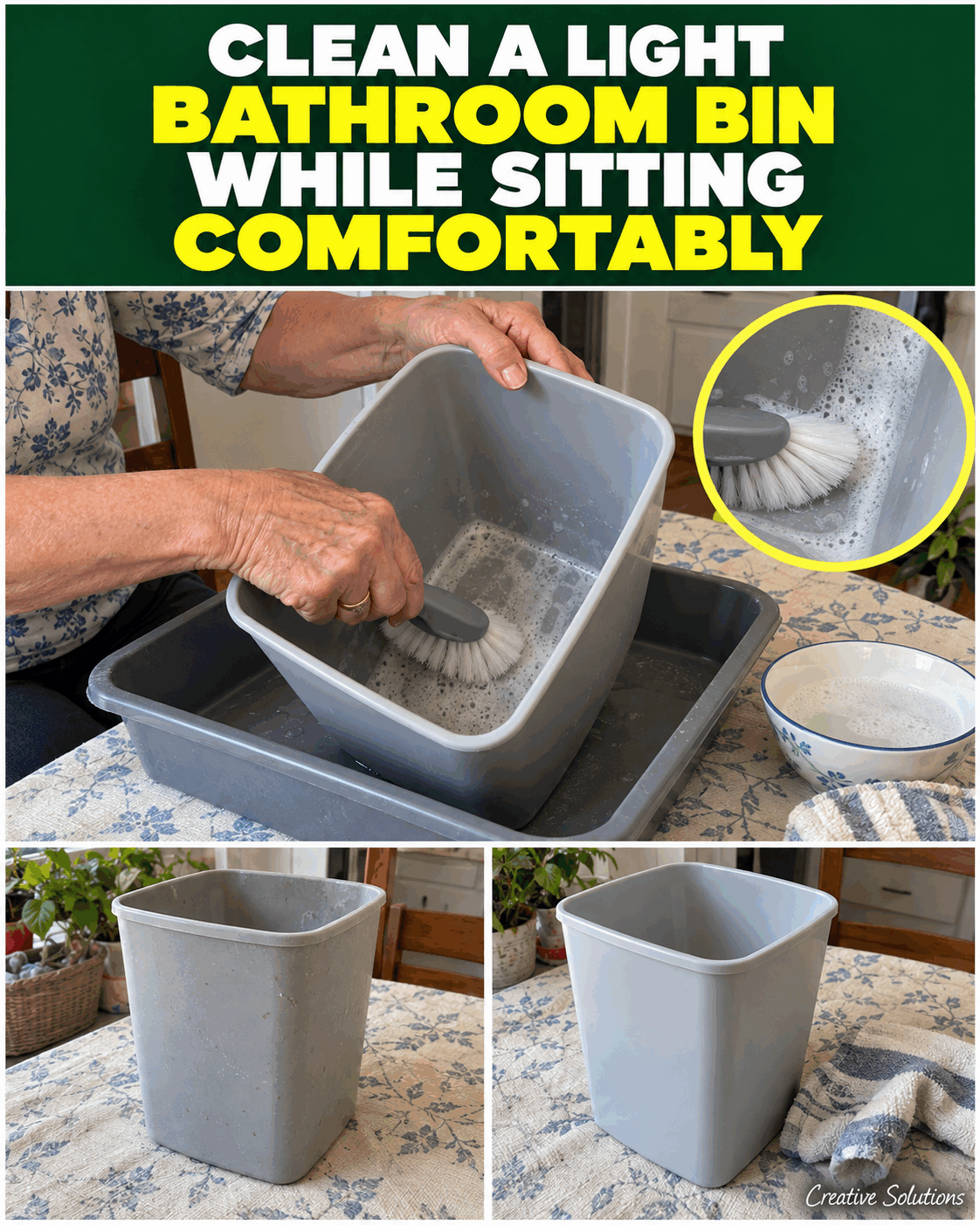
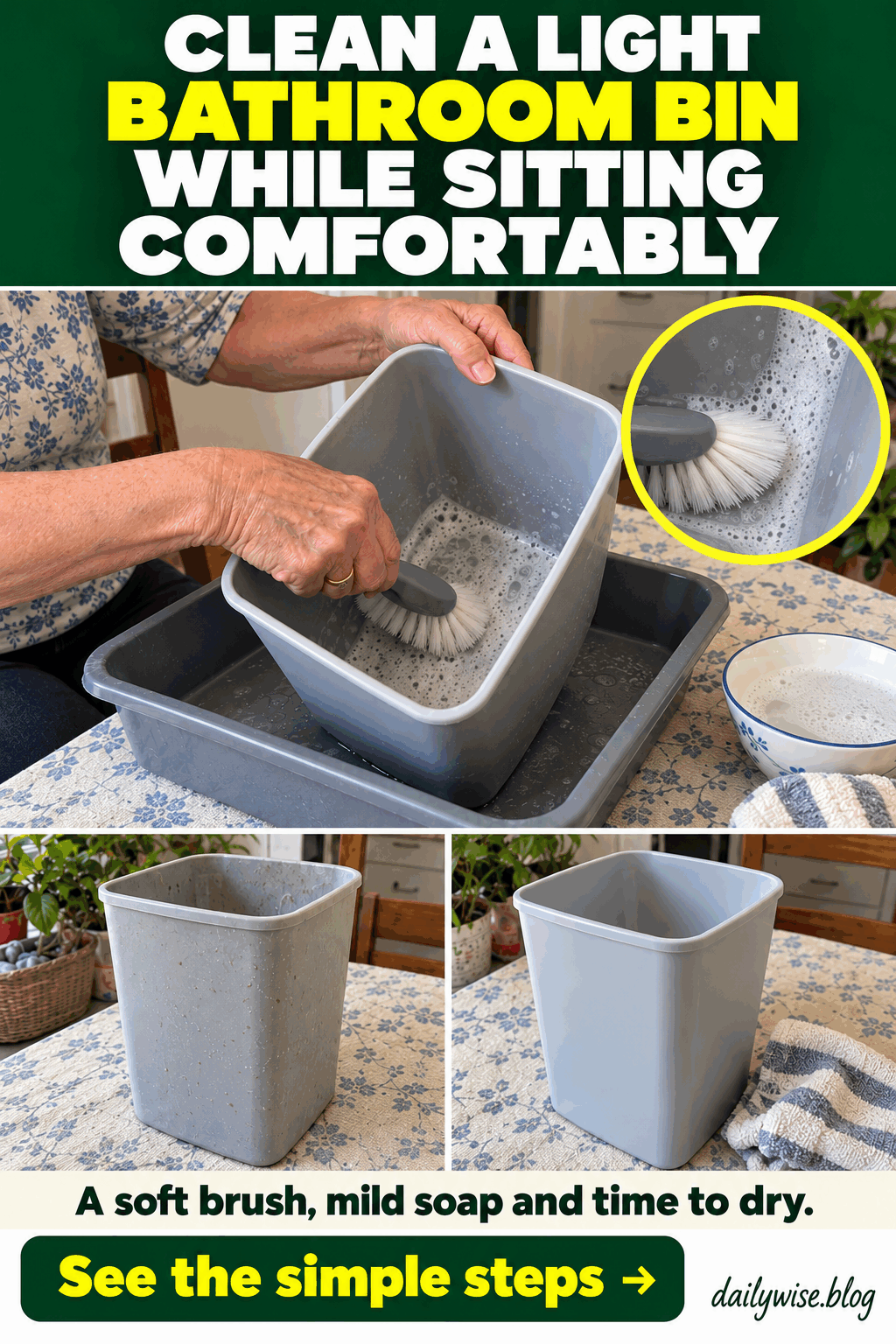
A simple way to clean a lightweight bathroom bin while seated
A little mild dish soap and a soft brush are enough for the ordinary cleaning of a small washable bathroom wastebasket. Bringing the empty, lightweight bin to a suitable table lets you work while seated instead of bending over it on the floor. The useful part is the arrangement: a stable chair, a protected surface and a shallow tray to catch drips.
This method is for a plain, washable plastic bin that you can comfortably move when empty. It is a gentle clean to remove ordinary surface dirt, followed by rinsing and thorough drying. It is not a promise to sterilize the bin, and you do not need to add several household products to the same wash water.
Choose the right bin for the task
A small molded-plastic wastebasket with a smooth interior is a good match. Check its care instructions first. Woven baskets, fabric-covered bins, wood, delicate finishes and bins with electrical parts need different treatment. Do not put a sensor lid, battery compartment or motor into a basin of water.
The bin should also be light enough for you to bring to the work area without strain. Working while seated is helpful only if the setup itself is comfortable. If moving the bin, lifting the tray or carrying the rinse water is awkward, ask someone to handle those parts or choose another arrangement that suits you.
Set up a comfortable place before starting
Use a firm table at a height that lets your shoulders stay relaxed. A sturdy chair with a back and both feet supported is preferable to a low stool. Keep the bin directly in front of you, within easy reach. You should not need to twist sideways or stretch across a wide table to reach the brush.
Cover the surface with a washable protective layer and place a shallow basin or drip tray on top. Choose a tray that holds the bin securely without tipping. Keep drinking glasses, food, clean towels and personal items away from this area. The tools used for the bathroom bin stay with the cleaning supplies afterwards.
What to have beside you
- The empty, washable, lightweight bathroom bin.
- A shallow basin or tray large enough to catch drips.
- Mild dishwashing liquid suitable for the material.
- A soft cleaning brush reserved for household tasks.
- A small bowl of comfortably warm water.
- A jug of clean rinse water and two clean cloths.
- Household gloves if the product label recommends them or you prefer them.
You do not need a full heavy bucket. A small amount of wash water is easier to handle and gives you more room on the table. Add dish soap according to its label, using only enough for light cleaning. A thick layer of foam does not make the bin easier to rinse and can leave a slippery film behind.
Empty the bin before it reaches the table
Remove the liner and put the contents in the usual household waste. Do not reach blindly into the bottom. This routine assumes ordinary, safely contained bathroom rubbish, such as tissues and packaging. If there is broken glass, a sharp object or unusual contamination, deal with that separately rather than brushing around it.
Once the bin is empty, look for cracks or rough edges. A damaged rim may catch the cloth or make the container unpleasant to handle. Do not scrub across a sharp broken area. If the plain plastic is intact and the bin is suitable for washing, set it inside the prepared tray.
Step 1: loosen everyday surface dirt
Dampen the soft brush with the lightly soapy water. Work over a small section of the inside wall using short, gentle strokes. You are lifting ordinary marks and dust, not sanding the plastic. A soft brush can reach a rounded corner without the force of a stiff scouring pad.
Turn the light bin a little at a time within the tray so that the next section faces you. Keep one hand on the firm rim to steady it. Avoid holding the container at arm’s length. If the base is difficult to reach comfortably, tilt the empty bin toward you within the tray rather than bending your shoulders down into it.
Step 2: clean the base and rim
Use the same gentle brushing on the bottom and around the accessible inner rim. A damp cloth can help on flat surfaces where the brush is unnecessary. For a stubborn ordinary mark, let a little soapy water sit briefly on that spot, then try again gently. Follow the care instructions instead of switching immediately to a strong abrasive.
Wipe the outside as well, especially the area where you usually hold the bin. Work with a lightly damp cloth rather than pouring wash water over the table. If the bin has a separate simple washable lid, clean it according to its own instructions. Keep any non-washable parts away from the water.
Step 3: remove the soapy residue
Use a cloth dampened with clean water to wipe the washed surfaces. Rinse the cloth and repeat until there is no slippery soap film. For a small plain plastic bin, a little clean water from the jug can also be used inside the tray, provided the tray has enough room to contain it.
Do not let the tray become so full that it is difficult to move. If you cannot comfortably empty it, arrange for someone to help before beginning. Keeping the water quantity modest makes the seated task simpler and reduces the chance of spilling when the cleaning is finished.
Step 4: dry the bin completely
Wipe the inside, outside, rim and base with a clean dry cloth. Then leave the bin open in a suitable place so remaining moisture can evaporate. Check the small corners and the underside before fitting a new liner. A liner put into a damp bin can hide water that has not had a chance to dry.
There is no need to hurry this stage with a heater or hair dryer. Ordinary air drying after wiping is enough for the setup described here. Once the bin is dry, add a clean liner if you use one and return it to its usual position. Keep the surrounding bathroom floor dry as well.
Keep the clean-up as simple as the cleaning
Empty the used wash water carefully, rinse the tray and clean the brush and cloths as appropriate for their materials. Let the tools dry before putting them away. A damp brush shut in a small cupboard is not a good finish to an otherwise tidy routine. Wash your hands after handling the bin and cleaning tools.
If you worked on a table used for other activities, remove the protective layer and clean the surface with a suitable product. Put the household brush back with the cleaning supplies so it cannot be mistaken for a dish brush or a personal-care brush. A simple label makes that separation easy to maintain.
Cleaning without turning it into a complicated project
Regular cleaning with soap, water and gentle scrubbing removes ordinary dirt. The CDC distinguishes that routine cleaning from disinfecting, which is a separate process with product-specific directions. This small-bin method is intended for everyday care, not a special response to illness or a major spill.
Keep the routine manageable by cleaning when marks or dirt become visible and before residues have accumulated for a long time. Do not put extra products in the bin just for a stronger smell. A clean, rinsed and fully dry container is the practical result you are looking for.
Frequently asked questions
Can I clean any bathroom bin this way?
No. It is for a plain, lightweight, washable bin. Check the care instructions. Electrical lids, wood, fabric and delicate finishes need their own cleaning methods.
Does sitting make every part of the task easy?
The table arrangement can reduce bending during brushing. Moving the bin and emptying water still need to be comfortable. Ask for help with those parts if needed.
Should I add bleach to the soapy water?
No additional product is needed for this ordinary cleaning routine. Do not mix cleaning products. Any separate disinfection task requires a suitable product and its own label directions.
When can I put a liner back in?
Wait until the bin, including its corners and underside, is dry. Wipe first and allow remaining moisture to air dry before lining it.
Cleaning principles: CDC: When and how to clean your home. Follow the bin’s material-specific care instructions.