
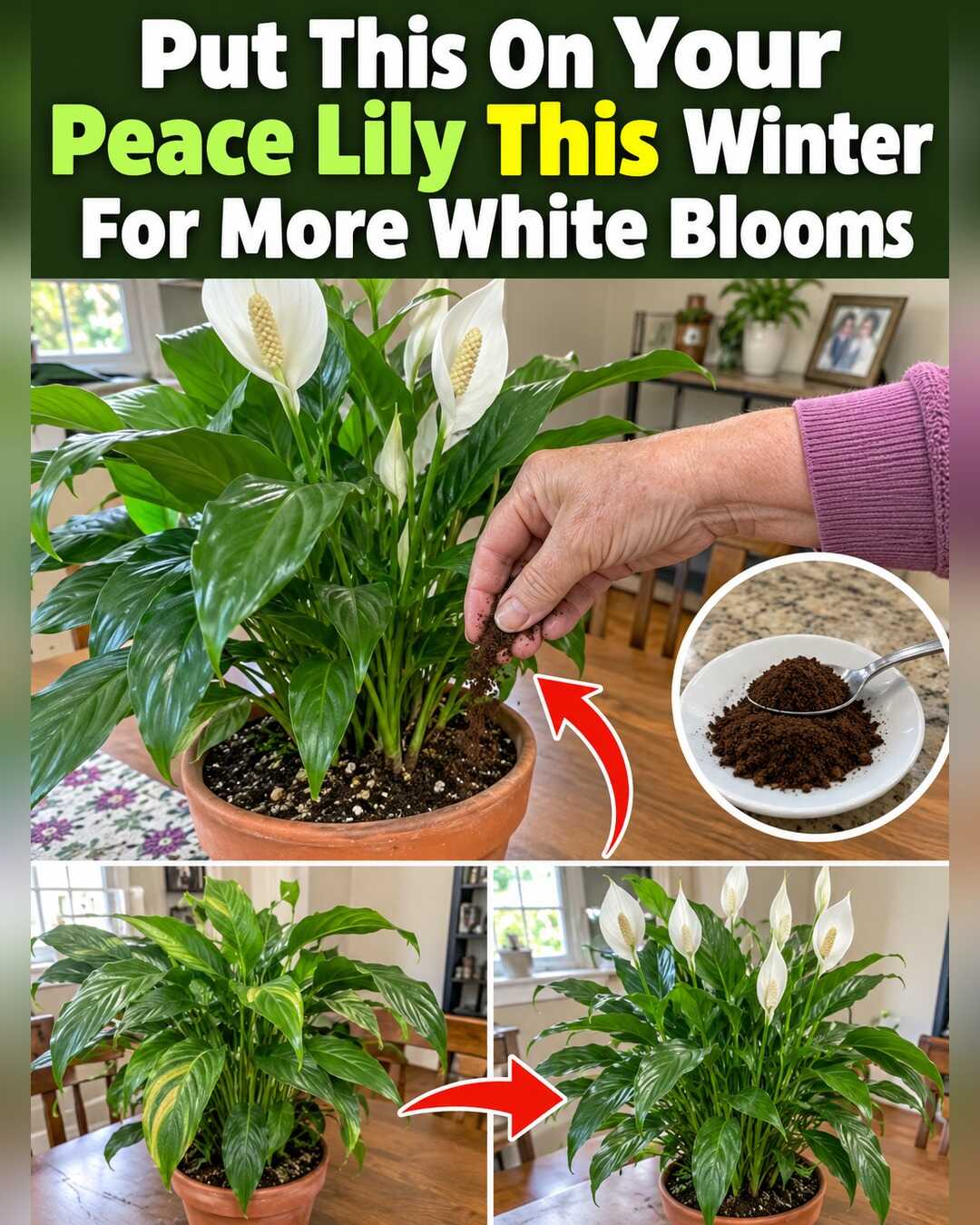
Put THIS on Your Peace Lily This Winter for More White Blooms
The thing to put on your peace lily this winter is a small spoonful of used coffee grounds, dried first. Just one teaspoon, scattered thin around the plant, can give it a light boost and help it produce more of those white blooms when the days are short.
Peace lilies (Spathiphyllum) are popular because they handle indoor life well. But in winter, many of them stop flowering and look a little tired. Here is how to use the coffee grounds the right way, and how to help the plant bloom more.
What you need
- 1 teaspoon of used coffee grounds, dried (plain, no sugar, milk, or flavoring)
- A saucer or an old plate for drying the grounds
- A peace lily that gets bright, indirect light
- Room-temperature water
How to dry the grounds
Spread the used grounds in a thin layer on a plate and leave them in a dry spot for a day or two. Stir them once or twice. They should feel crumbly and dry, with no damp clumps.
Drying matters. Wet grounds stay moist on top of the soil and can grow mold, and they can also hold water against the roots. Dry grounds mix into the soil and break down slowly.
The method, step by step
-
Check the soil. Push a finger about an inch into the soil. If it is still wet, wait. Only treat the plant when the top of the soil is slightly dry.
-
Measure one teaspoon. For a medium pot, about 6 to 8 inches wide, one teaspoon is enough. For a small pot, use half a teaspoon.
-
Sprinkle it thin. Scatter the dried grounds around the plant, keeping them away from the stems. Never pile them up in one spot.
-
Work it in lightly. Use a fork or your fingertips to mix the grounds into the top half inch of soil.
-
Water as usual. Water slowly with room-temperature water until it runs out of the drainage holes, then empty the saucer.
Repeat once a month at most. In winter, once every four to six weeks is plenty.
Why it can help
Used coffee grounds contain a small amount of nitrogen and other nutrients, and they add organic matter to the soil. As they break down, they feed soil life and release a little nourishment to the plant. They are mild, not a strong fertilizer, which is why a small amount works better than a lot.
The grounds can also make the soil a bit lighter and looser, so air and water move through more easily. A healthy, well-drained root zone is one of the main things a peace lily needs to bloom.
Keep in mind that coffee grounds are one helper, not a miracle. Light and care matter just as much, and the plant needs those to flower.
Mistakes to avoid
- Using too much. More is not better. A thick layer can compact, hold water, and stress the roots.
- Using wet grounds. They can mold. Dry them first.
- Using flavored or sugared coffee. Only use plain grounds.
- Treating a dry, wilting plant. Water first and let it recover before you add anything.
- Doing it every week. Peace lilies grow slowly in winter and need little food.
More tips for white blooms in winter
Give it light. The number one reason a peace lily does not bloom is too little light. A spot near a bright window, without direct hot sun, works best. In winter, move it closer to the window as the days get short.
Keep it warm. Peace lilies like temperatures of about 65 to 80°F. Keep them away from cold drafts and from heaters that blow dry air.
Water well, but not too much. Water when the top inch of soil is dry. If the leaves droop, that is the plant asking for water, and it usually perks up within a few hours.
Add humidity. Winter heating dries the air. Put the pot on a tray with pebbles and a little water, but keep the pot above the waterline.
Wipe the leaves. Dusty leaves take in less light. Wipe them gently with a damp cloth every few weeks.
What results to expect
Do not expect flowers overnight. Plants take time to respond, usually a few weeks to a couple of months. With good light and steady care, many peace lilies send up new white spathes, and the leaves often look darker and healthier.
If your plant has not bloomed for a long time, try also moving it to a brighter spot. In many homes, that single change makes the difference.
Frequently asked questions
Are coffee grounds safe for peace lilies?
In small, dried amounts, yes. Many indoor gardeners use them. The key is to use only a teaspoon, mixed into the soil, and not to apply it too often.
Can I use fresh coffee grounds?
Used grounds are gentler than fresh ones. Use grounds from brewed coffee, dried first. Fresh unbrewed grounds are stronger and are not recommended for houseplants.
How often should I feed my peace lily?
In winter, once a month at most with coffee grounds, or none at all if the plant looks healthy. In spring and summer, you can use a mild houseplant fertilizer every few weeks.
Why are the leaf tips turning brown?
Brown tips often come from dry air, too much fertilizer, or tap water with a lot of minerals. Raise humidity, avoid overfeeding, and try using filtered or rainwater.
My peace lily has leaves but no flowers. What should I do?
Check the light first. Move the plant to a brighter spot with indirect light, water regularly, and be patient. Flowers usually follow when the plant gets enough light and has a healthy root system.
One teaspoon of dried coffee grounds is an easy, low-cost way to give your peace lily a little extra care this winter. Pair it with bright light and steady watering, and watch for new white blooms.