
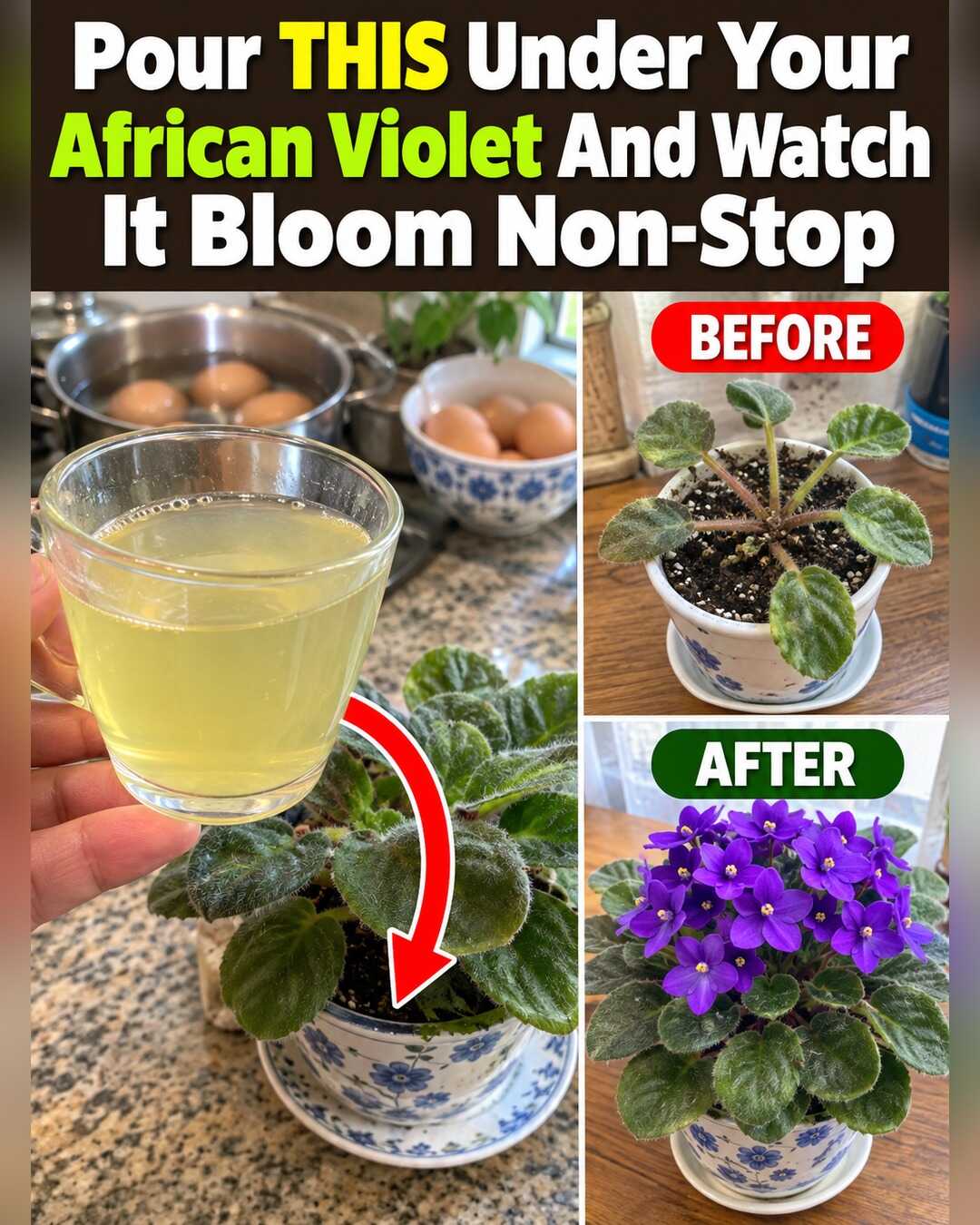
Pour THIS Under Your African Violet and Watch It Bloom Non-Stop
The “this” in the title is cooled egg-boiling water: the plain water left in the pot after you hard-boil eggs. Once it is completely cold, give your African violet about one cup, poured into the saucer or onto the soil, once a month. Many home growers say it helps the rosette fill out and the flower buds keep coming. It costs nothing, and you probably pour it down the drain every week.
African violets (Saintpaulia) have a reputation for being fussy. Some sit on a windowsill for months with a few tired leaves and not a single flower. If that sounds like your plant, this gentle kitchen habit is worth a try. Below you will find what you need, the exact method, why it may work, the mistakes to avoid and a short FAQ.
What you need
- A pot of water in which you have just boiled eggs, with no salt added
- A clean jug or glass, big enough for one cup (about 240 ml)
- A little patience: the water must be fully cold before it goes near the plant
- An African violet in a pot with drainage holes, ideally standing on a saucer
Step by step: how to use it
- Boil the eggs in plain water. Do not add salt, vinegar or oil. Salt is bad for houseplant roots, so this is the one rule you must follow.
- Take the eggs out and let the water cool. Leave the pot on the counter until it feels cold to the touch. Warm or hot water can damage the fine roots of a violet.
- Measure one cup. Pour it into a clean glass or jug. If the water looks cloudy, that is fine.
- Check the soil first. Press a finger about 2 cm into the potting mix. If it is still wet, wait a day or two. Violets hate soggy soil.
- Pour into the saucer. This is the safest way to water an African violet because the fuzzy leaves stay dry. Let the pot drink for 15 to 20 minutes.
- Empty the saucer. Throw away whatever the plant did not take up. A violet should never stand in water for hours.
- Repeat once a month. Between those days, water the plant the way you normally do with room-temperature tap water.
If you prefer to water from the top, pour slowly onto the soil at the edge of the pot and keep the water away from the center of the plant and from the leaves.
Why it may help
When you boil eggs, tiny amounts of minerals from the shells, mostly calcium, can dissolve into the water. The amount is small, so think of it as a very light, free “snack” for the plant, not as a strong fertilizer. Here is why gardeners like it:
- Gentle. African violets have fine, shallow roots and do better with mild feeding than with strong doses.
- Free and easy. It uses water you would otherwise throw away.
- Good habit. A monthly routine reminds you to look at the plant, check for pests and turn the pot so every side gets light.
To be honest, egg water is not magic. It will not make a violet bloom in a dark corner. Think of it as a small extra on top of good basic care: light, correct watering and the right pot size.
The basics that matter even more
If your violet still has no flowers after a few months, check these things before changing anything else:
- Light. Violets need bright, indirect light for about 10 to 12 hours a day. An east window is ideal. In winter, a small grow lamp helps a lot.
- Temperature. They like the same temperatures we do, around 18 to 24 degrees Celsius. Cold drafts make them sulk.
- Pot size. Violets bloom best when slightly root-bound. If the pot is much wider than the rosette, the plant puts its energy into roots and not into flowers.
- Old leaves. Remove faded flowers and any yellow or damaged outer leaves with clean fingers or small scissors.
Common mistakes to avoid
- Using salted water. If you salted the pot, do not use the water. Pour it away and rinse some rice or use plain tap water instead.
- Using warm water. Always wait until it is cold or at room temperature.
- Pouring on the leaves. Wet fuzzy leaves can spot and rot, especially in sun or in a cool room.
- Doing it too often. More is not better. Once a month is enough, and in the darker winter months you can stretch it to every six weeks.
- Leaving water in the saucer. Soggy roots are the number one reason violets die.
- Storing the water. Use it the same day. Old egg water can smell and grow bacteria.
Bonus tips for more flowers
- Turn the pot a quarter turn each week so the rosette grows evenly and does not lean toward the window.
- Dust the leaves gently with a soft, dry brush. Clean leaves catch more light.
- Use a violet potting mix that is light and airy, with perlite. Heavy garden soil suffocates the roots.
- Repot once a year in fresh mix, in a pot about one third the width of the rosette.
- Keep humidity moderate. A small tray with pebbles and a little water under the pot can help in dry, heated rooms, as long as the pot does not sit in the water.
Frequently asked questions
Can I use the water from soft-boiled eggs too?
Yes, as long as it is plain and unsalted. The water from hard-boiled eggs is the one most gardeners use, but both are fine once completely cold.
How often can I give my violet egg water?
Once a month is a safe rhythm. In winter, when growth slows down, every six weeks is plenty. More often is not needed and can leave the soil heavy and wet.
Should I pour it on the leaves?
No. African violet leaves are fuzzy and hold water, which can lead to spots and rot. Use the saucer or pour carefully on the soil, away from the center of the plant.
My violet has no flowers yet. Did I do something wrong?
Probably not. Light is the most common reason a violet does not bloom. Move it somewhere brighter, remove old leaves and give it a few weeks. Egg water is a small helper, not a replacement for light.
Does the water smell?
Fresh, cooled egg water has only a very light smell, if any. If it smells strongly of sulfur, it has stood too long. Pour it away and use fresh water.
Is it safe around pets?
Plain egg water is harmless, and African violets are generally considered non-toxic to cats and dogs. Still, keep plants out of reach of pets who like to chew.
Final thoughts
A cup of cooled egg water once a month is one of the easiest habits you can add to your plant routine. It costs nothing, takes two minutes and gives you a good reason to check on your violet regularly. Combine it with bright light, a small pot and careful watering from the saucer, and give it two or three months. Then come back and tell us how your African violet is doing.