
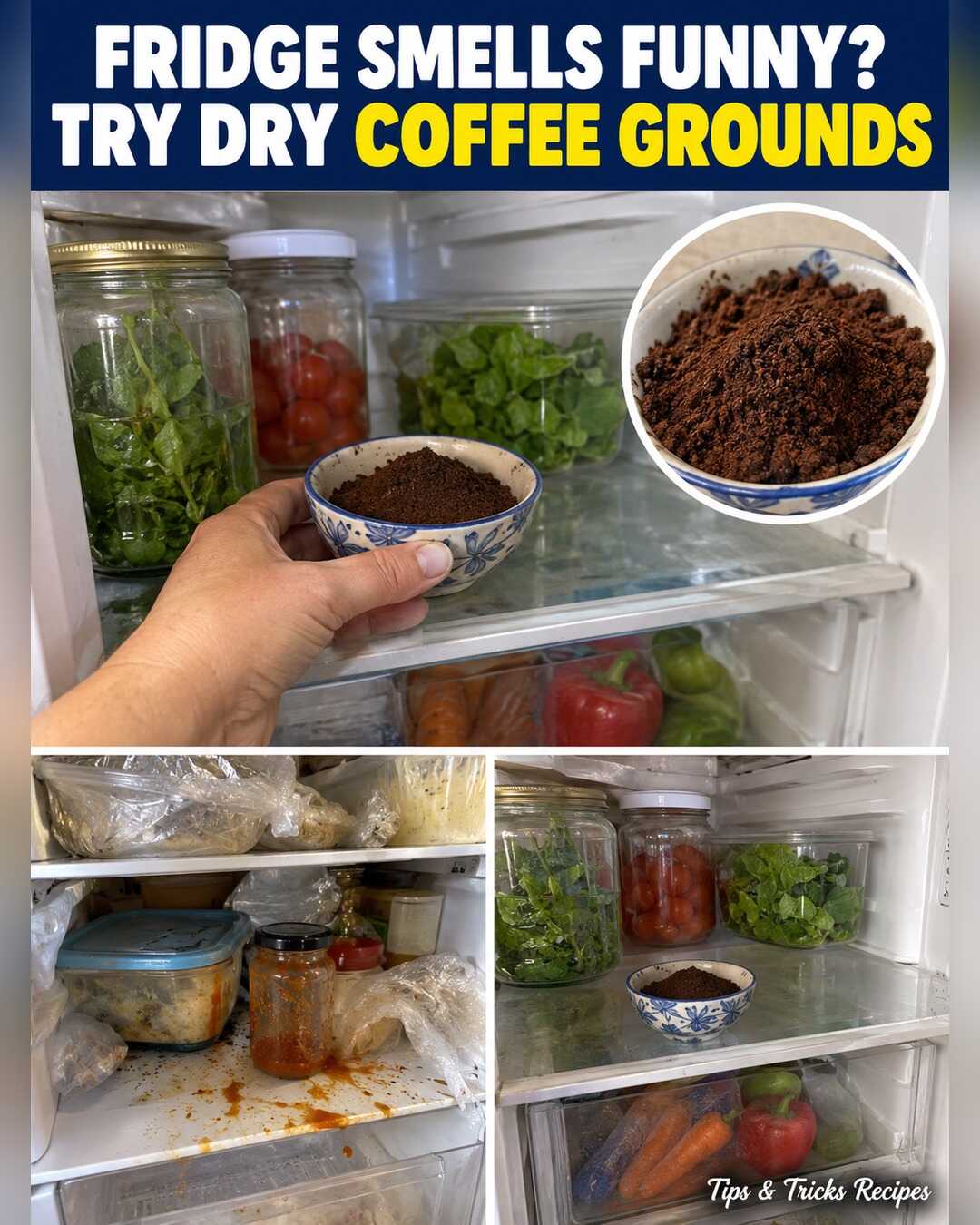
Fridge Smells Funny? Put a Small Bowl of Dry Coffee Grounds on the Back Shelf Overnight
You open the fridge and there it is: that stale, slightly sour smell that clings to everything. The milk tastes a little off, the butter picks up odors, and you can’t quite find the culprit. It happens in every kitchen, especially after a busy week.
Before you buy a special deodorizer, try something you probably throw away every morning: coffee grounds. Dried and left in a small bowl on the back shelf overnight, they soak up lingering odors. Here is how to do it the right way, starting with the step most people skip.
What You’ll Need
- About one cup of used coffee grounds (or fresh ground coffee if you don’t drink coffee).
- A baking sheet lined with parchment paper, or a large plate.
- A small open bowl or ramekin.
- Warm water, a few drops of dish soap and a clean cloth.
- A trash bag for anything past its prime.
The Method, Step by Step
-
Find and remove the source. No bowl can beat a forgotten container of leftovers. Check the back of each shelf, the crisper drawers and the door bins. Toss anything spoiled, leaking or past its date. This step alone solves half the problem.
-
Wipe the shelves. Mix warm water with a few drops of dish soap. Wipe the shelves, the walls and the door seals, paying attention to sticky spills. Dry everything with a clean cloth so no moisture is left behind.
-
Dry the coffee grounds. Wet grounds can grow mold in the fridge. Spread your used grounds in a thin layer on the lined baking sheet and let them air-dry for a day, or dry them in the oven at low heat for about 20 minutes, stirring once. Let them cool completely.
-
Fill a small bowl. Pour the dry grounds into a small open bowl or ramekin. Don’t pack them down: loose grounds have more surface in contact with the air.
-
Place it on the back shelf. Put the bowl at the back of the middle shelf, where air circulates the most. Keep it uncovered and away from foods that could tip into it.
-
Leave it overnight. Close the fridge and let the grounds work for the night. By morning, most of the lingering smell is usually much weaker. A faint coffee scent is normal and fades quickly.
-
Keep it for a week or two. You can leave the bowl in place as a quiet helper. Give the grounds a stir every few days to expose a fresh layer.
-
Replace and compost. After one to two weeks, or when the grounds seem damp, throw them in the compost or around outdoor plants and fill the bowl with a fresh dry batch.
Why It Works
Dry coffee grounds are porous, with lots of tiny nooks that trap odor molecules floating in the cold air of the fridge. They work a bit like a sponge for smells, and their own mild coffee scent helps mask what is left.
The key is the cleaning beforehand. Odors come from something: spoiled food, a sticky spill, a dirty seal. Once the source is gone, the grounds absorb the stale smell that remains in the air and on the plastic walls, so your fridge resets overnight.
Mistakes to Avoid
- Using wet grounds. They can grow mold in a few days, which creates a new smell.
- Skipping the cleaning. The grounds can’t fix a leaking container or a spill under the crisper drawer.
- Covering the bowl. A lid stops the air from reaching the grounds.
- Placing it near open food. Keep the bowl away from uncovered butter, cheese or desserts.
- Leaving it for months. Once saturated, grounds stop working. Replace them regularly.
Bonus Tips and Variations
No coffee drinker at home? A small open box or bowl of baking soda does the same job. Many people keep one in the fridge and change it every month or so.
Store strong foods like onions, fish and cut garlic in airtight containers. Odors travel fast in a closed fridge, especially to butter and milk.
Wipe the rubber door seal once a month with warm soapy water. Crumbs and drips get trapped in its folds and can start to smell.
The same dried coffee trick works in the freezer, in a gym bag or near the trash can. Just keep the grounds dry and replace them often.
A Simple Weekly Fridge Routine
The best way to avoid fridge odors is to never let them start. Pick one day a week, ideally the evening before your grocery run, and take five minutes to look through every shelf.
Move older items to the front so they get eaten first, and toss anything that’s past its prime. Check the bottom of the crisper drawers, where a single soft vegetable can quietly spoil and smell up everything.
Wipe any drips or sticky rings with a warm, soapy cloth and dry the spot. A spill cleaned the same week takes seconds; one left for a month needs scrubbing.
Finally, check your bowl of coffee grounds or baking soda. Stir it, and if it looks damp or has been there more than two weeks, replace it. That’s it: a fresh fridge with almost no effort.
Frequently Asked Questions
Will my food taste like coffee?
No. Dry grounds give off only a light scent that fades after a day, and they don’t transfer flavor to covered food. If you keep butter or cream uncovered, put them in a container just to be safe. Most people notice a neutral, fresher fridge rather than a coffee smell.
Can I use fresh ground coffee instead of used grounds?
Yes, fresh ground coffee works well and is already dry, so you can skip the drying step. It has a stronger scent at first, which some people enjoy. Used grounds are simply a way to reuse something you would otherwise throw away.
How often should I replace the grounds?
Every one to two weeks is a good rhythm. Replace them sooner if they look damp, clump together or if the fridge smell comes back. Fresh, dry grounds work best, and swapping them takes just a minute.
Is baking soda better than coffee grounds?
Both absorb odors well. Baking soda is neutral and has no smell, while coffee adds a light scent that helps mask what is left. Try both and see which you prefer. Either way, cleaning the fridge first is what makes the biggest difference.
What if the smell doesn’t go away?
Look again for the source: under the crisper drawers, in the drip tray if your fridge has one, or in the door seal. If the smell is strong and persistent, or the fridge isn’t cooling properly, check the manual or call a technician, because the problem may not be food.
Where is the best spot for the bowl?
The back of the middle shelf is usually best, because cold air circulates there and reaches most of the fridge. In a large or very full fridge, you can use two small bowls, one on a top shelf and one near the crisper drawers, where odors often start.
Clean out the culprit, wipe the shelves and leave a small bowl of dry coffee grounds on the back shelf overnight. Tomorrow morning, open the door and enjoy a fresher fridge.