
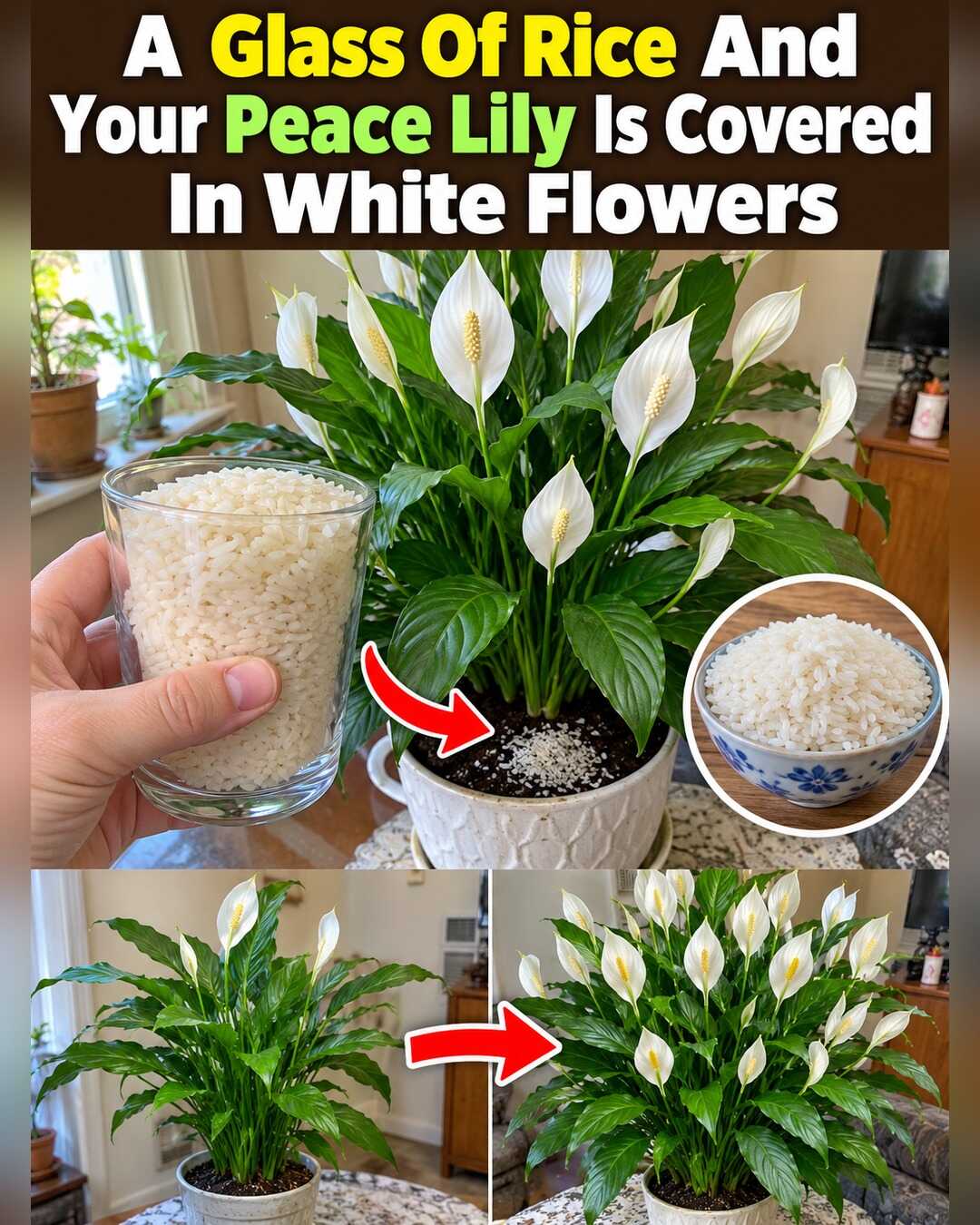
A Glass of Rice and Your Peace Lily Is Covered in White Flowers
The “glass of rice” in the title is exactly what it sounds like: a small glass of plain, uncooked rice. Gardeners soak it in water for a few hours and give the cloudy, starchy water to their peace lily about once a month, and many say the plant keeps making clean white blooms. Rice is in every kitchen, the method is easy, and the cost is almost zero.
Peace lilies (Spathiphyllum) are among the most popular houseplants, yet many of them stay green and flowerless for years. If your peace lily has beautiful leaves but no white flowers, this gentle kitchen habit is worth a try. Below you will find what you need, the exact method, why it may help, what to avoid, and answers to common questions.
What you need
- One small glass (about 100 ml) of plain, raw rice, white or brown, with no salt and no oil
- 2 to 3 cups of room-temperature water
- A clean jar or bowl and a strainer
- A peace lily in a pot with drainage holes
Step by step
- Rinse the rice quickly under the tap to remove dust, then drain it.
- Put the rice in a jar and cover it with 2 to 3 cups of water.
- Soak for 2 to 4 hours on the counter, stirring once or twice. The water turns white and cloudy.
- Strain the water into another jar. Keep the rice for cooking.
- Dilute it with equal parts plain water if it looks thick like milk.
- Check the soil. Peace lilies like evenly moist soil but never soggy. Push a finger 3 cm into the mix. If it is still wet, wait a day.
- Pour about one cup slowly onto the soil around the plant, away from the center of the crown. Let the extra drain and empty the saucer after 10 minutes.
- Repeat once a month. In winter, every six weeks is enough.
Some gardeners also sprinkle a small spoonful of dry rice on top of the soil. It is not necessary, and it can attract insects, so the water method is the better choice indoors.
Why it may help
Soaking rice releases starch and trace amounts of minerals and B vitamins into the water. It is a very mild liquid, which suits a plant that is easily upset by strong fertilizer.
- Gentle nutrients. Peace lilies need modest feeding. A mild, regular boost is safer than a strong dose that burns the leaf tips.
- Helps the soil. Starch feeds beneficial microbes in the potting mix.
- Builds a routine. Regular care makes you notice dry soil, dust and pests early.
Rice water is not a miracle. Flowers need light first. If your lily lives in a dark corner, move it before trying anything else.
What a peace lily needs to bloom
- Light. Medium to bright indirect light. Peace lilies survive in low light, but they rarely flower there.
- Warmth. Keep it between 18 and 26 degrees Celsius, away from cold drafts.
- Watering. Water when the top of the soil feels slightly dry. Drooping leaves are a signal that the plant is thirsty, and it recovers within hours after a drink.
- Maturity. Very young plants may need a year or more before they bloom.
- Pot. A slightly snug pot encourages flowers. Repot only when roots fill the pot.
How to choose the best spot
Many flowering problems are really location problems. Stand next to the plant at noon on a sunny day. If you can read a book comfortably there without turning on a lamp, the light is probably enough for a peace lily. If it is dim, move the pot closer to a window, but keep it out of direct sun, because the leaves can scorch and turn pale with brown patches. An east window or a spot a meter or two back from a south window is usually perfect.
Keep the plant away from heaters, air conditioners and open doors in winter. Peace lilies like stable, humid, warm air. A bright bathroom or kitchen often suits them better than a dry living room. Grouping several plants together also raises humidity a little.
Signs your peace lily is ready to bloom
A healthy plant that is ready to flower usually has dark green, firm leaves, a good number of new leaves in the center and no brown, mushy roots at the bottom of the pot. If your plant looks like this and still has no flowers, increase the light a little and be patient. Plants often bloom in spring, but indoors a peace lily can flower several times a year when conditions are right.
Common mistakes to avoid
- Adding salt or oil. Never use water from cooked rice that contains salt or oil.
- Keeping the water too long. Use it the same day, because it sours and can smell.
- Using it too often. Once a month is enough. Too much starch leaves the soil heavy.
- Pouring into the crown. Water collecting in the center of the leaves can cause rot.
- Leaving water in the saucer. Soggy roots turn black and the plant declines.
- Expecting instant flowers. Give it two to three months with good light.
Bonus tips for a flowering peace lily
- Wipe the leaves with a damp cloth every few weeks. Clean leaves collect more light.
- Remove old flowers when they turn green or brown, cutting the stem at the base.
- Use room-temperature water. Cold water can shock the roots. If your tap water is hard, let it stand overnight first.
- Watch for brown tips. They usually mean dry air or too much fertilizer, not a lack of rice water.
- Give it a short rest in winter by watering a little less.
A simple plan for the next three months
- Week 1: move the plant to a brighter spot and give the first cup of rice water.
- Weeks 2 to 4: water normally, wipe the leaves and check the soil before every watering.
- Week 5: give the second cup of rice water and take a photo.
- Weeks 6 to 8: keep the routine and look for a new flower bud, a small green spike between the leaves.
- Week 9: third cup of rice water. Compare your photos.
Frequently asked questions
Can I use dry rice instead of rice water?
Soaked or rinsed rice water is the better choice. Dry grains on the soil can attract insects or mold in a warm room.
How often should I use it?
About once a month, or every six weeks in winter. It is a light extra, not a daily treatment.
Does it work on other houseplants?
Many gardeners also use it on pothos, philodendron and orchids. Always start with a small amount and watch the plant.
My peace lily leaves are yellow. Is it the rice?
Usually not. Yellow leaves are most often caused by overwatering, too much sun or old age of the lower leaves. Pause the rice water and check the soil and drainage.
Why does my lily droop?
Most often it is thirst. Water thoroughly and it will perk up within a few hours. If it droops with wet soil, check the roots for rot.
Is a peace lily safe for pets?
No. Peace lily leaves and flowers can irritate the mouth of cats and dogs if chewed, so keep the plant out of their reach. The rice water itself is harmless.
Final thoughts
A glass of rice and a few hours of soaking is all it takes. Used once a month with bright indirect light and careful watering, it can be a pleasant, low-cost way to support your peace lily. Be patient, take photos, and see for yourself how many white flowers appear after a few months.