
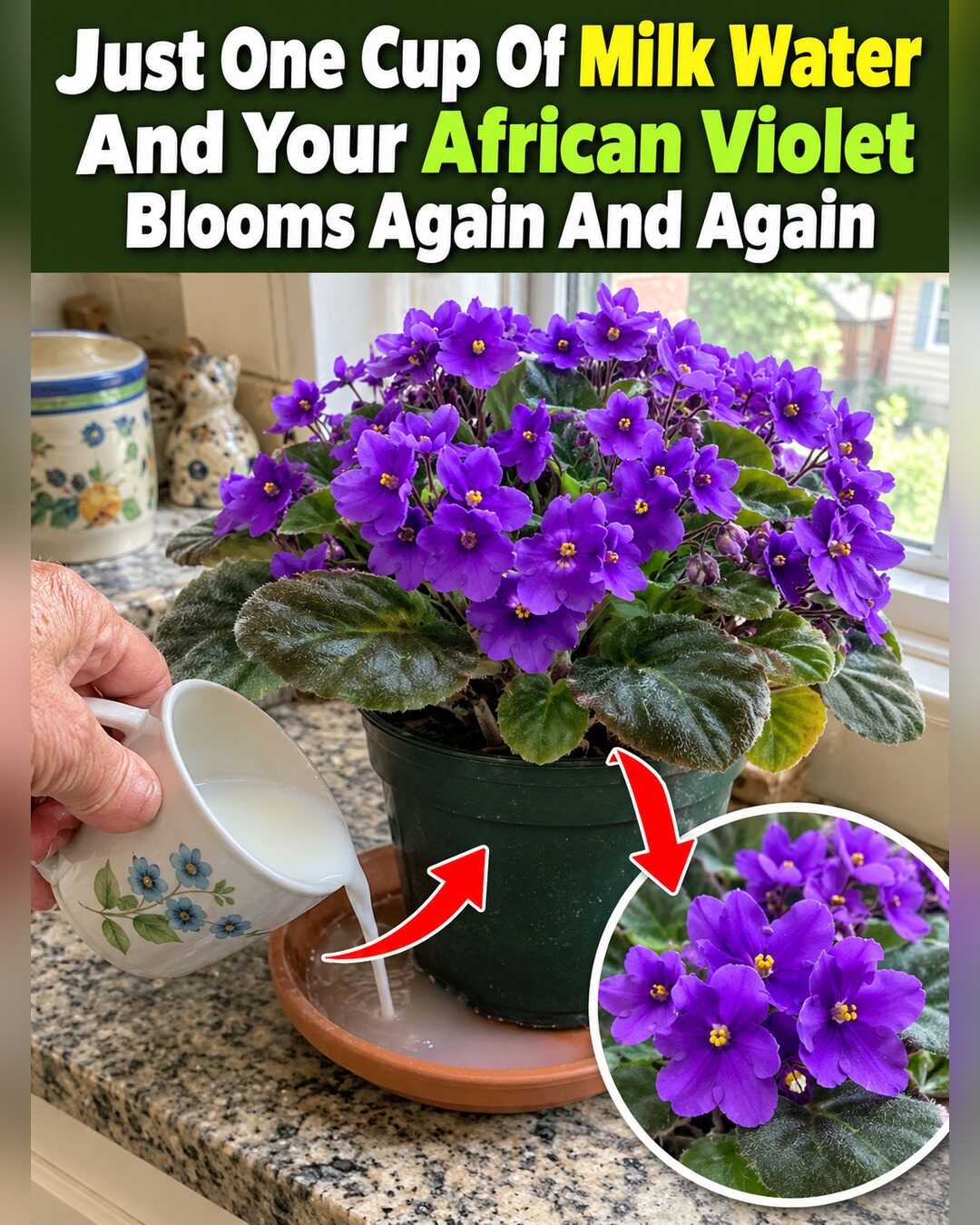
Just One Cup of Milk Water and Your African Violet Blooms Again and Again
Here is the little secret many grandmothers swear by: milk water. Just a splash of milk mixed into a cup of plain water, given to your African violet once a month. It is one of those old kitchen tricks that costs nothing and turns a tired violet into a windowsill full of purple blooms.
African violets are loved for flowering almost all year, but many of us have one that just sits there with leaves and no flowers. In this article, I will show you exactly how to make the milk water, how much to give, how often, and the mistakes to avoid so your violet stays healthy.
What You Need
- 2 tablespoons of milk (skim or 2% works best)
- 1 cup of room-temperature water (about 8 oz)
- A measuring cup or a regular coffee mug
- A spoon for stirring
- Your African violet in a pot with drainage holes and a saucer
The Method, Step by Step
- Use room-temperature water. African violets hate cold water. Cold water on their roots or leaves can leave pale spots. Fill your cup and let it sit on the counter for an hour, or use water that has been standing overnight.
- Mix the milk water. Add 2 tablespoons of milk to 1 cup of water and stir. The mixture should look very pale, almost like cloudy water. That is all you need. Do not use cream or whole milk straight.
- Water from the bottom. Pour the milk water into the saucer under the pot, not on the leaves. African violets like to drink from below. The fuzzy leaves spot easily if they get wet.
- Wait 20 to 30 minutes. Let the plant soak up what it needs. You will see the saucer slowly empty.
- Empty the saucer. After 30 minutes, pour out anything left. Violets do not like sitting in water, and old milk water should never stay under the pot.
- Repeat once a month. Use milk water once every 4 weeks. In between, water as usual with plain room-temperature water whenever the top of the soil feels dry to the touch.
Why It Works
Milk contains small amounts of calcium, protein and other nutrients. When it is heavily diluted, it becomes a very gentle home feeding that many indoor gardeners have used for generations, especially on African violets and other flowering houseplants.
Because the mix is so weak, it does not burn the roots the way too much store-bought fertilizer can. The key is the small dose and the long pause between feedings. Gardeners who stick with it often say their violets look greener, grow fuller and start setting buds again.
Of course, light matters just as much. A violet that gets enough bright, indirect light and a little monthly milk water is a happy violet.
Mistakes to Avoid
- Using too much milk. More milk does not mean more flowers. Strong mixtures can sour in the soil, smell bad and attract tiny flies.
- Pouring it over the leaves. Milk on fuzzy leaves leaves marks and can cause rot. Always water from below or right at the soil line.
- Leaving the saucer full. Standing water leads to root rot, the number one killer of African violets.
- Using it every week. Once a month is plenty.
- Cold water straight from the tap. It can shock the roots and spot the leaves.
Bonus Tips
Find the right window. An east-facing window is ideal. A north window works in summer. If you only have a south or west window, keep the plant a few feet back or behind a sheer curtain.
Turn the pot. Give your violet a quarter turn every time you water. This keeps it round and even instead of leaning toward the glass.
Pinch off spent flowers. When a bloom fades, pinch it off at the base of its little stem. The plant will put its energy into new buds.
Keep it cozy. African violets like the same temperatures we do, around 65 to 75°F. In winter, keep them away from cold window glass at night and away from heating vents.
Small pots are better. Violets bloom best when they are a little snug in their pot. Do not move them to a much bigger pot.
A Simple Monthly Routine
The easiest way to remember is to tie it to a date you already know. Many of our readers give their violets milk water on the first Sunday of each month, right after church or the morning paper. Put a little note on the calendar or on the fridge.
Keep a small notebook by your plants, too. Write down the date and how the plant looks. After a few months, it is a joy to look back and see how many flowers your violet has given you.
Signs Your African Violet Is Happy
A healthy African violet has firm, velvety, dark green leaves that grow in a neat rosette. New leaves come from the center, and flower stems rise above the leaves. When the plant is getting the right light, it often blooms again and again throughout the year.
If the leaf stems are long and the leaves reach toward the window, the plant needs more light. If the leaves are pale or yellowish, it may be getting too much direct sun. Fix the light first, then let the monthly milk water do its part.
A Little Note on Water
If your tap water is very hard or heavily treated, let it sit out overnight before using it. Many violet lovers also use collected rainwater. Your plant will thank you with healthy leaves and plenty of blooms.
Frequently Asked Questions
Can I use any kind of milk?
Skim or 2% milk is best because it has less fat. Whole milk can be used, but dilute it even more. Avoid flavored milk, sweetened milk, or creamer. Plant-based milks are not the same and are not recommended for this tip. Plain, simple milk and plenty of water is the rule.
How long until I see blooms?
Every plant is different. A healthy violet with good light often starts forming buds within a few weeks. If your plant has not bloomed in a long time, give it two or three months of steady care, bright light and its monthly milk water, and be patient.
Will it make my house smell?
Not if you use the right amount and empty the saucer after 30 minutes. A sour smell means the mix was too strong or sat too long. If that happens, flush the pot with plain water once and use less milk next time.
Can I use this on my other houseplants?
Many people use diluted milk water on other flowering plants like begonias, peace lilies and Christmas cactus. Use the same gentle mix, once a month. Skip it for cactus and succulents, which prefer lean soil and very little feeding.
My violet has leaves but no flowers. What else should I check?
Most often it is light. Violets need bright, indirect light for many hours a day. Also check that the pot is not too big and that you are not overwatering. Once those are right, the monthly milk water is a nice extra boost.
Final Thoughts
A splash of milk in a cup of water is such an easy thing to try. Give your African violet a little treat this month, and tell us in the comments how many new blooms you see!