
Oats and Yogurt! An Easy Breakfast Loaf with No Wheat Flour
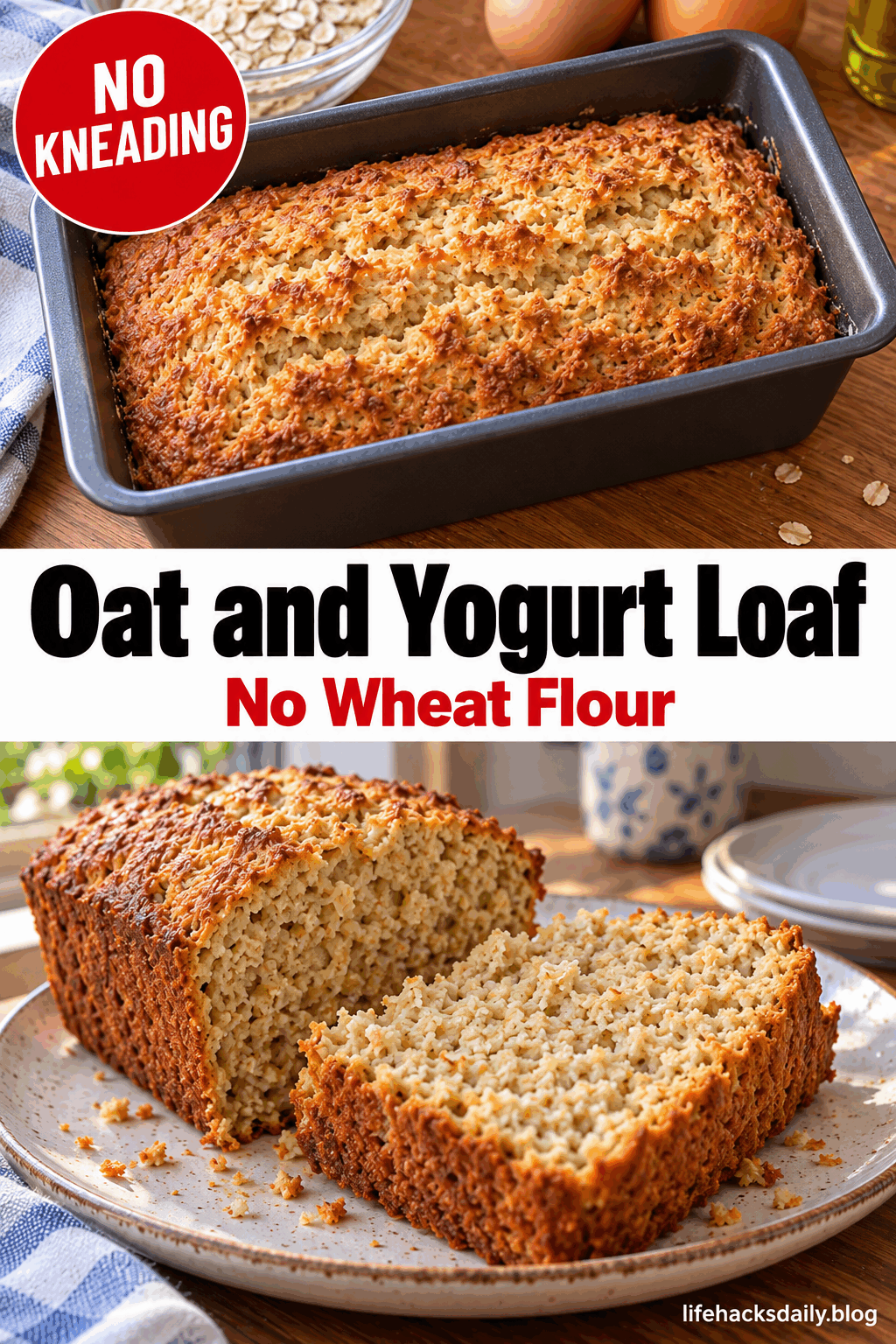
Rolled oats and plain yogurt make a wonderfully straightforward breakfast loaf with a tender, close crumb and a lightly golden crust. There is no wheat flour and no yeast to manage. You mix the batter, spoon it into a small loaf pan, and let the oven turn it into something worth slicing.
This is a quick bread, so expect a moist oat loaf rather than the stretchy texture of a kneaded sandwich bread. Plain yogurt gives it a pleasant tang, and finely ground oats make the slices more even. The basic version contains no added sugar and works with either sweet or savory toppings.
Time and portions
Plan on 15 minutes of preparation, 40 to 50 minutes in the oven, and at least 30 minutes of cooling. One small loaf gives about eight slices. An 8 by 4 inch loaf pan, a blender or food processor, two bowls, and a piece of parchment are the main equipment needed.
Ingredients
Use thick, plain Greek yogurt without added sweeteners or fruit. A runny yogurt can make the center take longer to set, while an unusually thick brand may need a small splash of water. Weighing the oats is especially helpful because the volume changes after grinding; measure them before they go into the blender.
- 2 cups (180 g) rolled oats, measured before grinding
- 1 cup (240 g) plain unsweetened Greek yogurt
- 2 large eggs
- 1 tablespoon olive oil
- 2 teaspoons baking powder
- 1/2 teaspoon fine salt
- Up to 2 tablespoons water, only if needed
Preparation
The oven should be fully heated before the batter goes in. Baking powder starts working as soon as it meets the wet mixture, so do not leave the finished batter on the counter for a long wait. Prepare your pan first and have a clear space ready for cooling afterward.
-
Heat the oven to 350°F (175°C). Line an 8 by 4 inch loaf pan with parchment, leaving enough overhang to lift the loaf later. Place the oats in a blender or food processor and grind to a fine, even meal, pausing to scrape down the sides if necessary.
-
Whisk the eggs, yogurt, and olive oil in a large bowl until smooth. In another bowl, mix the ground oats, baking powder, and salt so the raising agent is evenly distributed. Add the dry mixture to the wet ingredients and fold with a spatula until no dry oat pockets remain.
-
Let the mixture stand for five minutes while the oats absorb some moisture. It should form a thick batter that can be spread with a spatula. If it is dry and crumbly rather than spoonable, fold in water one tablespoon at a time, using only enough to bring it together.
-
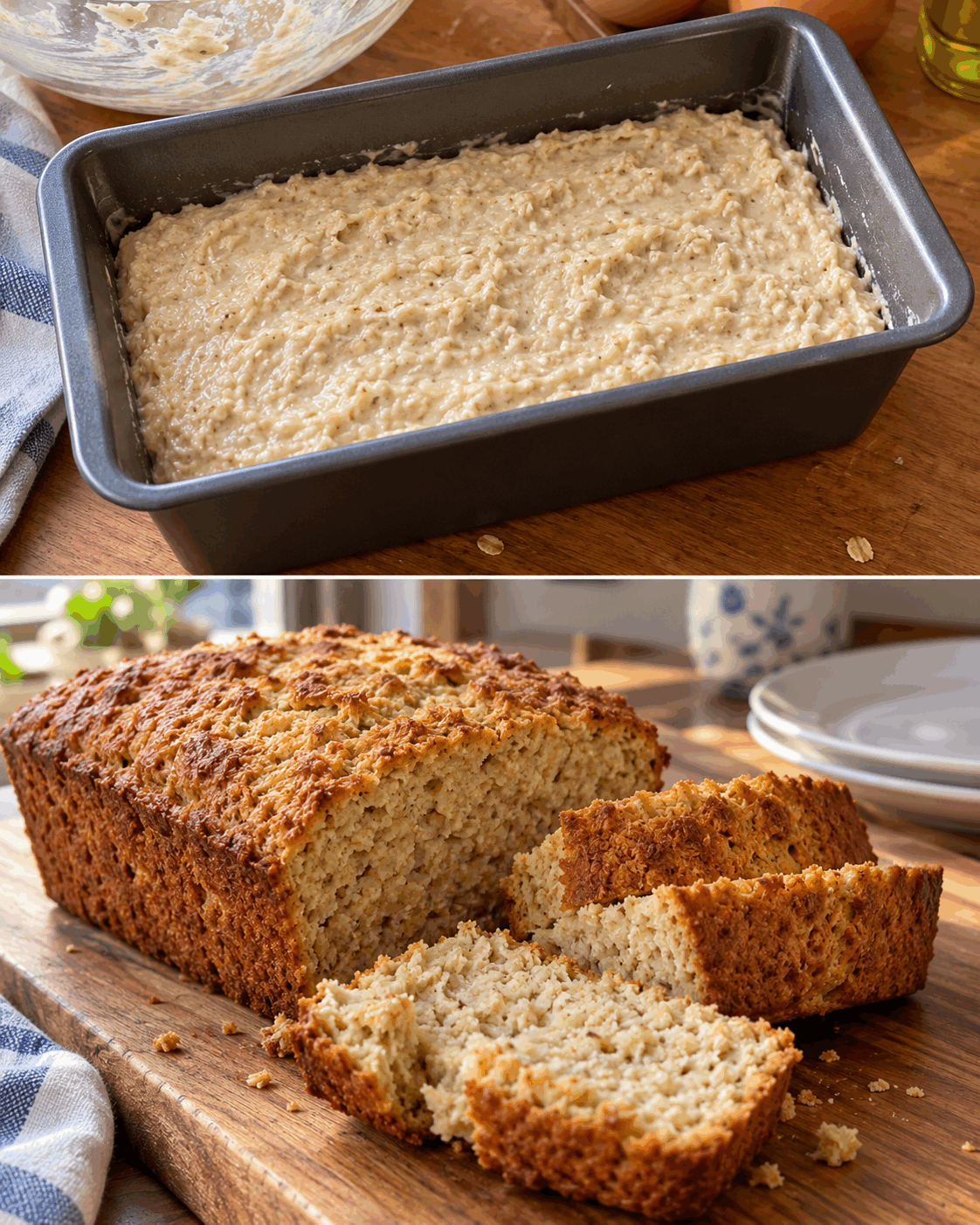
Spoon the batter into the prepared pan and smooth the top without packing it down heavily. Bake on the middle rack for 40 to 50 minutes. Look for a lightly browned surface and a skewer that comes out without wet batter; if the top colors too quickly, cover it loosely with foil.
-
Rest the baked loaf in its pan for ten minutes, then lift it carefully onto a rack. Let it cool for at least another twenty minutes before slicing, or longer for the neatest pieces. Use a gentle sawing motion with a serrated knife instead of pressing down through the tender crumb.
What makes a better loaf
Grinding the oats finely gives the loaf enough structure to slice without a gritty center. Stop the machine once you have an even meal, and scrape down any whole flakes clinging to the sides. A few visible oat flecks are fine, but large unground pockets create weak spots in the finished bread.
Cooling is part of the method, not merely a serving preference. Oat bread can feel fragile while very hot, even when it has baked through. Leave it in the pan briefly, lift it out onto a rack, and let steam escape before taking a serrated knife to the first slice.
Ways to serve and vary it
For a simple breakfast, toast a slice lightly and add plain yogurt or a thin spread of peanut butter. For lunch, try cream cheese, sliced cucumber, or an egg. The loaf is mild enough for either direction, and its compact slices suit open sandwiches better than overfilled, thick sandwich stacks.
You can fold a tablespoon of chopped chives into the basic batter for a savory version, or add a little cinnamon for a warmer breakfast flavor. Keep the first loaf plain so you learn its normal consistency. Large quantities of fruit, seeds, or cheese will change the moisture and baking time.
Keeping the loaf fresh
Once completely cool, place the loaf in a covered container and refrigerate it for up to three days. This moist, yogurt-based bread is best kept chilled rather than left on a warm counter. Slice only what you need and toast briefly if you prefer a drier surface and warmer crumb.
Freeze individual slices with parchment between them, then seal them in a freezer bag with the date written outside. Small portions thaw more conveniently than a whole frozen loaf. Warm the slices in a toaster or a moderate oven, checking them regularly because thin edges can brown faster than the center.
Frequently asked questions
Can I use regular plain yogurt?
You can try it, but regular yogurt is often thinner than Greek yogurt and may produce a wetter batter. Start without the optional water and judge the consistency after the oats have rested. Expect that the baking time may change, and always check the center before taking the loaf out.
Does no wheat flour mean no flour at all?
The loaf contains no wheat flour, but the oats are ground into a meal that functions as oat flour in the batter. That is why the title specifically says no wheat flour. If you need a gluten-free version, select certified gluten-free oats and check the labels of the remaining ingredients.
Can I make the loaf without eggs?
This particular recipe uses eggs to help bind and set the oat batter, so simply leaving them out will change the result. An egg-free loaf needs a separately balanced recipe. For this version, use the stated eggs and focus on the thickness of the yogurt and the fineness of the oats.
Why is the middle gummy?
The loaf may need more baking, or it may have been sliced while still hot. Thin yogurt and inaccurate measurements can also add extra moisture. Check for wet batter with a skewer, allow a proper cooling period, and measure the oats by weight if the problem happens repeatedly with your usual ingredients.
Give this simple loaf a full bake and enough time to cool before slicing. Keep a few slices in the freezer for mornings when breakfast needs to be ready quickly.