
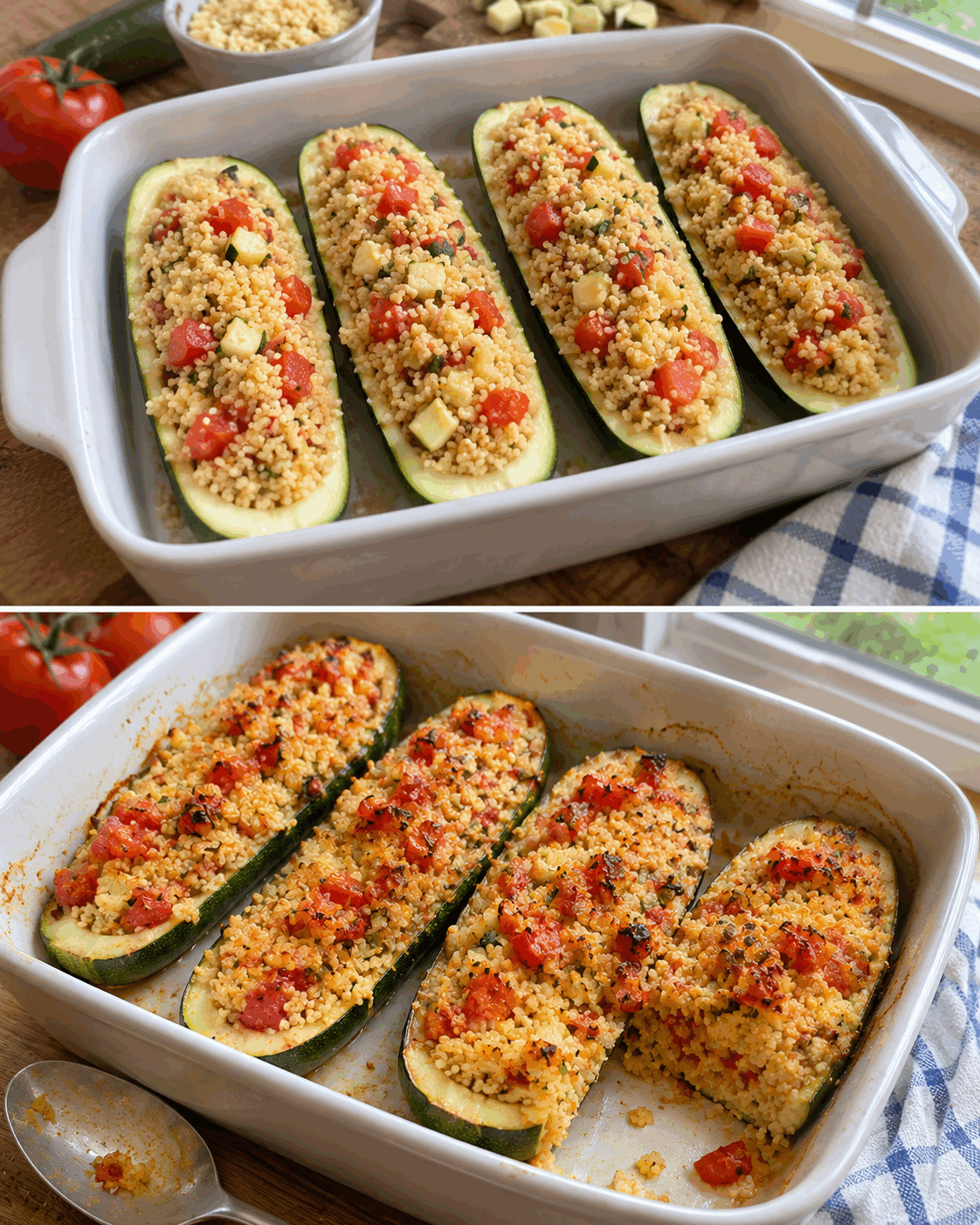
Skip the Meat! Baked Zucchini Boats with Couscous and Tomato
Zucchini, couscous and tomato make a generous meat-free filling for these oven-baked zucchini boats. The hollowed shells soften in the oven while the couscous catches the tomato juices. This is a practical dinner with recognizable vegetables, a lightly golden surface and a tender, fully cooked center.
Set out a rectangular baking dish large enough for four zucchini halves before mixing. This recipe makes 4 boats, serving 2 as a main or 4 as a side and takes 25 minutes preparation and 30–35 minutes baking. Use 375°F (190°C) in a conventional oven, remembering that individual ovens vary. The visual checks below matter more than a timer alone.
Ingredients
- 2 medium zucchini, about 600 g total
- 80 g dry quick-cooking couscous
- 100 ml boiling vegetable broth, or package-specified liquid
- 200 g ripe tomatoes, diced
- 1 small onion, about 70 g, finely chopped
- 1 garlic clove, minced
- 2 tablespoons olive oil, divided
- 1 tablespoon chopped parsley
- Half a teaspoon dried oregano
- Salt and black pepper to taste
Preparation
-
Prepare the shells
Heat the oven to 375°F (190°C). Halve the zucchini lengthwise and scoop out the centers with a teaspoon, leaving a shell about a quarter-inch thick. Chop the removed flesh finely. Brush the shells with a little of the measured oil and arrange snugly in the baking dish.
-
Hydrate the couscous
Place the dry couscous in a bowl and pour over the hot broth, following the package liquid ratio if it differs from this quantity. Cover and stand for five minutes, or as directed. Fluff with a fork until the grains separate. Do not leave a puddle of liquid under the couscous.
-
Cook the vegetables
Warm the remaining oil in a skillet over medium heat. Cook the onion for about five minutes until softened. Add the garlic and chopped zucchini flesh and cook for another five minutes, stirring. Add the tomato and oregano, then cook until loose watery juices have reduced but the vegetables are still moist.
-
Combine the filling
Fold the vegetables into the fluffed couscous and add the parsley. Taste and adjust salt and pepper, considering how salty the broth was. The filling should be juicy rather than soupy. If water collects at the bottom of the bowl, drain it before filling the zucchini shells.
-
Fill and bake
Spoon the mixture evenly into the four shells, mounding gently without packing it solid. Add two tablespoons of water to the bottom of the dish, away from the filling. Cover loosely with foil and bake for 20 minutes. Uncover and bake for another 10–15 minutes to color the top.
-
Check and serve
Pierce the thickest part of a zucchini shell with a small knife: it should enter easily. If the shells remain firm, cover again and bake a little longer. Rest five minutes, then lift out with a broad spatula. Serve with salad or another simple vegetable side, keeping the filling intact.
Tips for a reliable result
Zucchini size matters more than perfect symmetry. Thick, oversized shells need longer than slender ones, so keep the walls evenly thin. Cooking the scooped flesh before mixing prevents a watery filling. Browned edges are welcome, but do not dry out the entire filling while waiting for the shells to soften.
Measure the ingredients before starting and use the same vessel size described above. A much deeper layer takes longer to cook, while a very shallow layer dries more quickly. Make only one adjustment at a time so you can understand the effect instead of changing several proportions together.
Simple variations
Fresh basil can replace parsley, and finely diced bell pepper can be cooked with the onion for a different vegetable note. Keep tomato as part of the filling and cook away excess moisture. Couscous usually contains wheat; choose a clearly labeled alternative only if necessary and follow its own cooking directions before filling.
Storage and reheating
Cool leftovers promptly and refrigerate in a covered container for up to three days. Avoid leaving the finished food sitting out for hours. For longer storage, freeze individual portions, well wrapped, for up to one month. Label the container with the date so the oldest portions are easy to use first.
Thaw frozen portions in the refrigerator. Warm only what you intend to serve, using a moderate oven and checking the center. Covered reheating helps prevent the outside from becoming hard before the middle warms. If the food develops an unusual smell, visible mold or other signs of spoilage, discard it.
Frequently asked questions
Must the zucchini be cooked first?
Not for medium zucchini with evenly scooped shells and the covered first stage described here. The small amount of water in the dish helps soften them. If yours are unusually large or thick, give the empty shells a short initial bake and check their tenderness before adding the cooked filling.
Is couscous gluten free?
Ordinary couscous is made from wheat and contains gluten. This recipe is meat-free, but it is not presented as wheat-free or gluten-free. If cooking for someone with a dietary restriction, check the couscous and broth labels carefully and use a suitable separately cooked alternative when needed.
Why is my filling watery?
Fresh tomatoes and zucchini release water, especially when chopped. Cook the filling vegetables until loose liquid reduces before adding couscous. Do not pour extra broth into already hydrated couscous. The goal is moist, separated grains with vegetables, rather than a sauce that pools inside the zucchini shells.
Can I assemble the dish ahead?
Yes. Cool the cooked filling promptly, fill the shells and refrigerate covered for up to a day. Bake directly from the refrigerator, allowing additional time because the center starts cold. Keep the initial covered stage and check that the filling is steaming hot and the zucchini is tender before serving.
Serve after the resting time, when the texture has had a chance to settle. Keep a note of the cooking time that worked in your oven so the next batch is easier to judge.