
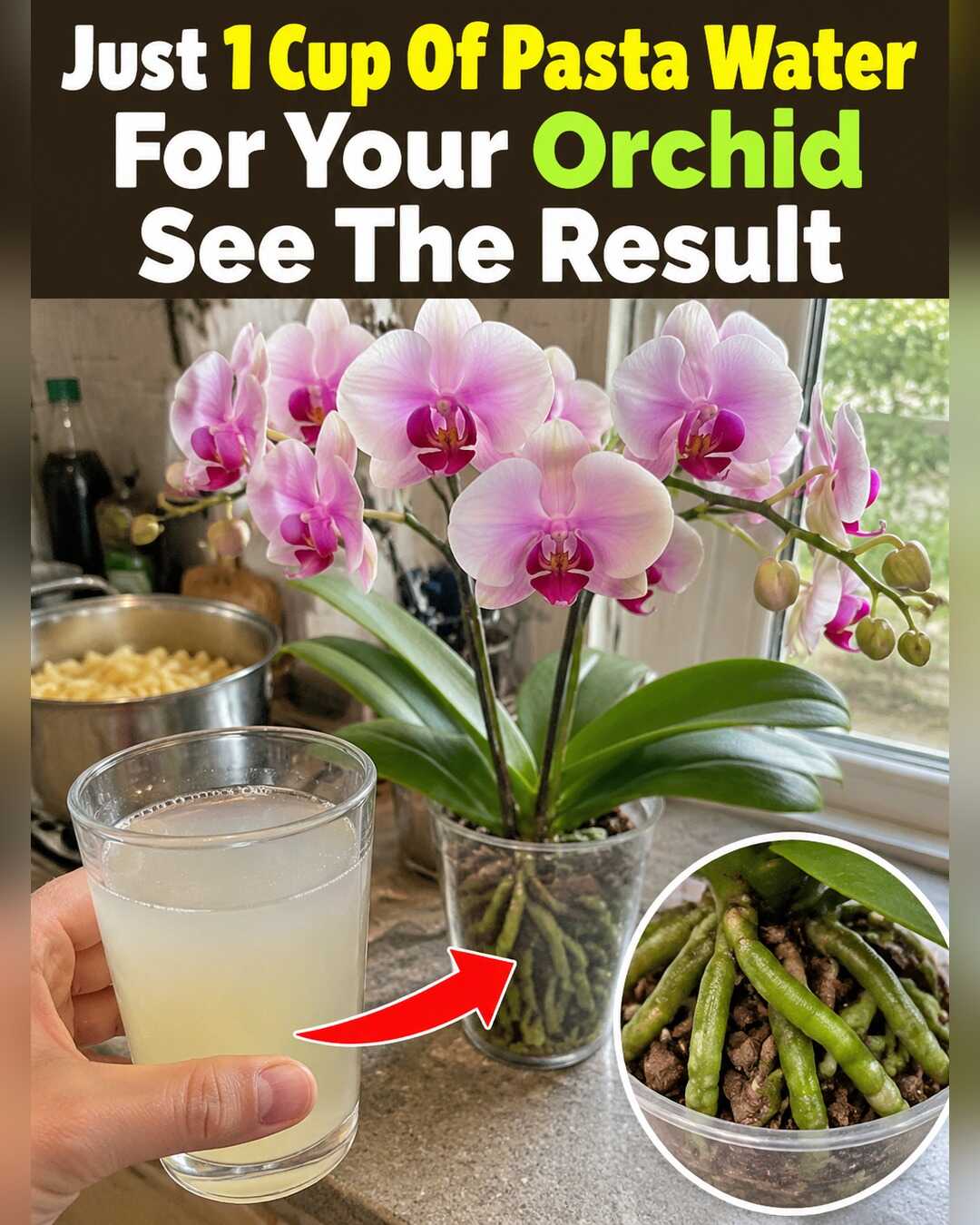
Just 1 Cup of Pasta Water for Your Orchid (See the Result)
The “this” in the title is cooled pasta cooking water: the cloudy, starchy water left in the pot after you boil pasta. Once it is completely cold, give your Phalaenopsis orchid about one cup, once every two to three weeks. Many home growers say it helps the roots stay green and the plant keep flowering. It costs nothing, and most of us pour it down the drain every week.
Phalaenopsis orchids, the popular “moth orchids” from the supermarket, have a reputation for being tricky. They bloom beautifully in the shop and then sit with bare stems for months. If that sounds like your plant, this gentle kitchen habit is worth a try. Below you will find what you need, the exact method, why it may help, the mistakes to avoid and a short FAQ.
What you need
- A pot of water in which you have just boiled plain pasta, with no salt, oil or sauce
- A clean jug or glass, big enough for one cup (about 240 ml)
- Patience: the water must be fully cold before it goes near the plant
- A Phalaenopsis orchid in a pot with drainage holes, ideally in bark mix
Step by step: how to use it
- Boil the pasta in unsalted water. Salt is bad for orchid roots. If you always salt your pasta water, skip this tip and use plain water or rinse water from rice instead.
- Take out the pasta and let the water cool. Leave it on the counter until it feels cold to the touch. Warm water can damage the roots.
- Dilute it if it is very cloudy. Mix half pasta water and half plain water. A thick, starchy liquid can leave a sticky film on bark and roots.
- Measure one cup. Pour it into a clean glass.
- Water the roots, not the crown. Pour slowly over the bark and let it run out of the drainage holes. Never leave water sitting in the center of the leaves.
- Let it drain fully. Empty the saucer or decorative pot after 10 minutes. Orchid roots hate sitting in water.
- Repeat every two to three weeks, and water with plain water in between.
Always use the water the same day. Starchy water left standing can spoil and smell.
Why it may help
Pasta water contains a little starch and trace minerals from the pasta. Gardeners say the weak, cooled liquid gives the bark mix a mild boost. The amount is small, so think of it as a gentle, free extra and not as a fertilizer. Here is why people like it:
- Gentle. Orchid roots are sensitive and prefer weak solutions.
- Free and easy. It uses water you would otherwise pour away.
- Good habit. A regular routine makes you look at the roots and leaves more often, which helps you spot problems early.
To be honest, pasta water is not magic. It will not make an orchid bloom in a dark corner. Think of it as a small extra on top of good basic care: bright light, the right watering and the right pot.
The basics that matter even more
If your orchid still has bare stems after a few months, check these things before changing anything else:
- Light. Orchids need bright, indirect light, such as an east window. Dark green leaves usually mean too little light.
- Night temperature. A drop of 3 to 5 degrees at night in autumn helps trigger new flower spikes.
- Roots. Healthy roots are silvery-green when dry and bright green after watering. Brown, mushy roots mean overwatering.
- Bark mix. Use orchid bark, not regular potting soil. Repot every two years as the bark breaks down.
- Old spikes. Cut the stem just above a node, the small bump on the stem, to encourage a side branch with new flowers.
Common mistakes to avoid
- Using salted water. Salt dries out roots. Never use salted pasta water.
- Using oily or sauced water. Oil coats the roots and stops them breathing.
- Using warm water. Always wait until it is cold or at room temperature.
- Pouring into the crown. Water trapped between the leaves can cause rot.
- Doing it too often. Every two to three weeks is enough.
- Storing the water. Starch spoils fast. Use it the same day.
Bonus tips for more flowers
- Use a clear pot so you can see the roots and know when to water.
- Soak the pot in plain water for 10 minutes once a week instead of watering a little every day.
- Do not mist the leaves. Water trapped in the crown causes rot.
- Keep it away from fruit bowls. Ripening fruit gives off a gas that makes orchid buds drop.
- Wipe the leaves with a damp cloth to remove dust and help the plant catch light.
How to read your orchid’s roots
The roots tell you more than the leaves, so it is worth learning to read them. This is especially useful if you use a clear pot, which lets you see every root.
- Silvery-green and firm: the root is dry and healthy. It is time to water.
- Bright green: the root has just been watered. Do not water again yet.
- Brown, soft or papery: the root is dead, usually from too much water. Trim it with clean scissors.
- Green tips growing outward: new growth. This is a very good sign.
Check the roots once a week while you hold the pot to the light. A few minutes of looking will tell you when to water, when to wait and when to repot. Healthy roots are the foundation of every new flower spike, so this habit is worth more than any special water.
Frequently asked questions
Can I use pasta water that was salted?
No. Salt builds up around orchid roots and can burn them. If your pasta water was salted, pour it away and use plain water. Only unsalted pasta water is suitable for this tip.
How often can I give my orchid pasta water?
Once every two to three weeks is a safe rhythm. Between those days, water with plain, room-temperature water. More often can leave a starchy film on the bark and the roots.
Should I dilute the pasta water?
If it is very cloudy and thick, yes. Mix it half and half with plain water. A light cloudy water is fine as it is, but thick starch can make the bark slimy.
Will it make my orchid flower again?
It may give a small boost, but light and temperature are the real triggers. A bright spot and a cooler night in autumn do far more than any water, so combine the tip with those basics.
Why are the roots of my orchid turning brown?
Brown, soft roots usually mean overwatering or old bark. Cut off the rotten roots with clean scissors, repot in fresh bark and water only when the roots look silvery.
Is it safe around pets?
Phalaenopsis orchids are considered non-toxic to cats and dogs, and plain pasta water is harmless. Keep the plant out of reach of pets that like to chew leaves.
Final thoughts
A cup of cooled, unsalted pasta water every few weeks is an easy habit that costs nothing and takes two minutes. It gives you a reason to check your orchid’s roots regularly. Combine it with bright light, a cooler night and careful watering, give it a couple of months, and then come back and tell us how your orchid is doing.