
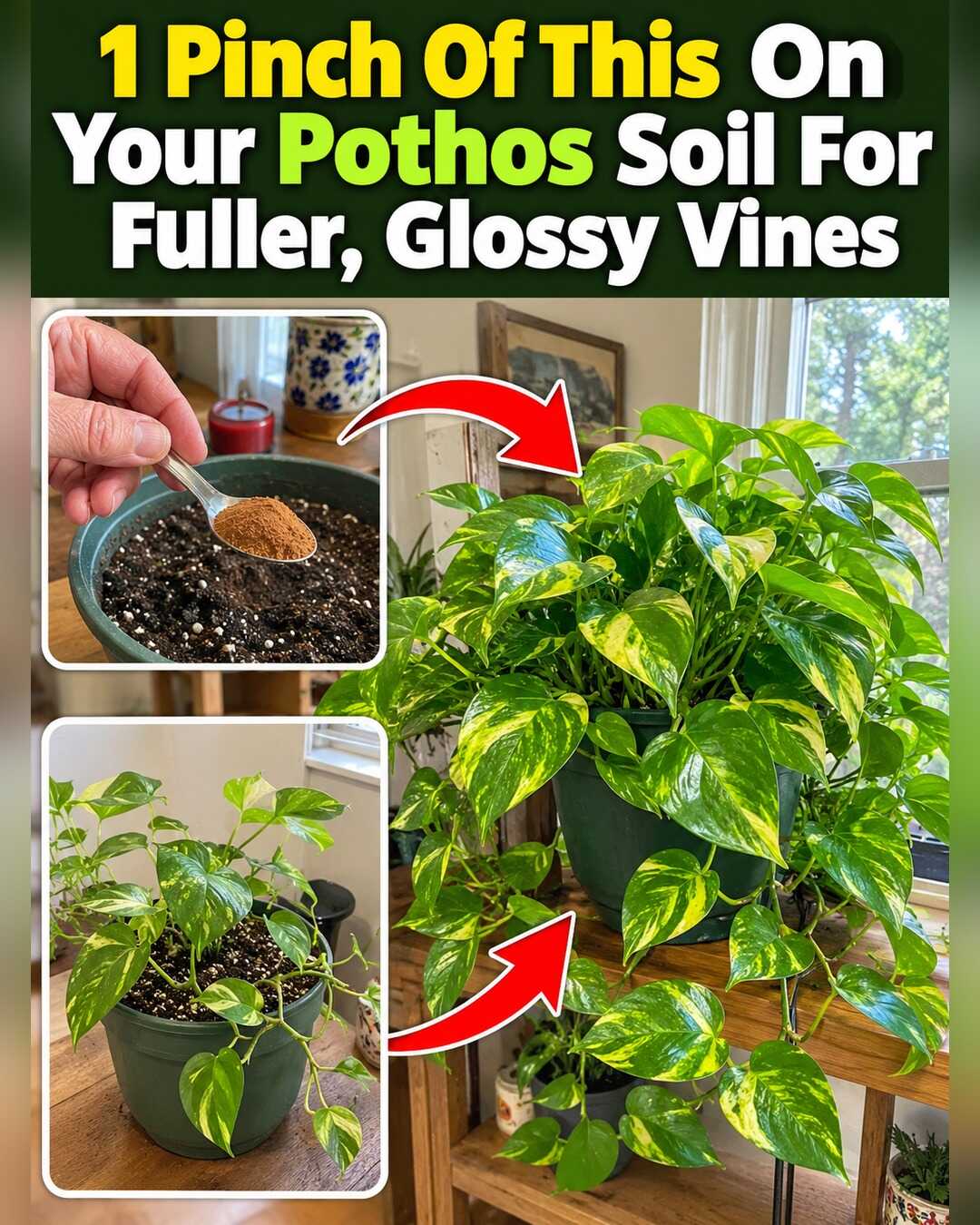
1 Pinch of This on Your Pothos Soil and the Vines Get Fuller and Glossier
The thing to sprinkle on your pothos soil is ground cinnamon. Just one small pinch, the kind you would add to a bowl of oatmeal, scattered on top of the soil once a month. Many home gardeners use it as a gentle, old-fashioned helper for fuller vines and glossy leaves.
Pothos is one of the easiest houseplants there is, but in the shorter days of fall and winter it can get leggy, with long bare stems and small, dull leaves. A little care at the soil level can make a real difference, and cinnamon is a simple place to start.
What you need
- 1 pinch of ground cinnamon (about 1/4 teaspoon), plain, from your kitchen cabinet
- A pothos in a pot with drainage holes
- A spot with bright, indirect light
- A small spoon or your fingers
- Room-temperature water
The method, step by step
-
Check the soil first. Push a finger about an inch into the potting mix. If it feels dry, the plant is ready for a drink. If it is still wet, wait a day or two before you do anything.
-
Remove dead leaves. Pick off any yellow or crispy leaves and clear loose debris from the top of the soil. A clean surface lets you see what is going on and keeps pests away.
-
Sprinkle the pinch. Hold the cinnamon a few inches above the pot and let a very thin layer fall on the soil, around the edge and away from the stems. One pinch is plenty for a pot up to 8 inches wide.
-
Water as usual. Water slowly until a little drains out of the bottom. This helps the cinnamon settle into the top of the soil instead of sitting in a pile.
-
Repeat once a month. Mark your calendar. More is not better here. A light touch once every four weeks is enough, and you can skip it if the soil stays damp for long periods.
Why people use cinnamon on houseplants
Cinnamon has natural properties that gardeners have long appreciated. It is often used to dust the top of the soil because it can help discourage the mold and fungus gnats that love damp potting mix. A cleaner, drier surface means healthier roots.
Healthy roots are the real secret to full vines. When the roots are not stressed by soggy soil, the plant can put its energy into new leaves and longer, thicker growth. Cinnamon is not a fertilizer, so think of it as a helper, not a miracle.
Gardeners also report that dusting a cut stem with a tiny bit of cinnamon helps it heal when they take cuttings. That is another way people use the same spice around a pothos.
What to expect
Do not expect a change overnight. Most people notice results over four to eight weeks: fewer gnats, firmer stems, and new leaves coming in a bit larger and shinier. Results depend on light, watering, and the season.
For the best look, pair the cinnamon with a few basic habits. Give the plant bright, indirect light, and rotate the pot a quarter turn each week so it grows evenly rather than leaning toward the window.
Mistakes to avoid
- Using too much. A thick layer can crust over and keep water from soaking in. A very thin dusting is all you need.
- Piling it against the stems. Keep the cinnamon on the soil, not on the stems or leaves.
- Overwatering. Pothos hates wet feet. Let the top inch of soil dry between waterings, especially in winter.
- Using cinnamon oil or flavored mixes. Only plain ground cinnamon. Never cinnamon sugar or essential oil.
- Keeping the pot in a dark corner. Pothos tolerates low light, but fuller vines need brighter spots.
Bonus tips for fuller vines
Pinch back the tips. When a vine gets long and bare, snip it just above a leaf. The plant will branch out from that point, which makes it fuller within weeks.
Root the cuttings in water, then plant them back into the same pot. This is the fastest way to turn a thin plant into a thick one. A few cuttings tucked around the edge fill the gaps beautifully.
Wipe the leaves. Dust blocks light. A damp cloth every couple of weeks makes the leaves look glossier right away, with no products needed.
Feed lightly in spring and summer with a diluted houseplant fertilizer. In winter, hold off. The plant is resting and does not need extra food.
Frequently asked questions
Is cinnamon safe for pothos?
In a very small amount on the soil, yes. Gardeners have used a pinch for years without problems. Keep it light, keep it off the stems, and never use cinnamon oil or mixes with sugar. If you notice any leaf damage, stop using it.
How often should I add cinnamon?
Once a month is plenty. The goal is a thin dusting on the soil surface, not a regular feeding. If the soil is staying wet or you see mold, you can add a little more often, but never more than every two weeks.
Does cinnamon replace fertilizer?
No. Cinnamon is not a nutrient source. It is a simple soil helper. For lush growth, your pothos still needs good light, proper watering, and an occasional light feeding during the growing season.
Is cinnamon safe around pets?
Ground cinnamon in a tiny amount is not considered toxic to cats and dogs, but pothos itself is toxic if chewed. Keep the plant out of reach of pets and small children, whether or not you use cinnamon.
Why are my pothos vines so thin and bare?
Usually it is not enough light. When pothos stretches toward a window, the gaps between leaves get longer. Move it to a brighter spot, prune the long vines, and the plant will thicken up over time.
Can I use cinnamon on other houseplants?
Yes, many people dust a pinch on the soil of philodendron, monstera, and other tropical plants the same way. Always start with a small amount and watch how the plant responds.
A pinch of cinnamon, a little patience, and a bright window are a simple recipe for a pothos that looks fuller and shinier. Try it this month and see what your vines do.