
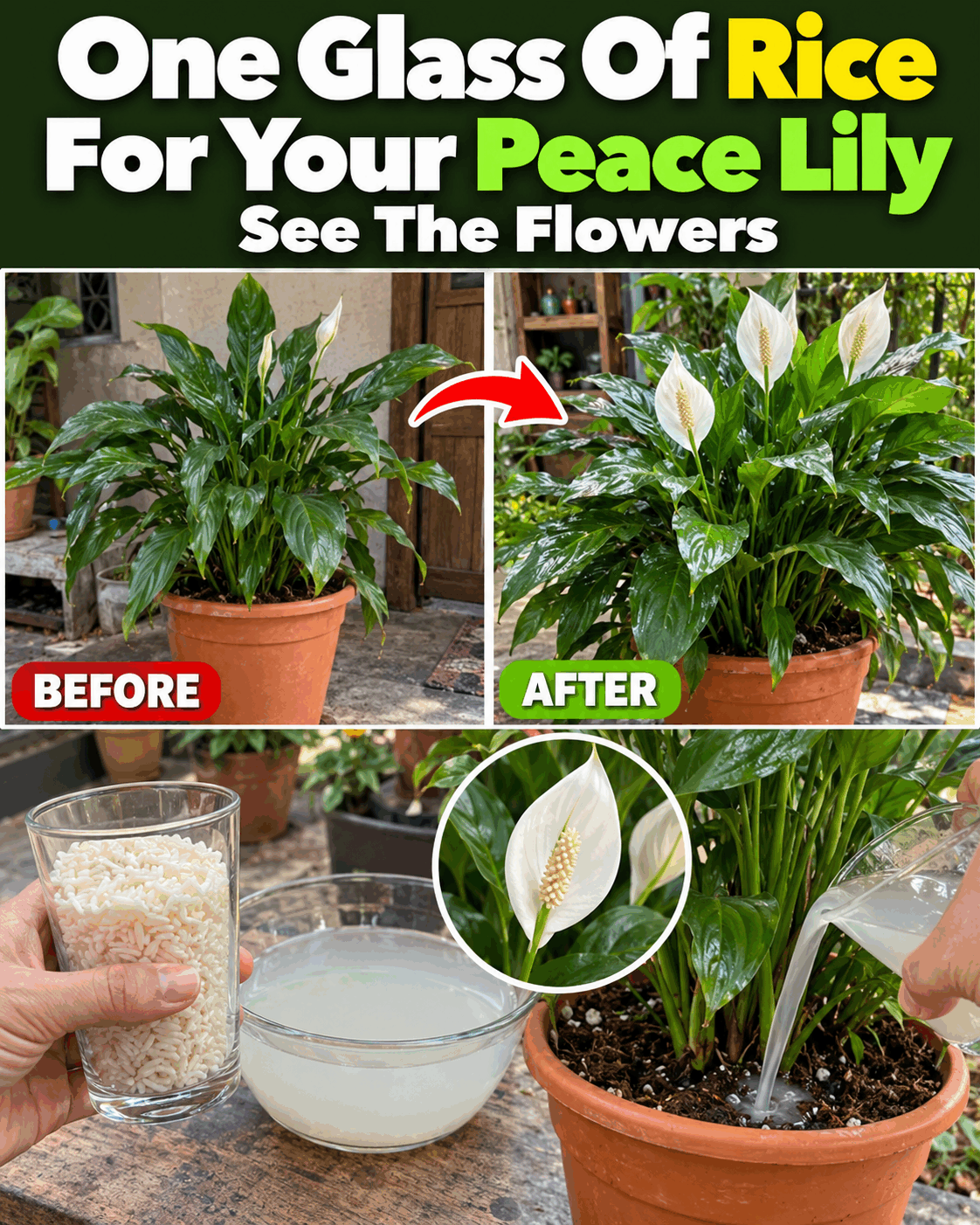
Just One Glass of Rice for Your Peace Lily: See Its Next Flowers
Rice is the household ingredient used here for your peace lily. Rice is the ingredient behind the glass in this household method. The rice itself stays out of the pot: a little fresh rinse water is used in a measured, diluted routine intended to accompany the peace lily’s growth and future flowers.
The important part is keeping the application small, freshly prepared and appropriate to a healthy plant, with a clear order that is easy to repeat without adding several remedies at once.
Start with one established peace lily, rather than a recently repotted or struggling specimen. This guide explains the amount, timing and handling, then shows what to observe afterward. The visible result develops alongside normal light, drainage and suitable watering; no household ingredient can promise a fixed flowering date or rescue damaged roots by itself.
What you need
- Fresh plain rice, with no seasoning or additives
- A clean glass, teaspoon and measuring jug
- Room-temperature water
- A fine strainer and a clean soft cloth
- A healthy established peace lily in a pot with drainage
- A saucer you can empty and a note of the application date
Check the plant before starting
A peace lily needs a draining pot and a mix that stays lightly moist without becoming waterlogged. Keep all rice grains out of the root zone. A glass describes how the rice is measured for rinsing, not how much concentrated rinse should be poured into the pot.
Look at the whole plant in ordinary daylight. Lift the pot to judge whether it feels unexpectedly heavy, check underneath for standing water and examine an older leaf for sticky residue or insects. If the plant smells sour, has soft black roots or is collapsing, deal with that problem first instead of adding another preparation.
Keep the working space simple. Set the plant on a stable tray away from food preparation, pets and small children. Use a clean container that has not held cleaning products. Wash your hands before touching the plant, and keep the household ingredient separate from any fertilizer, pesticide or other home mixture.
The method, step by step
-
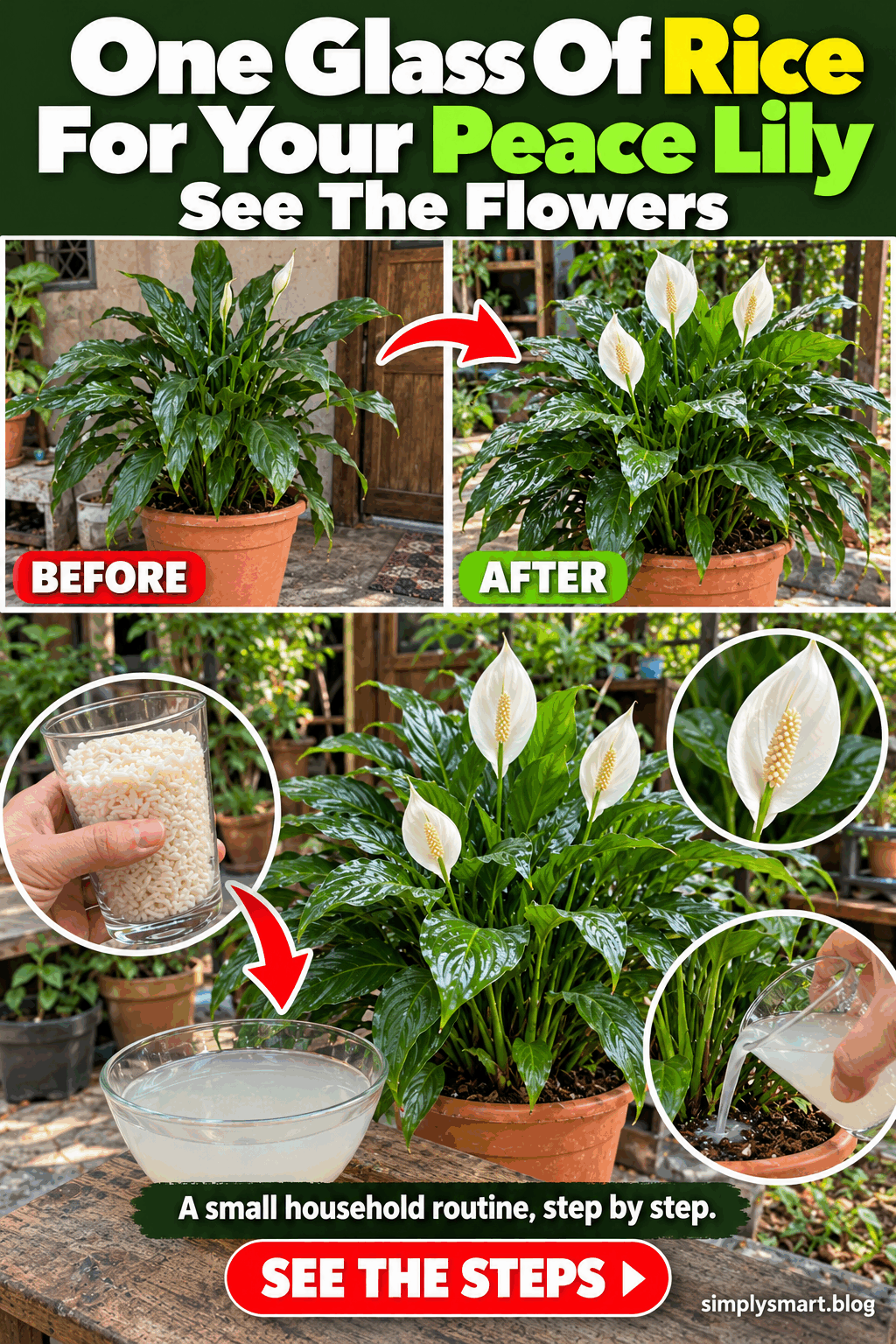
Place one glass of ordinary uncooked rice in a clean bowl and add enough room-temperature water to cover it. Swirl briefly with clean hands, strain off the first rinse and keep the rice for cooking. Mix one tablespoon of the freshly collected rinse into 500 ml of water.
Apply 50 ml at the edge of a medium established pot, no more than once a month during active growth, replacing that amount of normal watering.
-
Make only the small amount needed for this session. There is no advantage to preparing a large jar for future weeks. Keep utensils clean, do not add sugar, salt, soap or oil, and do not ferment the mixture. Fresh preparation keeps the method predictable and avoids leaving decomposing food around an indoor pot.
-
Work slowly and keep the rest of the plant undisturbed. There is no reason to pull roots out, loosen the whole root ball or move the plant into a larger container for this routine. Keep any liquid away from furniture, wipe accidental splashes and make sure drainage openings remain free.
-
Finish by removing leftover material from the working area. Empty the saucer after a root-zone application; after a leaf treatment, check that the surface has no visible film. Put the plant back in its usual suitable position, rather than moving it into direct sunshine to make the result happen faster.
-
Record the date and the amount: 50 ml of the final diluted rice rinse. A quick photograph in the same light is useful. You will be able to compare the plant fairly instead of relying on the impression that one leaf looks greener because the room is brighter or the surface is still wet.
Why the small amount matters
Rice is the ingredient behind the glass in this household method. The rice itself stays out of the pot: a little fresh rinse water is used in a measured, diluted routine intended to accompany the peace lily’s growth and future flowers.
A measured household routine is easiest to manage when it remains a minor part of normal care. Adding more liquid or leaving food fragments in a pot can change moisture and cleanliness. Using several ingredients together also makes it impossible to tell which change affected the plant, so keep this session to the single element described here.
Use the preparation no more than once a month during active growth, rather than every time you walk past the plant. This is a conservative household trial, not a complete fertilizer program. If the plant is resting, the room is cold or growth has stopped, wait until its normal conditions improve rather than doubling the amount.
What to watch afterward
Notice new leaves opening, a firm upright plant after normal watering and the gradual appearance of a pale flower stem. Existing flowers turn green as they age; that change alone does not mean the routine has failed.
Compare the same leaves and the same growing point over time. Take photographs from a similar distance and avoid judging colour under different lamps. A firm plant with stable leaves is more useful information than a single dramatic picture. Note any unusual mark, odour or persistent wetness so you can stop promptly and reassess the routine.
Mistakes to avoid
- Do not use concentrated, hot, salted or sweetened preparations.
- Do not combine several household remedies in one session.
- Do not leave food pieces, pulp or a sticky film behind.
- Do not treat a damaged, newly divided or freshly repotted plant.
- Do not repeat early simply because the visible result is slow.
Keep a particularly close eye on moisture after any root-zone routine. Water already held in the pot still counts, even if the new liquid is called an infusion. A decorative cover pot can hide a pool underneath, so lift the inner pot and empty the outer one. Never let the base sit continuously in discarded drainage water.
Small habits that make the routine easier
Choose a regular observation day rather than a rigid extra-watering day. First inspect the plant, then decide whether conditions suit the method. Keep a dedicated teaspoon and write the dilution beside the application date. That small record prevents a second person in the household from repeating the treatment the next morning.
Keep the plant close to the light level it already tolerates. Rotate the pot gently if needed for even growth, but avoid changing the mixture, position and container all at once. A stable setup lets you see gradual changes and keeps the experiment manageable without turning every new leaf into a reason for another intervention.
Frequently asked questions
Can I use more for a faster result?
Stay with 50 ml of the final diluted rice rinse. A larger amount does not make a household routine more effective and can leave excess moisture or residue. Keep the interval described above, watch the plant and stop if anything unusual develops. The purpose is a controlled small application, not a strong treatment.
Should I keep the leftovers for next month?
No. Prepare a fresh small portion for each session and discard the unused liquid or food fragment after use. A jar stored for weeks can change smell and cleanliness. Clean and dry the container before putting it away, and keep the plant routine separate from food storage.
Can I combine this with another homemade mixture?
Use one routine at a time. Combining several household ingredients changes the concentration and makes any reaction hard to interpret. Keep ordinary watering separate in your notes and follow any purchased product’s label independently. Do not mix a home preparation into a fertilizer or pesticide container.
When should I stop?
Stop if leaves develop unusual marks, the pot remains wet longer than normal, an unpleasant smell appears or the plant loses firmness. Remove any remaining surface residue with plain water where appropriate and inspect drainage. Repeating the mixture is not a way to diagnose an unhealthy plant.
Can I use the same method on every houseplant?
This guide is written for an established peace lily. Hairy leaves, succulents, seedlings and recently repotted plants can need different handling. Do not apply the routine automatically to the rest of a collection. Start with the small test described and keep each plant’s response in its own notes.
Keep the rice routine small, fresh and easy to track, with peace lily handling suited to the plant. Let ordinary care do its steady work while you watch the visible result without increasing the dose.