
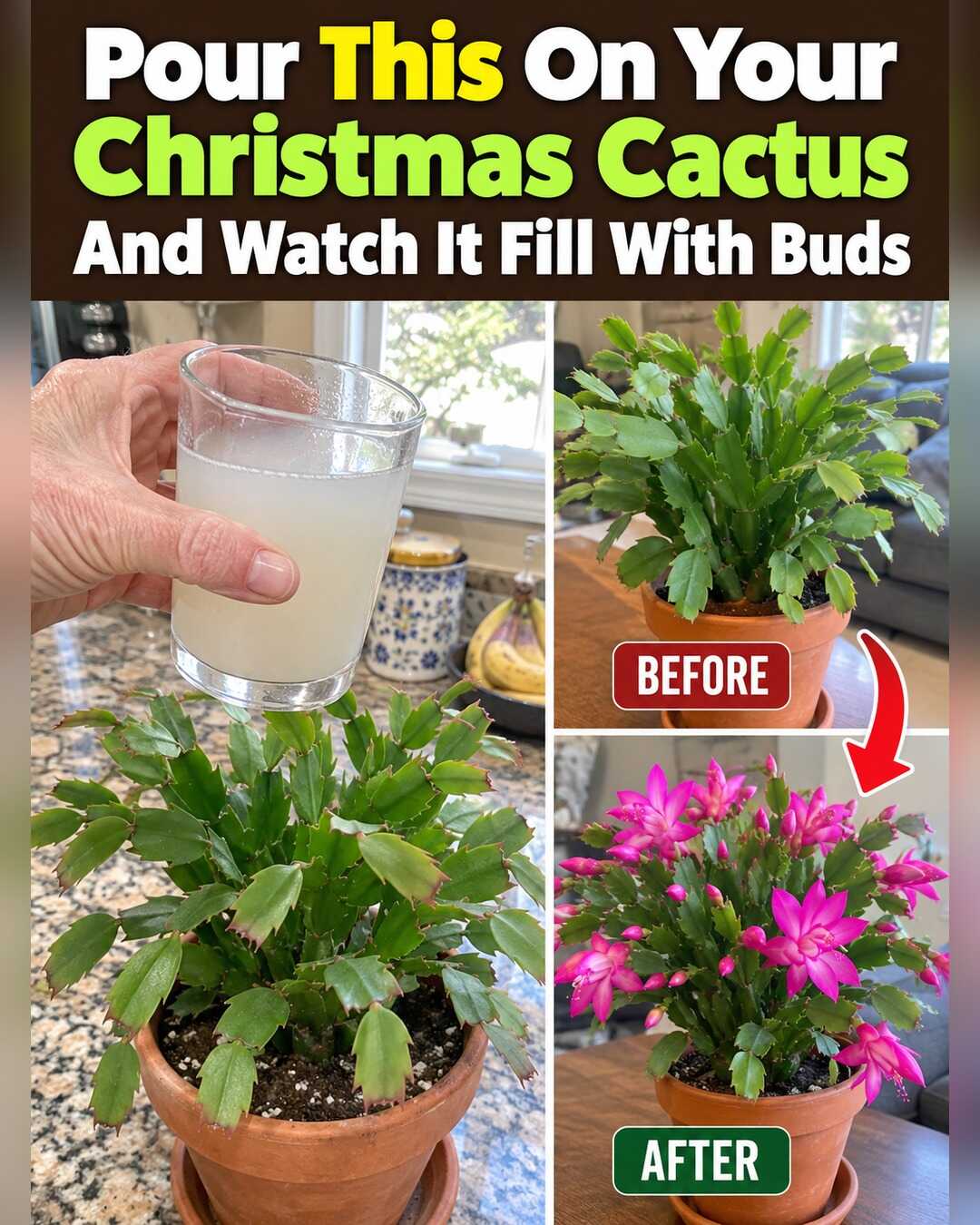
Pour THIS on Your Christmas Cactus and Watch It Fill With Buds
The secret is rice water, the cloudy water left over when you rinse rice before cooking. Instead of pouring it down the drain, many home gardeners save a cup of it for their Christmas cactus. Given once a month in the fall, it is an old-fashioned trick to help the plant fill with buds in time for the holidays.
November is the perfect time to start. In this article, you will learn how to make rice water the right way, how much to use, how often, and the simple care steps that help a Christmas cactus bloom.
What You Need
- 1/2 cup of uncooked white rice
- 2 cups of room-temperature water
- A bowl and a fine strainer
- A jar or a cup
- Your Christmas cactus in a pot with drainage holes
The Method, Step by Step
- Rinse the rice. Put the rice in a bowl and pour the 2 cups of water over it. Swish it around with your fingers for one minute. The water will turn milky white.
- Strain it. Pour the cloudy water through a strainer into a jar. Cook the rice for dinner as usual.
- Use plain rinse water only. Do not use water from cooking rice with salt, butter or oil. Plain, cold rinse water is what you want.
- Dilute it. Mix 1 cup of rice water with 1 cup of plain water.
- Water the soil when it is dry. Check the soil with your finger. When the top inch is dry, slowly pour the diluted rice water around the base of the plant until it starts to drain from the bottom.
- Empty the saucer. After 15 minutes, pour out any water in the saucer. Christmas cactus roots don’t like to sit in water.
- Once a month. Use rice water once a month in the fall and spring. Water with plain water the rest of the time.
Why It Works
When you rinse rice, a little starch and small amounts of nutrients wash off into the water. This gentle mix feeds the tiny living things in the soil, which helps keep it loose and healthy around the roots.
It is very mild, so it won’t burn the roots like too much fertilizer can. Gardeners who use it once a month, along with the right light and cool nights, often see their Christmas cactus covered in pink, red or white buds by December.
The Real Bloom Secret: Cool Nights and Long Darkness
A Christmas cactus sets buds when nights are long and cool. From mid-October to late November, give it 12 to 14 hours of darkness each night and temperatures around 55 to 65°F. A spare bedroom or a cool windowsill away from lamps works well. Once you see buds, you can move it back to your living room.
Mistakes to Avoid
- Using salted cooking water. Salt harms the roots. Only plain rinse water.
- Letting rice water sit for days. It turns sour. Use it the same day, or keep it in the fridge for one day at most.
- Overwatering. Soggy soil is the fastest way to lose a Christmas cactus.
- Moving the plant once it has buds. Sudden changes in light or temperature can make the buds drop.
- Placing it near a heater. Hot, dry air makes buds fall off before they open.
Bonus Tips
Bright, indirect light: an east-facing window is perfect. Avoid hot afternoon sun.
A little humidity: set the pot on a tray of pebbles with a bit of water, without the pot touching the water.
Snug pots: Christmas cactus blooms best when slightly root-bound. Repot only every few years, in spring.
Share the love: after blooming, pinch off a few segments and root them in moist soil. They make lovely gifts for family.
A Simple Fall Schedule
Here is an easy plan to follow. Early October: move your Christmas cactus to a cool room with long nights. Mid-October: give it its first cup of diluted rice water. Mid-November: give the second one, and look for tiny buds at the tips of the segments. Early December: once the buds are plump, bring the plant to the spot where you want to enjoy it, and keep it there.
Write the dates on your kitchen calendar so you don’t have to remember them. It is a fun little project to share with grandchildren, too.
Signs of a Healthy Christmas Cactus
A healthy Christmas cactus has firm, plump, green segments. In bright light, the edges may turn a little reddish, which is normal. Limp, wrinkled segments usually mean the plant is either too dry or the roots have been sitting in water for too long.
Look at the soil before you water. If it is still damp, wait. If it is dry an inch down, water thoroughly. Getting this right matters more than any trick, and it keeps your plant blooming for years. Many families pass the same Christmas cactus down for generations.
Our Honest Advice
Rice water is a gentle, free little boost, and it’s fun to try. But the real secret to a Christmas cactus covered in flowers is still the basics: long, cool nights in the fall, bright indirect light, and careful watering. When those are right, the rice water is the cherry on top. Many readers tell us the best part is simply paying a little more attention to their plant each week.
Frequently Asked Questions
Can I use brown rice?
Yes, rinse water from brown rice works the same way. It may be a little less cloudy. Just make sure it is plain rinse water, without salt, oil or seasoning. The amount and the once-a-month rule stay the same.
When will I see buds?
If you give your plant long, cool nights starting in October, buds usually appear in November, and flowers open in December. If you start a little later, it may bloom closer to the New Year. Every plant is a bit different, so be patient.
Why are the buds falling off my Christmas cactus?
Bud drop usually comes from a sudden change: moving the plant, a cold draft, heat from a radiator, or soil that is too wet or too dry. Once buds form, keep the plant in one spot and water it evenly.
Can I use rice water on my other plants?
Many people use diluted rice water on African violets, peace lilies, pothos and herbs. Use the same mix, once a month. Skip it for desert cacti and succulents, which prefer very little feeding and dry soil.
Is it a Christmas cactus or a Thanksgiving cactus?
They look very similar. A Thanksgiving cactus has pointed, claw-like edges on its leaf segments, while a Christmas cactus has smoother, rounded edges. Both love the same care, and this rice water trick works for both.
Should I fertilize my Christmas cactus too?
In spring and summer, a balanced houseplant fertilizer at half strength once a month is helpful. Stop fertilizing in early fall when you start the cool, dark nights. During this time, the monthly cup of diluted rice water is a gentle option that won’t push leafy growth instead of buds.
Final Thoughts
A cup of rice water, cool nights and a little patience: your Christmas cactus could be your holiday centerpiece this year. Try it this week and show us your blooms!