
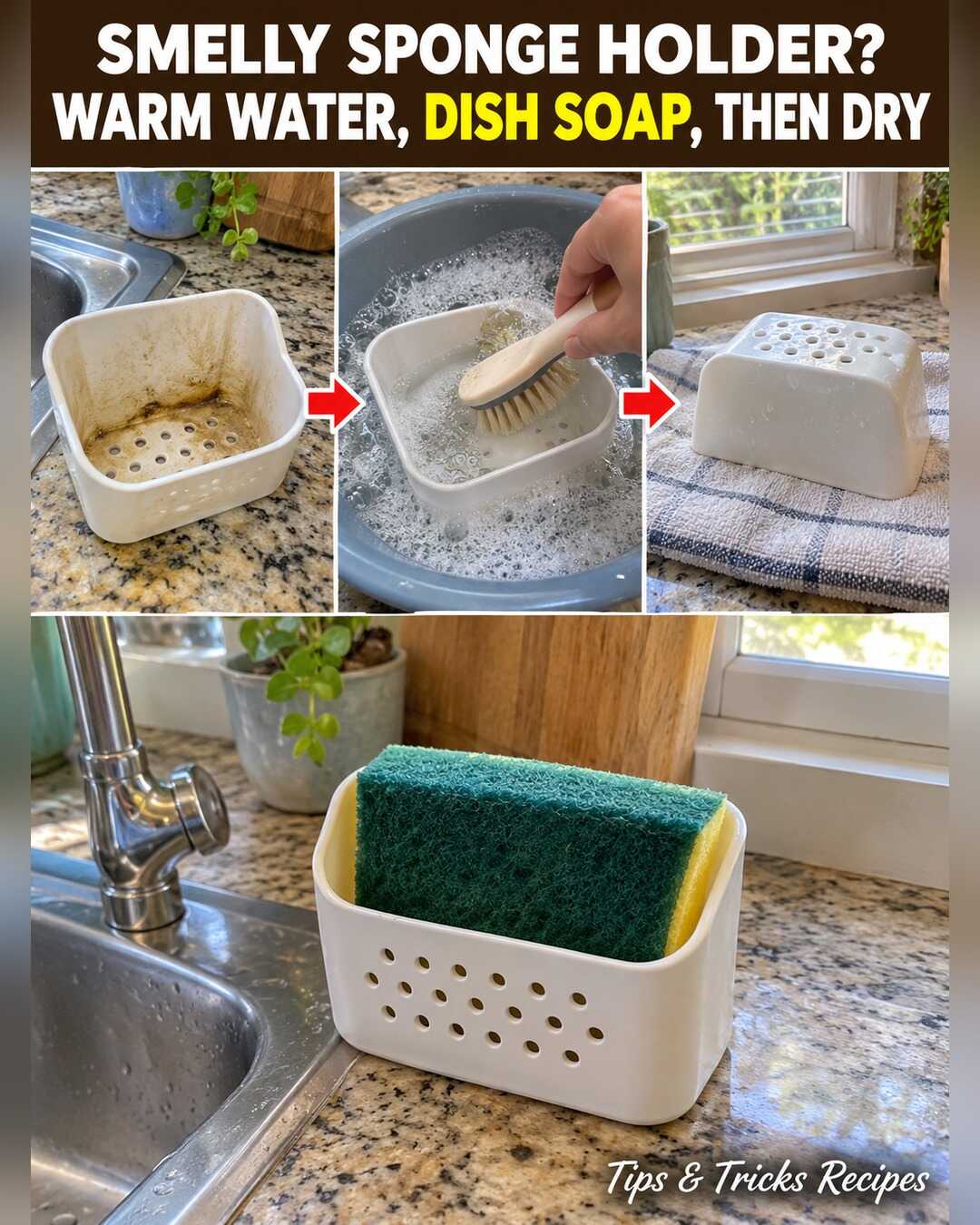
Smelly Kitchen Sponge Holder? Warm Water and Dish Soap, Then Dry, Makes It Fresh
You reach for the sponge and catch a whiff of something sour. Nine times out of ten, the sponge is not the only culprit. The holder underneath it is sitting in a film of soap, food bits, and trapped moisture, and it quietly smells up the whole sink area.
Here is the simple fix: warm water, a little dish soap, and a thorough drying. It takes about ten minutes, costs almost nothing, and gives you a fresh, clean sponge holder again. Below you will find the exact steps, what to avoid, and how to stop the smell from coming back.
What you need
- Warm water (comfortably warm to the hand, not scalding)
- Regular dish soap, a teaspoon or two
- A small basin, or just your sink with the plug in
- An old dish brush or toothbrush for corners and drainage holes
- A clean dish towel
- A dry spot with good airflow, such as near a window
Step by step: how to clean a smelly kitchen sponge holder
-
Take out the sponge. Set it aside. If the sponge itself smells strongly or is falling apart, now is a good time to replace it. A fresh holder with an old sponge will smell bad again fast.
-
Empty the holder. Pour out any standing water and tip out crumbs, slime, or bits of food stuck in the bottom.
-
Fill a basin with warm water and dish soap. Stir until you have a good layer of suds. The soap lifts grease, and warm water softens the dried-on residue.
-
Soak for 5 minutes. Submerge the holder or at least let the stained parts sit in the suds. Brown rings and sticky patches loosen quickly this way.
-
Scrub every corner. Use the brush on the bottom, the sides, and especially the drainage holes. Odors hide where water collects, so be thorough here.
-
Rinse with clean warm water. Make sure no soap film remains, since leftover suds can feel slippery and attract more grime.
-
Dry completely. This is the most important step. Turn the holder upside down on a clean towel, ideally by a window, and let it air-dry until it feels dry to the touch. A damp holder is what brings the smell back.
Why this simple method works
Sponge holders get smelly because moisture and leftover food particles collect at the bottom. Bacteria and mildew feed on that mix, and the smell that comes from them is what you notice at the sink.
Dish soap breaks down the greasy film, and warm water carries it away. Drying then removes the one thing germs and mold need to keep growing: lasting dampness. Cleaning without drying only solves half the problem.
Mistakes to avoid
- Putting a wet sponge straight back. Squeeze it out well and let the holder dry first.
- Leaving water to stand. Pour it out after each use, or choose a holder with drainage holes.
- Using boiling water on plastic. Very hot water can warp or crack some plastic holders.
- Skipping the drainage holes. Residue builds up in those small openings first.
- Mixing cleaning products. Dish soap and warm water are enough. Never combine bleach with other cleaners.
Bonus tips for a fresher sink area
- Choose a holder that lifts the sponge off the surface so air can circulate underneath.
- Squeeze the sponge firmly after each use, then stand it on its edge.
- Wipe the holder with a soapy cloth every few days between deep cleans.
- Many dishwasher-safe holders can go on the top rack once a week.
- Replace kitchen sponges every one to two weeks, or sooner if they smell.
How often should you clean it?
For most kitchens, a quick wash once a week is enough to keep odors away. If you cook a lot and the sponge is in constant use, twice a week is better. A quick rinse and wipe on the other days only takes seconds.
If the holder still smells after a good wash and full drying, check for cracks or deep stains. Plastic can hold on to smells over time, and a new holder costs very little. For everyday cases, though, a warm soapy wash and thorough drying are all you need.
A quick weekly routine
Pick one day, such as Sunday evening, and make the holder part of your usual cleanup. Rinse it with the last of the warm dish water, wipe the corners with your fingers or a brush, and leave it upside down overnight. By morning it is dry and ready.
This tiny habit takes under two minutes and prevents the slimy film from forming at all. It also helps your sponge last longer, because a dry holder keeps the sponge from sitting in dirty water. You will notice the difference in the smell of your sink area within a few days.
Frequently asked questions
Why does my sponge holder smell even though I clean the sponge?
The holder collects the water that drips off the sponge, and that water carries food bits and soap. Without regular washing, it turns into a damp, smelly film. Cleaning the sponge and the holder together fixes it.
Can I use vinegar instead of dish soap?
Yes, a mix of warm water and white vinegar can freshen a holder too. For greasy or sticky buildup, though, dish soap is the better first choice because it cuts through the oil directly.
Is it safe to put the holder in the dishwasher?
Many are, especially ones made of plastic or silicone marked dishwasher-safe. Check the bottom of the holder or the packaging first. If you are unsure, hand-washing as described above is always safe.
How long does the holder need to dry?
Usually 20 to 30 minutes in a well-aired spot, longer in a humid kitchen. It should feel completely dry, including the drainage holes, before the sponge goes back in.
When should I replace the holder?
Replace it if it is cracked, deeply discolored, or still smells after a proper wash and drying. At that point, the material itself has absorbed the odor.
Warm water, dish soap, and a full dry are all it takes to bring a smelly sponge holder back to fresh. Make it part of your weekly kitchen routine and the sour smell will stay away.