
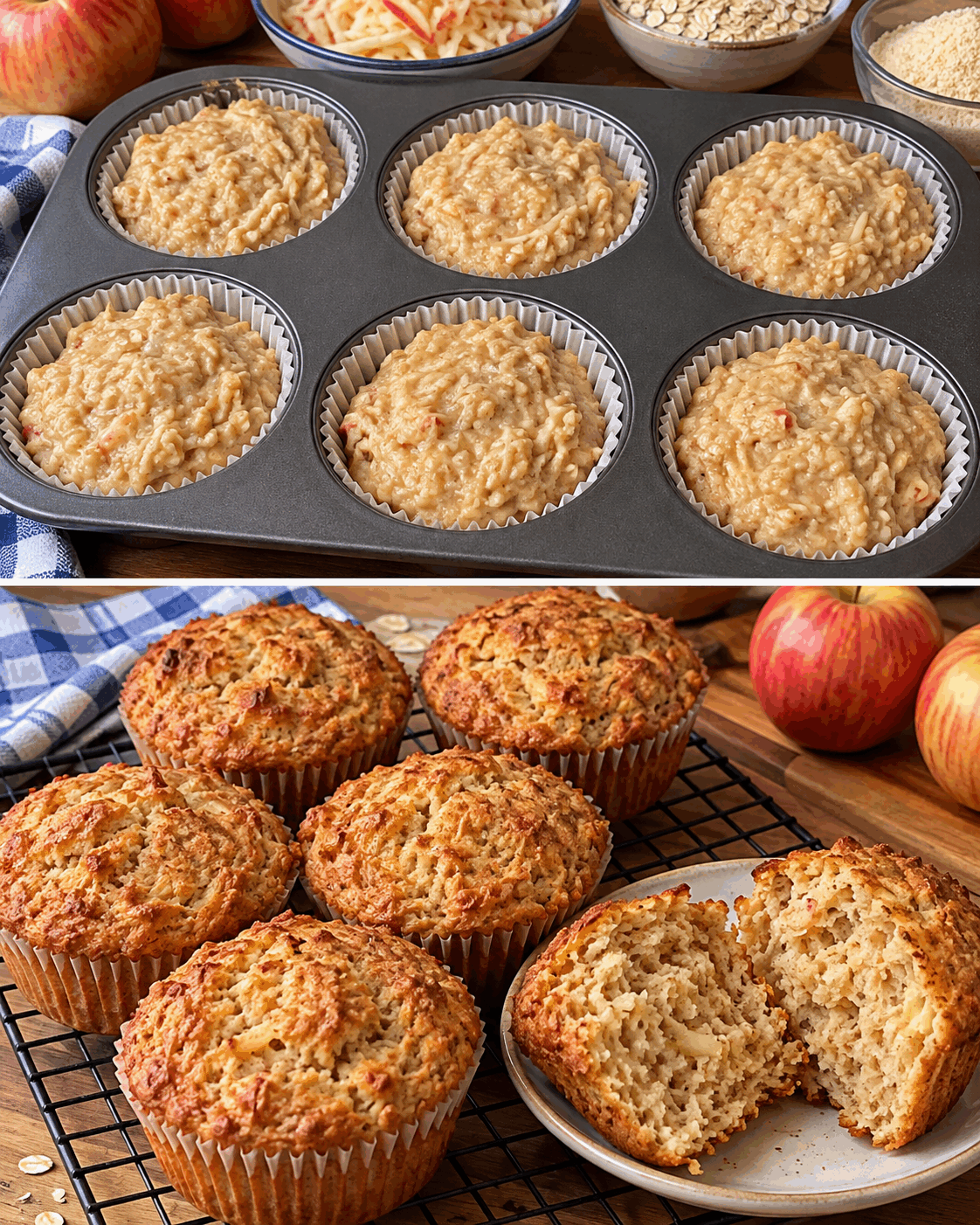
Soft Apple Almond Breakfast Muffins with Oats and No Added Sugar
Grated apples, ground almonds and oats make these breakfast muffins soft and pleasantly moist without added sugar. The apple is mixed through the batter in fine strands, so each muffin tastes of fruit without a large wet chunk in the middle. Cinnamon adds warmth, and plain yogurt brings the mixture together.
This is a modestly risen almond-and-oat bake rather than a fluffy bakery muffin made with wheat flour and sugar. The recipe fills six large muffin wells, and each portion needs time to cool before peeling away the liner. Gentle handling helps preserve the tender crumb instead of making it seem underbaked.
Time, yield and muffin pan
Allow fifteen minutes for preparation and twenty-five to thirty minutes for baking at 180°C. Let the muffins stand in the pan for about ten minutes, then finish cooling on a rack. Use six generous wells, roughly 120 to 150 milliliters each, rather than six miniature cavities that cannot hold this amount of batter.
Paper liners are useful, although a light oiling can help them release from this naturally moist mixture. If your pan has smaller wells, divide the batter among more cavities and begin checking earlier. Do not force all the batter into six tiny wells just to keep the stated count; an overflowing pan cooks unevenly.
Ingredients
- 250 g coarsely grated apple, from about 2 apples, weighed after coring
- 100 g ground almonds
- 80 g fine rolled oats
- 2 large eggs
- 100 g plain unsweetened yogurt
- 30 ml neutral oil
- 6 g baking powder
- 1 teaspoon ground cinnamon
- A small pinch of salt
Choose plain yogurt with no added sugar, unsweetened ground almonds and ordinary oats. The apples provide the fruit sweetness, so the flavor will reflect the apples you choose. No honey, syrup, sweetened milk or chocolate chips are included. The recipe uses no wheat flour, but oats are not automatically suitable for every dietary restriction.
Step-by-step preparation
- Heat the oven to 180°C and line six large muffin wells. Set a cooling rack nearby. Measure the almonds, oats, baking powder, cinnamon and salt into a bowl, then stir thoroughly. Breaking up any almond clumps now helps the raising agent distribute evenly rather than concentrating in one part of a muffin.
- Wash and core the apples, then grate them coarsely. Weigh 250 grams of grated fruit and use it promptly. If a puddle of loose juice collects, drain that free liquid, but do not wring the apple bone-dry. Keep fine strands throughout the batter rather than replacing them with large cubes.
- Whisk the eggs, plain yogurt and oil in a second bowl until evenly blended. Fold in the grated apple, then add the dry mixture. Stir until every part is moistened and no dry almond pockets remain. The batter should be thick and spoonable, with visible oat flakes and fine apple strands.
- Let the mixture stand for about five minutes while the oats begin to absorb moisture. Divide evenly among the six prepared large wells, filling each roughly three-quarters full. Smooth only lightly. Do not add apple slices or a crumble topping, since those are not part of the stated batter and would change the bake.
- Bake for twenty-five to thirty minutes, until the tops feel gently set and a skewer inserted into the center comes out without wet batter. A few moist crumbs are expected. If the top colors early, shield loosely with foil while the centers finish; do not remove the pan simply because the surface looks golden.
- Leave the muffins in the pan for about ten minutes, then move them carefully to the rack. Let them cool further before opening one to inspect the crumb. Ground almonds and grated apple make the texture delicate while hot, so pulling the liners away immediately can tear otherwise properly baked muffins.
Understanding the soft crumb
Ground almonds contribute richness but do not behave like wheat flour. Oats absorb moisture, while eggs help hold the muffins together as they cook. That combination gives a tender, slightly close crumb, not large airy tunnels. A little moisture is normal; a gummy wet band or liquid batter is a sign to check baking more carefully.
Apple moisture varies, which is why the weighed amount and brief draining of loose juice are helpful. Adding an extra unmeasured apple can make the centers heavy. Use the listed quantity for the first batch, then note your apple variety and oven timing so any future adjustment is based on an actual result.
Sweetness and simple serving ideas
These muffins are only as sweet as their fruit, almonds and yogurt naturally make them. A ripe sweet apple gives a different result from a sharp cooking apple. That is a flavor choice rather than a health promise. Serve plain, and taste the recipe as written before deciding whether it meets your breakfast preferences.
If you add a drizzle of honey at the table, that serving is no longer a no-added-sugar presentation. The base muffins still contain no added sweetener, but photographs and descriptions should match what is actually offered. There is no icing, sugar dusting or syrup hidden in the final appearance of this version.
Cooling, storage and reheating
Because the muffins contain a generous amount of fruit and yogurt, refrigerate cooled leftovers in a covered container and enjoy within three days. Let them cool without a tight lid first, so condensation does not soak the tops. Use a clean liner or a small sheet of baking paper to separate stacked muffins.
For longer storage, freeze the cooled muffins individually, then pack them together once firm. Thaw in the refrigerator and warm gently before serving if desired. A short oven warming helps the outside feel less damp than microwaving, but avoid drying them out while trying to create a crisp crust they were never meant to have.
Common mistakes to avoid

Frequently asked questions
Are these muffins sugar-free?
They contain naturally occurring sugars from apples and yogurt, so no added sugar is the accurate description. The recipe contains no honey, syrup, sweetened yogurt or other added sweetener. Choose plain unsweetened ingredients and do not add a sugary topping while continuing to use the same claim.
Can I use chopped apples instead of grated?
Grating is recommended for this version because it distributes moisture and fruit throughout the batter. Large chunks can leave wetter pockets and make the muffins harder to hold together. Another recipe can be designed around cubes, but these muffins and their photographs should show fine apple strands rather than large pieces.
Why did the liners stick?
The muffins may have been opened while still very warm, or the liner surface may not release this moist batter easily. Let them cool thoroughly and consider lightly oiling the liners next time. A soft almond-and-oat crumb is more delicate than a standard wheat muffin, especially straight from the oven.
Can I use six small muffin cups?
Not if they cannot comfortably hold the batter below the rim. The stated recipe uses six large wells. Smaller cups require more portions and a shorter baking check. Leaving headroom is more important than preserving the number six at any cost, because overfilled cups can overflow and stay damp in the center.
Can I replace the ground almonds with more oats?
That changes the balance significantly, since almonds provide fat and a different texture from oats. The recipe is not tested as an all-oat version. For a predictable result, keep the almond quantity as written. If you need to avoid nuts, use a separate recipe developed for that requirement rather than making a direct swap.