
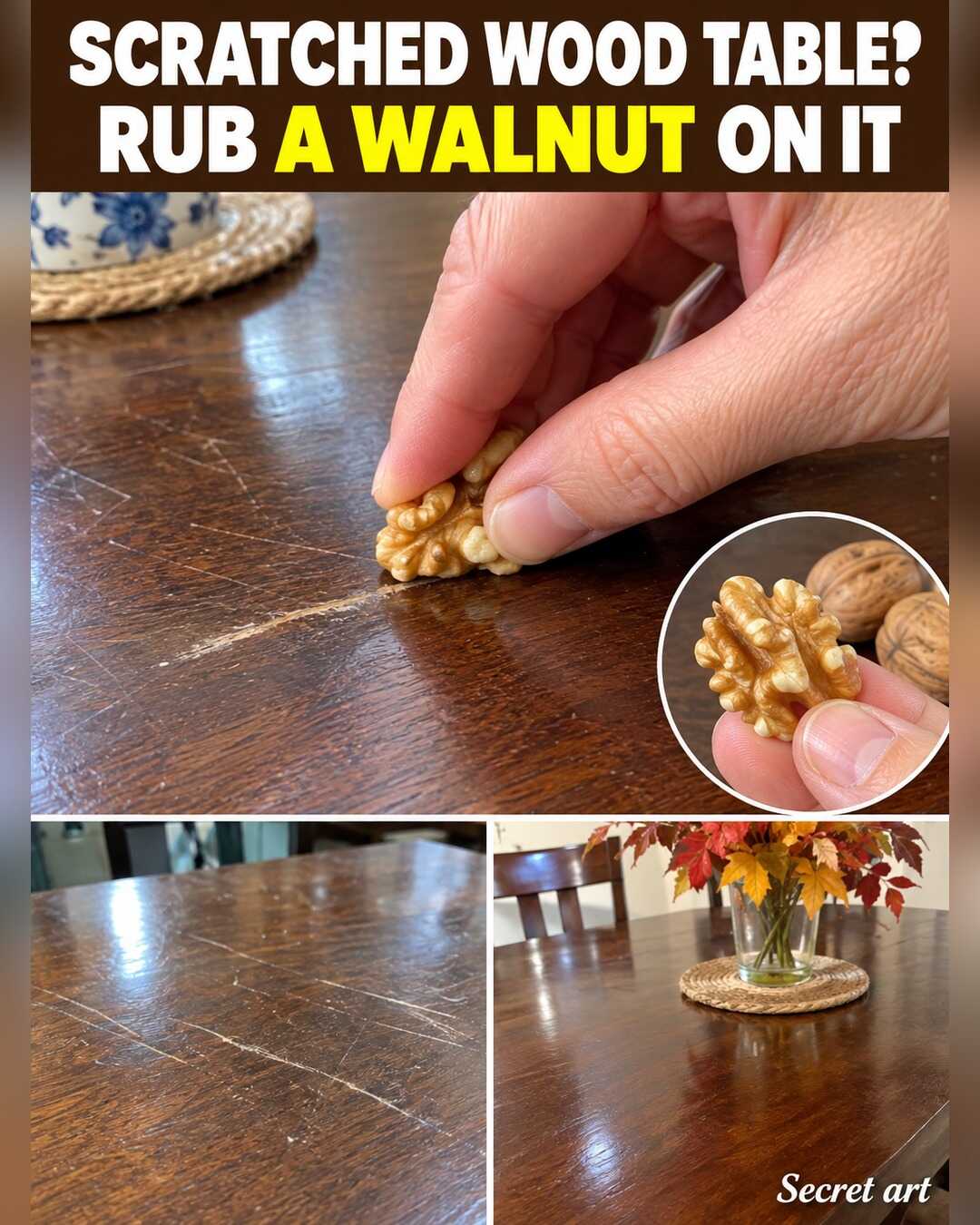
Rub a Walnut on Light Scratches in Wood Furniture and Watch Them Fade
A dropped key, a sliding plate, a toy car racing across the table: light scratches on wood furniture happen in every home. On a dark coffee table or dining table, those thin pale lines catch the light and suddenly the whole piece looks worn.
Before you reach for a repair marker or call a professional, try an old-fashioned secret: a plain shelled walnut. Rubbed gently over a light surface scratch, it can darken the mark and help it blend into the wood. Here’s how to do it, and when it works best.
What You’ll Need
- One or two raw shelled walnuts (unsalted, unroasted).
- A soft, clean cotton or microfiber cloth.
- A second dry cloth for buffing.
- A slightly damp cloth for cleaning the surface first.
- Good light, ideally from a window.
The Method, Step by Step
-
Check the scratch. Run your fingernail gently across the mark. If your nail barely catches, it’s a light surface scratch, perfect for this trick. If your nail sinks into a deep groove or the wood is chipped, the walnut will only help a little.
-
Clean the area. Wipe the surface with a slightly damp cloth to remove dust and crumbs, then dry it completely. Dirt rubbed into a scratch can make it look darker in the wrong way.
-
Test in a hidden spot. Rub the walnut on a small hidden area, like the underside of the table edge, to see how it affects the color and finish. This is especially important on light woods.
-
Rub the walnut along the scratch. Hold the walnut half between your fingers and rub it back and forth directly over the scratch, following its direction. Use gentle, steady pressure. You’ll see the pale line slowly darken.
-
Work in small circles. After a few strokes along the line, rub in small circles over the scratch to push the walnut oils into the wood fibers. Keep going for about a minute.
-
Let it rest. Leave the area alone for five minutes. The natural oils need a little time to soak in and warm the color of the exposed wood.
-
Buff with a soft cloth. Take the dry cloth and buff the area with light circular motions. This removes extra oil and evens the shine, so the treated spot blends with the rest of the surface.
-
Repeat if needed. Look at the scratch from different angles. If it’s still visible, repeat the rubbing and buffing once or twice. Many light scratches become hard to spot.
Why It Works
A light scratch removes or disturbs the top layer of finish and exposes paler wood fibers underneath. That’s why it looks white or light against the darker surface. The scratch reflects light differently, and your eye notices it right away.
Walnuts contain natural oils and a little brown pigment. When you rub the nut over the scratch, these oils soak into the exposed fibers, darken them slightly and help them catch the light like the surrounding wood. It’s a small cosmetic fix, not a full repair.
Mistakes to Avoid
- Expecting it to fix deep gouges. Deep scratches and chips need wood filler or a professional.
- Using salted or roasted walnuts. Salt and seasoning can leave residue on the wood.
- Rubbing too hard. Heavy pressure can dull the surrounding finish.
- Skipping the test on light wood. On very pale woods, the walnut can leave a slightly darker spot.
- Forgetting allergies. If anyone at home has a nut allergy, skip this trick and wipe the area well.
Bonus Tips and Variations
For very small scratches on dark wood, a pecan or a Brazil nut can work in a similar way. The walnut is still the most popular choice thanks to its oil content.
After the walnut trick, you can apply a little furniture polish suited to your wood finish to even out the shine across the whole surface.
Prevent new scratches with felt pads under vases, lamps and decorative objects, and use placemats and coasters on dining and coffee tables.
Dust wood furniture with a soft dry cloth instead of a rough one. Grit in an old rag can create fine scratches over time.
How to Care for Wood Furniture Day to Day
Once your scratches have faded, a few habits help keep your wood looking its best. Dust weekly with a soft, dry microfiber cloth, always following the grain. Dust is slightly abrasive and creates fine marks over time.
Wipe spills immediately with a dry cloth. Water, coffee and juice left on wood can create white rings or dark spots that are much harder to fix than a light scratch.
Keep wood furniture away from direct sunlight and heat sources such as radiators. Sun fades the color unevenly, and heat can dry out the wood and the finish.
A few times a year, apply a furniture polish or wax suited to your finish. It adds a thin protective layer that makes small scratches less likely and less visible.
Frequently Asked Questions
Does the walnut trick work on all wood?
It works best on medium and dark woods with a light surface scratch, like walnut, oak with a dark stain, mahogany or cherry. On very light woods such as maple or birch, the effect can look darker than the surrounding area, so always test in a hidden spot first.
Is the repair permanent?
It’s a cosmetic improvement that can last a long time, but regular cleaning and wear may slowly lighten the scratch again. If that happens, simply repeat the walnut rub. For a permanent fix on valuable furniture, a professional touch-up is the best option.
Can I use walnut oil instead?
A drop of walnut oil on a soft cloth can help, but the whole nut is easier to control because you rub right on the line. If you use oil, apply very little and buff well, as extra oil can leave a sticky surface that attracts dust.
Will it work on laminate or painted furniture?
Not really. Laminate and painted surfaces don’t absorb oil the way real wood does, so the scratch stays visible. For laminate, look for a touch-up marker in the right color. For painted pieces, a small amount of matching paint is the usual solution.
What about white water rings on wood?
White rings are a different problem: moisture trapped in the finish, not a scratch. The walnut won’t help there. A low, gentle heat from a hairdryer held at a distance can sometimes clear them. Test carefully and stop if the finish changes.
Can I use the walnut on wooden floors?
On small, light scratches in a dark wood floor, a walnut can help in the same way. Clean the spot first, rub gently and buff well so the floor isn’t slippery. For larger areas or deep scratches, use a floor repair kit made for your type of finish.
One walnut, a soft cloth and a few minutes: light scratches on wood furniture fade into the grain. Grab a walnut from the pantry and try it on that little mark you see every day.