
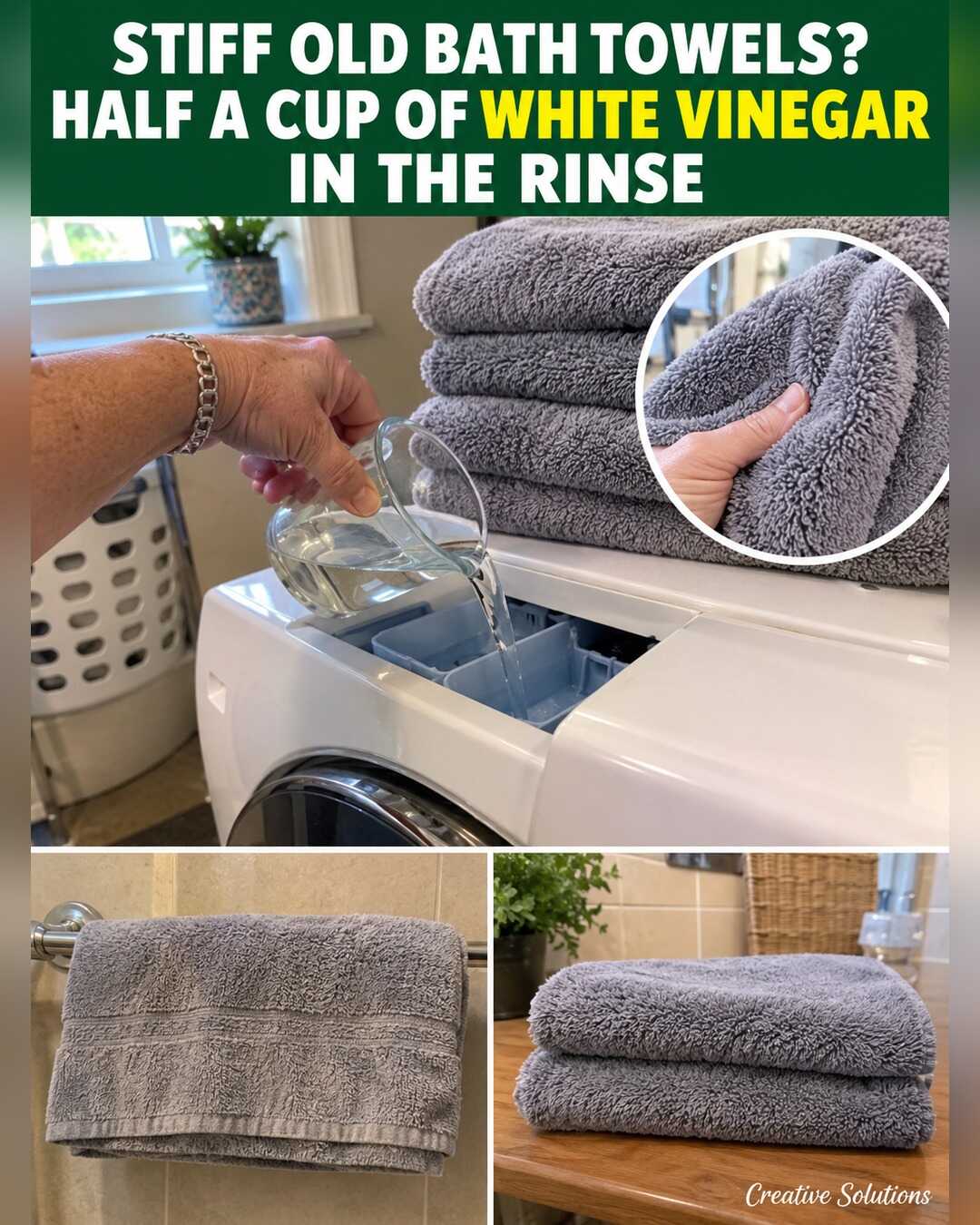
Stiff Old Bath Towels? Half a Cup of White Vinegar in the Rinse Makes Them Soft Again
The fix for stiff, scratchy bath towels is half a cup of plain white vinegar added to the rinse cycle. It helps strip away the detergent and softener buildup that makes old towels feel rough, and it costs just pennies a load.
If your towels have started to feel more like cardboard than cotton, and they do not absorb water like they used to, buildup is almost always the reason. The good news is that you can usually bring them back without buying anything new.
What you need
- Your stiff bath towels (wash them on their own, not with other clothes)
- 1/2 cup of distilled white vinegar
- Your regular laundry detergent, but only a little
- A washing machine and a dryer (or a clothesline)
The method, step by step
-
Wash the towels alone. Put 4 to 6 towels in the machine. Do not overload it. Towels need plenty of room to move and rinse well.
-
Use less detergent. Use about half of what you normally use. Too much soap is a top cause of stiff towels, because the extra stays in the fibers.
-
Choose warm water. Pick a warm or hot setting, whichever the towel label allows, and a normal or heavy-duty cycle with an extra rinse if your machine has one.
-
Add the vinegar to the rinse. Pour 1/2 cup of white vinegar into the fabric softener compartment. The machine releases it at the right time, during the final rinse.
-
Do not add softener. Skip liquid fabric softener and dryer sheets for this wash. They coat the fibers and are a big reason towels lose their absorbency.
-
Dry them well. Tumble dry on medium heat, shaking each towel out first. Add two wool dryer balls or clean tennis balls to keep them fluffy, or hang them in the sun.
Why it works
Detergent, softener, and hard water minerals build up in cotton loops over time. This coating makes the fibers stick together and feel stiff. Vinegar is mildly acidic, so it helps loosen those deposits and rinse them out.
When the buildup is gone, the loops of the towel can stand up again. That is why towels feel fluffier and absorb water better after a vinegar rinse. Many people also notice that the musty smell fades.
The vinegar smell does not stay. Once the towels are dry, it is gone. If you still notice a faint smell, just run a quick extra rinse.
Mistakes to avoid
- Using too much detergent. More soap does not mean cleaner towels. It means stiffer ones.
- Using fabric softener every wash. It leaves a waxy film that blocks water.
- Mixing vinegar with bleach. Never combine them. Bleach and vinegar make a dangerous gas. Use only one, never both in the same load.
- Pouring vinegar straight on the towels. Always use the softener compartment or dilute it in the rinse water.
- Overloading the machine. Crowded towels do not rinse out properly.
- Drying on very high heat. Too much heat can make fibers harsh. Medium is better.
Bonus tips for fluffy towels
For very stiff towels, repeat the process, then do a second wash with 1/2 cup of baking soda in the drum (no vinegar in that load). Doing them in separate washes keeps each one working properly.
Shake towels out before drying. A good snap or two lifts the loops, and it only takes a few seconds per towel.
Do not leave wet towels in the machine. Dry them as soon as the cycle ends, or they can get musty and stiff.
Wash new towels before the first use, and wash them separately for the first few loads. It helps them absorb better from the start.
Once a month, give your towels a vinegar rinse as maintenance. This keeps buildup from coming back and helps them last longer.
Frequently asked questions
Will vinegar damage my washing machine?
In the small amount used for laundry, vinegar is generally considered safe for modern machines. Half a cup in the rinse, used now and then, is fine. If you are worried, check your machine manual for guidance.
Can I use apple cider vinegar instead?
It is better to use distilled white vinegar. Apple cider vinegar is darker and can leave a color on light towels. White vinegar is clear, cheap, and works just as well for this job.
How often should I do a vinegar rinse?
Once a month is enough for most households. If your water is very hard, or your towels feel rough again quickly, you can do it every two to three weeks. Always keep detergent use low.
Will my towels smell like vinegar?
Not after drying. The smell disappears as the towels dry, especially if you hang them in fresh air or run a full dryer cycle. A slight smell while they are wet is normal.
Why are my new towels not absorbent?
Many new towels are finished with a softening coating at the factory. A wash or two, with a vinegar rinse and no fabric softener, usually removes it, and absorbency improves.
Can I use this method on colored towels?
Yes. Vinegar is gentle on colors and can even help keep them bright. Wash dark and bright colors separately the first time, just to be safe, and use cool or warm water as the label advises.
A half cup of white vinegar and a lighter hand with the detergent can turn rough old towels soft and fluffy again. Try it on your next towel load and feel the difference.