
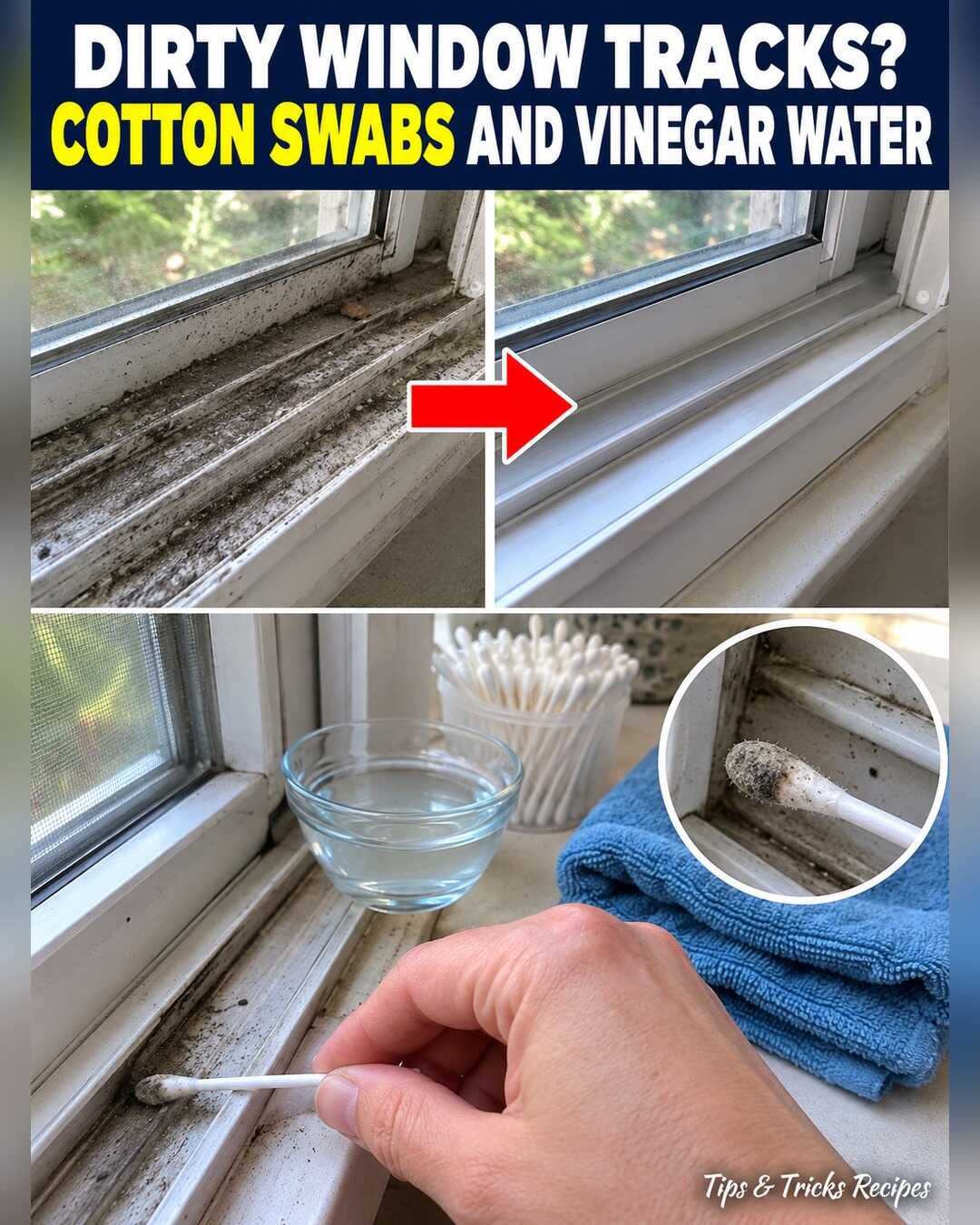
Dirty Window Tracks? Cotton Swabs and Vinegar Water Get Them Clean
Slide open a window and you will often see it: a gray strip of dust, dead bugs, and grime packed into the track. Wiping it with a rag only pushes dirt around, and a vacuum cannot reach the corners. That is where cotton swabs and a little vinegar water come in handy.
This simple method cleans dirty window tracks without special tools or harsh products. You will need about 20 minutes, and you can do a whole window in one go. Here is exactly how to do it.
What you need
- Cotton swabs (a whole box, since you will use plenty)
- White vinegar
- Warm water
- A small bowl
- A dry microfiber cloth or old rag
- A vacuum with a brush or crevice tool (optional)
- An old toothbrush for heavy buildup (optional)
Step by step: how to clean window tracks with cotton swabs and vinegar water
-
Remove loose dirt first. Use a vacuum with a narrow nozzle or a dry brush to pick up dust, leaves, and dead insects. Dry dirt turns to mud when wet, so this step makes everything easier.
-
Mix the vinegar water. In a small bowl, combine equal parts warm water and white vinegar. About half a cup of each is enough for a few windows.
-
Dip a cotton swab. Dip the tip in the mixture so it is damp but not dripping. Too much liquid just spreads the dirt.
-
Run the swab along the track. Press lightly and move it into the corners, the ridges, and the small drainage slots. Swabs fit places that cloths cannot reach.
-
Swap for a fresh swab often. When the tip turns gray, use a new one. Reusing a dirty swab puts the dirt right back in the track.
-
Scrub tough spots. For dried-on grime, let the damp swab rest on the spot for a minute, then rub again. An old toothbrush can help on wider areas.
-
Wipe and dry. Go over the track with a microfiber cloth to pick up leftover moisture and loosened dirt. Dry the track completely so no water sits in the corners.
Why this method works
Window tracks collect dust, pollen, and moisture, which mix into a sticky layer. White vinegar is mildly acidic and helps loosen that layer and light mineral deposits. Cotton swabs are small and soft, so they get into narrow grooves without scratching.
The warm water carries the loosened dirt onto the swab. Because each swab is used once and tossed, you remove the dirt instead of spreading it around, which is the biggest advantage over a rag.
Mistakes to avoid
- Skipping the dry cleaning step. Wet dust becomes paste that is harder to remove.
- Soaking the track. Use damp swabs only, and avoid letting water run down into the wall.
- Using vinegar on certain surfaces. Vinegar can dull natural stone sills and some finishes, so test a small spot or skip it there.
- Reusing dirty swabs. They only move grime from one place to another.
- Using sharp tools. A screwdriver or knife can scratch the track and damage the window.
Bonus tips for cleaner tracks
- Clean the tracks every few months, or more often in dusty areas.
- Make sure the small drainage holes are free of dirt so rainwater can flow out.
- Wrap a thin cloth around a butter knife (dull side) for wide gaps, if you do not have enough swabs.
- Do the windows on a dry day so you can leave them open to air-dry.
- Keep a pack of swabs with your cleaning supplies for quick touch-ups.
How long does it take?
A single window track takes about five to ten minutes, depending on how dirty it is. If it has not been cleaned in a long time, expect to use a good number of swabs. Work in small sections, and the job goes quickly.
Heavy buildup may need a second pass. Do not worry if the track is not perfect on the first try. Even a partial cleaning makes the window slide more easily and look much better. After the first deep clean, short touch-ups are fast and easy.
A quick routine to keep tracks clean
After the first big cleaning, you do not need to repeat the whole process. Once a month, run the vacuum brush along each track, then go over it with one or two damp swabs. That small habit keeps dirt from packing down and getting hard.
It also helps to wipe the sill and the frame while you are there, since dust falls from them into the track. In spring and fall, when pollen and leaves are everywhere, check the tracks a little more often. A few minutes of upkeep saves you from a long cleaning session later and keeps your windows sliding smoothly.
Frequently asked questions
Can I use something other than vinegar?
Yes. A few drops of dish soap in warm water also work well on window tracks. Vinegar is helpful for light mineral spots, but soapy water is a fine choice if you prefer to skip the smell.
Is vinegar safe for all window frames?
It is fine for most vinyl, aluminum, and painted frames in a diluted mix. Test a small hidden spot first if you are unsure, and wipe the area dry afterward.
How often should I clean window tracks?
Two to four times a year is enough for most homes. If you live near a busy road or keep windows open often, check them more often.
What if the dirt is black and hard like crust?
Let a damp swab or cloth sit on it for a minute or two to soften it, then scrub gently with a toothbrush. Repeat as needed rather than scraping hard.
Do I need to remove the window to clean the track?
No. This method works with the window in place. Slide the sash as far as it goes, clean the exposed part, and then slide it back to reach the rest.
Cotton swabs and vinegar water make dirty window tracks easy to handle. Give your windows twenty minutes this weekend and enjoy the clean, smooth finish.