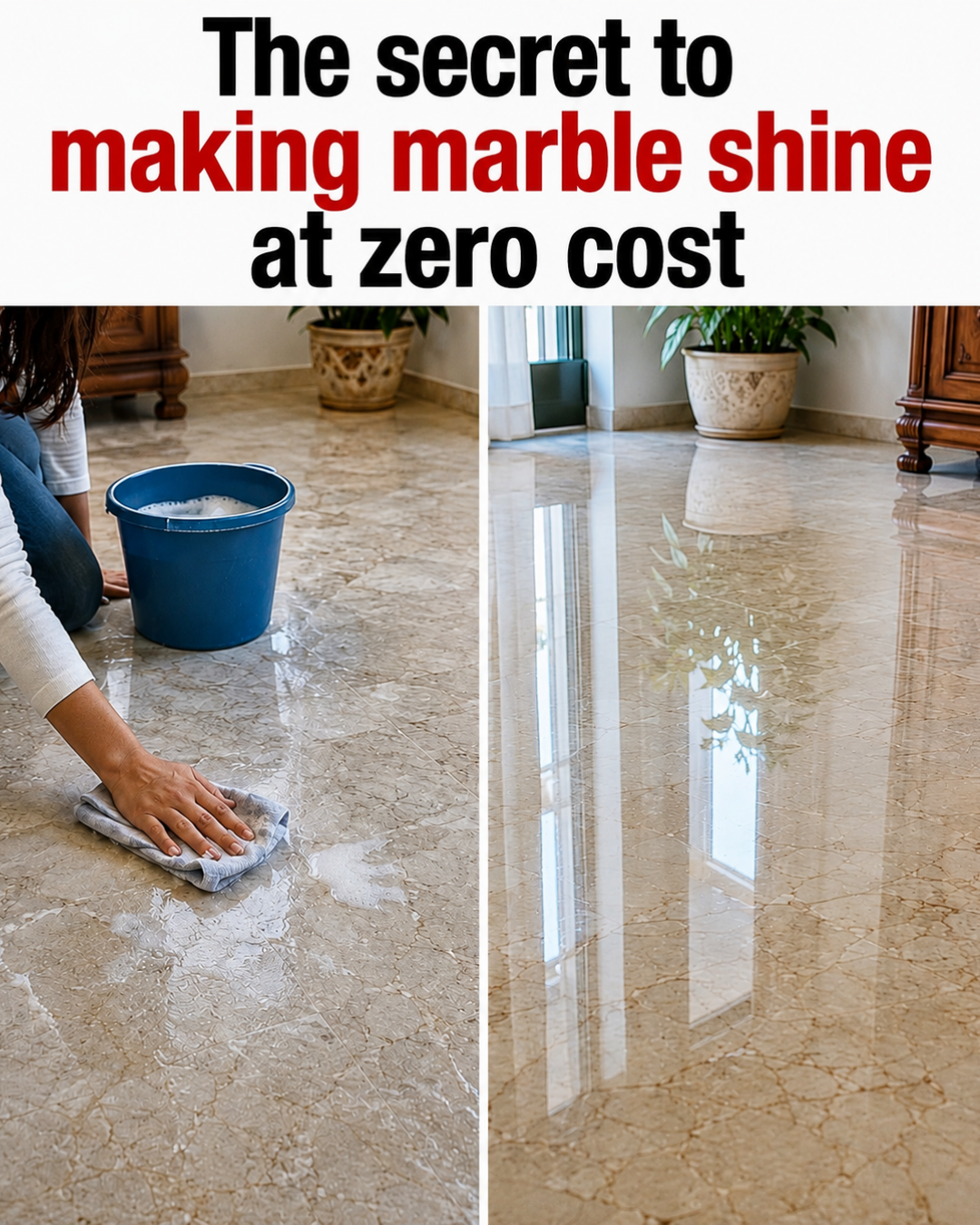
How to Restore the Natural Shine of Dull Marble Without Expensive Products
Dull marble can make an entire home look older, even when the floor has just been cleaned.
Many people spend money on specialized products that leave a shiny film for only a few hours. Once that temporary coating disappears, the marble often looks dull again.
Fortunately, restoring its natural appearance may be much simpler and less expensive than you think.
Start by Removing All Dust
Before washing the marble, remove every trace of dust, sand and debris.
Use a soft broom or a vacuum cleaner with a suitable floor attachment. Even tiny particles can scratch the marble when they are dragged across the surface during cleaning.
This first step is essential if you want to avoid creating additional marks.
Prepare a Gentle Cleaning Solution
Fill a bucket with approximately 3 liters of warm water. The water should be comfortably warm, but not boiling.
Add either:
- 2 tablespoons of liquid Marseille soap, or
- 1 tablespoon of Marseille soap flakes dissolved completely in the water.
Then add half a glass of rubbing alcohol and mix gently.
Marseille soap helps remove dirt without being excessively aggressive, while the alcohol encourages faster drying and reduces streaks.
Never Use Pure Vinegar on Marble
One of the most common marble-cleaning mistakes is using vinegar.
Although vinegar works well on many household surfaces, it is acidic and can gradually attack marble. Over time, it may create pale marks, damage the finish and make the surface look even duller.
The same warning applies to lemon juice, strong descaling products and acidic bathroom cleaners.
Wash Without Soaking the Floor
Dip a microfiber cloth or mop into the cleaning solution and wring it out thoroughly.
The cloth should be damp rather than dripping wet.
Wipe the floor using broad, continuous movements. Avoid leaving puddles or standing water on the marble, particularly around joints and edges.
Work in small sections so you can dry each area quickly.
The Polishing Step That Makes the Difference
After cleaning, polishing the surface by hand can improve its appearance considerably.
Take a clean, dry wool cloth or an old wool sweater that no longer sheds fibers.
Rub the marble using small circular movements. Spend approximately two minutes on each square meter.
The gentle friction helps remove remaining streaks and brings out the marble’s natural shine. This does not replace professional polishing, but it may noticeably improve marble that is only lightly dull.
For Particularly Dull Areas
For isolated areas that look more faded, prepare a very mild baking-soda solution.
Mix one teaspoon of baking soda into half a liter of water.
Apply it only to the dull areas with a soft cloth. Leave it in contact with the surface for no more than five minutes, then rinse with clean water and dry immediately.
Do not scrub aggressively. Baking soda is mildly abrasive and should be used carefully and only occasionally.
Always test the solution on a small, hidden area first.
Where This Method Works Best
This routine may be particularly useful on:
- Light-colored marble
- Beige marble
- Marble floors near entrances
- Kitchen floors with light grease residue
- Surfaces that have lost shine because of soap buildup
However, it will not repair deep scratches, acid etching, permanent stains or badly worn finishes. Those problems usually require professional honing and polishing.
How to Keep Marble Shiny Longer
The best way to maintain marble is through regular, gentle care.
Remove dust frequently, clean spills immediately and avoid harsh products. Use only a small amount of mild soap, because too much can leave a dull residue.
Always rinse away any remaining cleaner and dry the surface with a soft cloth.
The real difference usually does not come from an expensive product. It comes from treating the marble carefully and consistently every week.