Say Goodbye to Yellow Stains: The Hotel Secret for a Spotless White Toilet
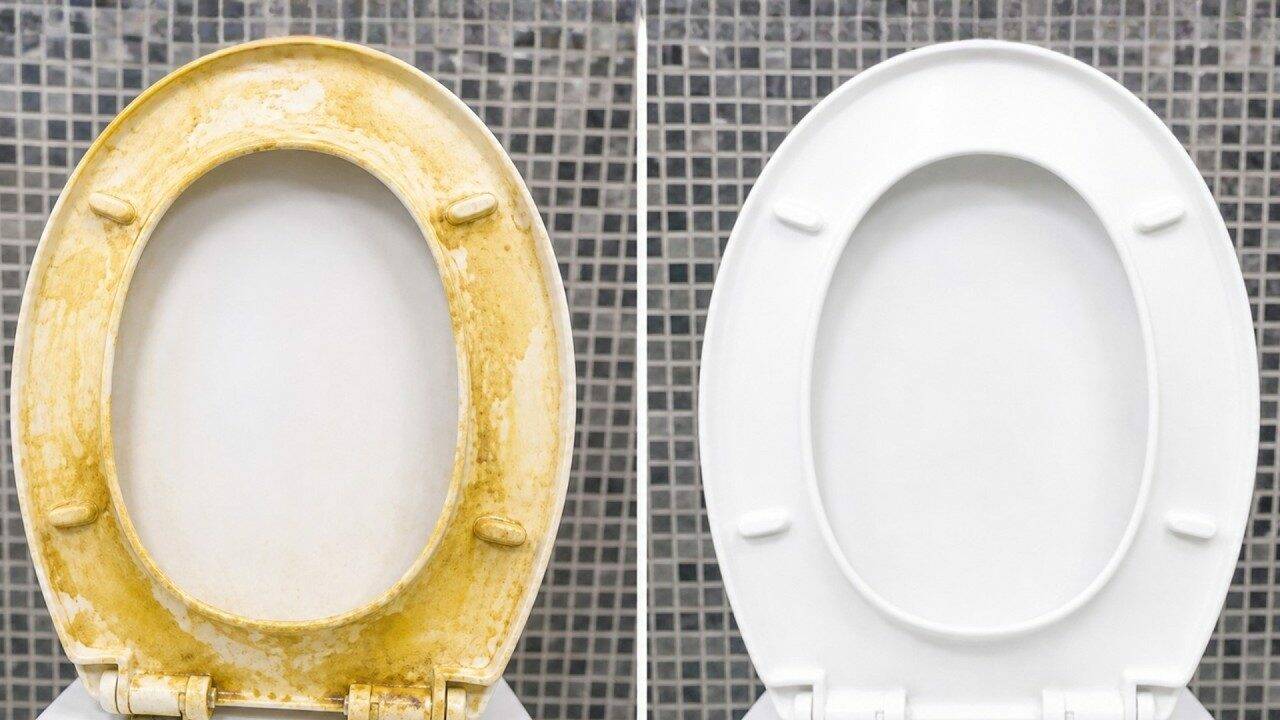
A toilet seat can start looking yellow surprisingly quickly. Hard water, soap residue, body oils, and everyday use all contribute to discoloration that ordinary cleaners sometimes struggle to remove. While replacing the seat may seem like the only solution, a few inexpensive household ingredients can often help restore its appearance.
Here are several practical bathroom cleaning and hygiene tricks inspired by professional housekeeping routines.
1. Remove Yellow Stains from a Toilet Seat
This simple cleaning paste combines three common ingredients to help loosen grime and brighten stained plastic surfaces.
You’ll Need
- A generous squeeze of green dish soap
- 1 heaping teaspoon of citric acid
- A small pinch of salt
- An old toothbrush
- Paper towels
- A microfiber cloth
How to Prepare the Paste
Mix the dish soap, citric acid, and salt in a small bowl until a thick paste forms.
The dish soap helps dissolve greasy residue, the citric acid works on mineral deposits and discoloration, while the salt provides gentle scrubbing power.
How to Use It
- Apply the paste to the stained areas using the toothbrush.
- Spread it evenly over the toilet seat.
- Cover the treated areas with paper towels.
- Leave everything in place for about 15 minutes.
- Remove the paper towels.
- Wipe away the loosened residue with a damp microfiber cloth.
- Dry the seat with a clean towel.
For stubborn stains, repeat the process rather than scrubbing aggressively.
Important: Citric acid should only be used on compatible plastic or ceramic surfaces. Avoid using it on natural stone or other acid-sensitive materials.
2. A Simple No-Touch Toilet Seat Tab
If you’d rather avoid touching the toilet seat directly, you can create a small lifting tab.
Simply attach a strip of electrical tape along the edge of the seat, leaving a folded section that acts as a handle.
Replace the tape regularly to keep it clean.
3. A Temporary Trick for Minor Toilet Clogs
Some people recommend sealing the toilet bowl with a large plastic bag so that flushing creates pressure inside the bowl.
While this may occasionally help with minor blockages, it is not a replacement for a proper toilet plunger and may not work for serious clogs.
Never:
- Flush repeatedly if the bowl is already full.
- Use boiling water in a clogged toilet.
- Continue flushing if the water level keeps rising.
If the blockage persists, use a flange plunger or contact a plumber.
4. Keep Your Toilet Smelling Fresher
Rather than relying on strong air fresheners, regular cleaning is usually the most effective way to control odors.
A toilet bowl cleaner or mild bathroom cleaner, combined with frequent brushing, helps prevent odor-causing residue from building up.
5. Refresh the Bathroom Naturally
Instead of masking odors, focus on cleaning the surfaces where bacteria and residue accumulate.
Regularly clean:
- The toilet seat
- The bowl
- Around the hinges
- The flush handle
- The floor surrounding the toilet
Good ventilation also helps reduce lingering bathroom odors.
6. Using Public Toilets More Hygienically
Many people simply wipe a public toilet seat with dry toilet paper before using it.
A more effective approach is to:
- Wet a piece of toilet paper.
- Add a little liquid soap or hand sanitizer if available.
- Wipe the seat thoroughly.
- Dry it with fresh toilet paper before sitting down.
This removes more residue than wiping with dry paper alone.
7. Make a Homemade Toilet Freshener
Instead of throwing away an empty toilet freshener holder, you can refill it with a homemade mixture.
Ingredients
- Grated glycerin soap
- Toothpaste
- Baking soda
- Laundry scent beads (optional)
Mix everything until it forms a firm paste.
Shape the mixture into small balls or press it directly into the empty holder before hanging it inside the toilet bowl.
As water flows over it during flushing, it slowly releases fragrance while helping reduce odors between cleanings.
Tips for Keeping a Toilet White Longer
- Clean the toilet seat every week.
- Wipe away water droplets after cleaning.
- Remove limescale before it becomes thick.
- Keep the bathroom well ventilated.
- Avoid abrasive pads that may scratch plastic surfaces.
- Replace heavily worn toilet seats that have permanent staining.
Final Thoughts
A bright, fresh-looking toilet doesn’t necessarily require expensive specialty cleaners. A simple paste made from dish soap, citric acid, and salt can help remove everyday discoloration, while regular maintenance keeps stains from returning. Combine these habits with good bathroom hygiene and routine cleaning, and your toilet can stay cleaner, fresher, and easier to maintain all year round.