🌸 Place under an orchid! Suddenly 100 roots will appear and bloom in all 4 seasons
🌸 Place under an orchid! Suddenly 100 roots will appear and bloom in all 4 seasons
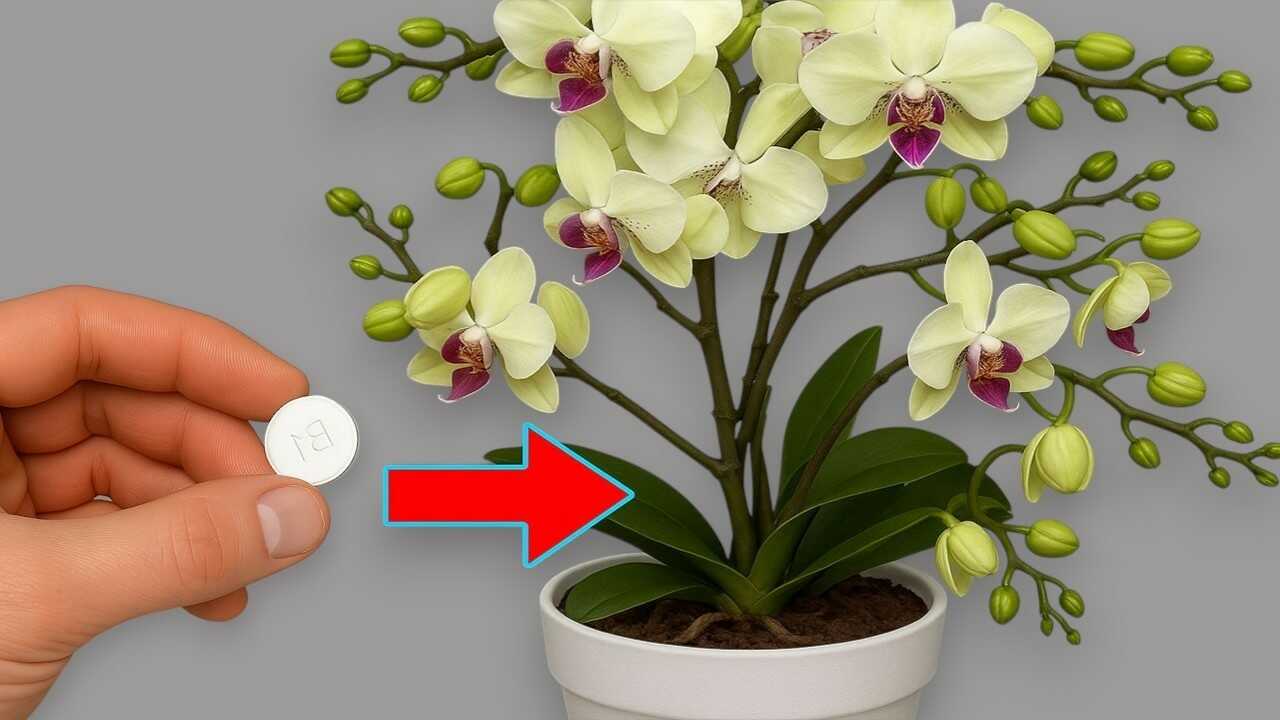
This image shows a small white tablet clearly marked B1 — a **vitamin B1 (thiamine) tablet**. Horticulturally, thiamine is sometimes used as a supplement to support **root development** and reduce transplant shock because it participates in plant **carbohydrate metabolism**. Below is a safe, evidence-aware, step-by-step method to use that tablet with potted orchids as a complementary treatment (not a miracle cure).
Why a B1 tablet?
Thiamine (vitamin B1) is an essential cofactor in metabolic pathways (e.g., pyruvate dehydrogenase, transketolase) that help convert sugars into energy and building blocks. In practical horticulture, low-dose B1 drenches have been used to support stress recovery and encourage new root growth. Scientific results are mixed, so treat B1 as a supportive **supplement** to proper **light, watering, drainage and balanced fertilization**.
Precise recipe and dosing (follow these exact steps)
- Identify the tablet strength: check the packaging. If it’s a standard 100 mg B1 tablet proceed as below. If different, dissolve to achieve 100 mg/L final concentration.
- Preparation: dissolve 1 × 100 mg B1 tablet in 1 litre (1000 ml) of lukewarm distilled or dechlorinated water. Stir until fully dissolved.
- Application amount: for a typical 10–15 cm (4–6 in) orchid pot, use 50–100 ml of the solution as a single **root drench** (pour around the potting mix so roots and the mix are lightly wetted). For larger pots use 150–250 ml.
- Frequency and season: apply once every 3–4 weeks during the active growth season (spring and summer). Reduce to once every 6–8 weeks in autumn and winter. Continue for at least 8–12 weeks to judge effect.
- Drainage: allow the pot to drain fully; never let the plant sit in stagnant water for long. Remove excess from the saucer after 15–30 minutes.
If you want a slow-uptake method like the picture suggests
Instead of placing an undissolved tablet under the plant (which can create high local concentrations and attract pests), pour the prepared solution into the saucer under the orchid pot so the potting mix can wick the diluted thiamine up gradually. Use the same volumes and frequency above.
Practical tips from experience
- Always read the tablet label: some “B1” products include fillers, vitamin mixes, or preservatives. Use plain thiamine when possible.
- Combine with correct basics: ensure bright, indirect light, appropriate watering intervals, and a free-draining orchid mix. B1 helps only when the plant’s environment is otherwise sound.
- Watch temperature and humidity: warm roots and moderate humidity speed growth—B1 will be more effective when the orchid is actively growing.
- Track progress: photograph roots every 2–4 weeks. Expect to judge meaningful root changes over several weeks to a few months, not days.
Common mistakes to avoid (real botanical pitfalls)
- Placing an undissolved tablet directly on roots or potting media: can create localized chemical concentration, pH changes or attract pests — dissolve first.
- Overdosing: using overly concentrated solutions or daily applications can cause salt buildup and root burn. Stick to the recommended dose and frequency.
- Relying on B1 instead of proper care: no vitamin can replace light, correct watering, airflow and fertilization; B1 is a supplement, not a primary fertilizer or fungicide.
- Using it during dormancy: applying during true rest periods (winter dormancy) wastes effort and may stress the plant; reduce frequency in colder months.
When to expect results
Root response is variable. With consistent care and the B1 regimen above, you may notice firmer new root tips or increased aerial roots within about 6–12 weeks of regular applications during the growth season. Flowering benefits (more spikes/better blooms) are secondary and may take a full growing cycle to observe.
Final motivating note and call to action
If you see that small white B1 tablet in your hand, use it as a measured boost — dissolve, dilute, and apply as a gentle root drench every 3–4 weeks in spring and summer. Combine this with excellent light, aerated potting mix, correct watering and periodic balanced orchid fertilizer. Try the 8–12 week plan, document the roots, and share your results — small, evidence-based steps often lead to big improvements in orchid health and bloom frequency.