🌸Don’t Give Up on Your Wilting Peace Lily! One Cup of Water Can Bring It Back to Life 🌱
🌸Don’t Give Up on Your Wilting Peace Lily! One Cup of Water Can Bring It Back to Life 🌱
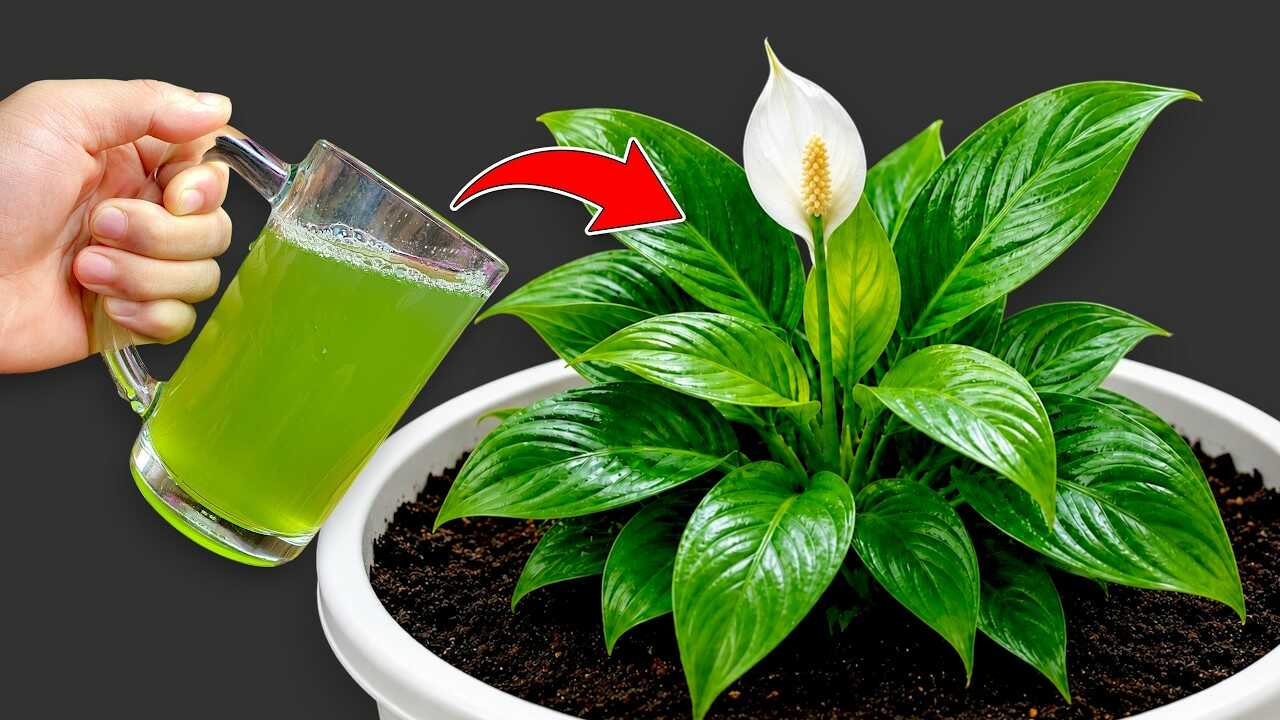
The photo shows a clear glass mug filled with a bright **green liquid** — visually this is a small batch of **compost tea** or homemade liquid fertilizer. If your **Peace Lily** (Spathiphyllum) is wilting, a carefully prepared and applied cup of this **diluted compost tea** can support root health, supply soluble nutrients and introduce beneficial microbes that help stressed plants recover. This is a supplement — not a miracle — and must be used with proper watering, light and drainage.
Why this green liquid helps (real, botanical reasons)
- Soluble nutrients: Properly brewed compost tea supplies available nitrogen, phosphate and trace elements in soluble form that roots can absorb quickly.
- Beneficial microbes: Aerated compost tea introduces aerobic bacteria and fungi that can improve soil biology, aiding nutrient uptake and root resilience.
- Improved root environment: A gentle soil drench can stimulate soil microbial activity and reduce the impact of minor root stress, supporting turgor recovery in leaves over several weeks.
Exact recipe: How to make the cup you see in the image
Follow this precise method to brew a safe, usable compost tea for a single small pot application.
- Ingredients and tools: 1 cup (approx. 120 g) mature, screened compost (fully decomposed), 1-gallon (3.8 L) bucket, dechlorinated water (let tap water sit 24 hours or use filtered water), small aquarium air pump with stone (optional but recommended), fine mesh bag or strainer.
- Brew: Place the 1 cup of compost into the mesh bag and submerge in the 1-gallon bucket of dechlorinated water. Run the aquarium pump and aerate continuously for 24 hours. (If you cannot aerate, steep for 48 hours in the shade and use immediately; note higher risk of anaerobic bacteria.)
- Strain and dilute: Remove the bag and strain the liquid. Dilute the brewed tea at a 1:4 ratio (one part brewed tea + three parts water). This yields a gentle solution safe for sensitive houseplants.
- Measure the dose: For a Peace Lily in a standard 6–8 inch (15–20 cm) pot, apply exactly one cup (240 ml) of the diluted compost tea as a soil drench around the root zone.
When and how often to apply (seasonal schedule)
- Spring–Summer (active growth): Apply one cup (240 ml) as a soil drench every 2 weeks.
- Autumn: Reduce to one cup every 4 weeks.
- Winter (dormant/slower growth): Do not apply compost tea; avoid fertilizing and reduce water frequency.
- Expectations: You should start to see improved leaf turgor and steadier growth within 3–6 weeks after regular applications if underlying care is corrected (light, watering, drainage).
Step-by-step application (quick practical routine)
- Check the soil moisture first — only apply if the top 1–2 inches (2.5–5 cm) are slightly dry. If soil is saturated, wait until it drains and begins to dry.
- Pour the one cup of diluted tea evenly around the topsoil surface, avoiding direct splash on the crown or flowers.
- Allow the pot to drain freely; never let the plant sit in a saucer of liquid for long periods.
- Monitor the plant weekly: note leaf firmness, color and new growth. Adjust light and watering if needed.
Practical tips from experience
- Use only fully matured compost — fresh or “hot” compost can contain high ammonia and harm roots.
- Keep the tea mild. A too-strong brew causes nitrogen burn and leaf yellowing.
- Always dechlorinate your water (let stand 24 hours) — chlorine harms beneficial microbes.
- If the tea smells rotten, discard it. A sour, foul odor indicates anaerobic conditions and potential pathogens.
- Prefer a soil drench over foliar spray for Peace Lilies; avoid spraying the white spathes (flowers) which are sensitive.
Common mistakes to avoid (real botanical errors)
- Overwatering after applying tea: Compost tea should not be a substitute for proper drainage — soggy soil causes root rot in Peace Lilies.
- Using fresh manure or uncomposted materials: These release salts and ammonia that burn roots.
- Applying during dormancy: Winter applications can stress a plant that is not actively taking up nutrients.
- Pouring onto the crown: Wetting the crown repeatedly leads to rot. Direct the cup around the edge of the root ball.
- Believing it’s a cure-all: Compost tea helps soil biology and nutrient availability but will not fix severe root rot, pests or extreme light deficiency by itself.
Conclusion — take action gently
If your Peace Lily is wilted, try this visible solution: a carefully brewed, diluted **compost tea**, applied as one cup (240 ml) soil drench every two weeks in the growing season. It can provide usable nutrients and beneficial microbes that support recovery — but always pair it with correct watering, adequate light and good drainage. Give the plant at least 3–6 weeks while you monitor moisture and light. Try one safe application cycle, observe the change, and adjust care from there — your Peace Lily can bounce back with patient, consistent attention.