🌸Sprinkle this on them! Non-blooming orchids suddenly bloom.
🌸Sprinkle this on them! Non-blooming orchids suddenly bloom.
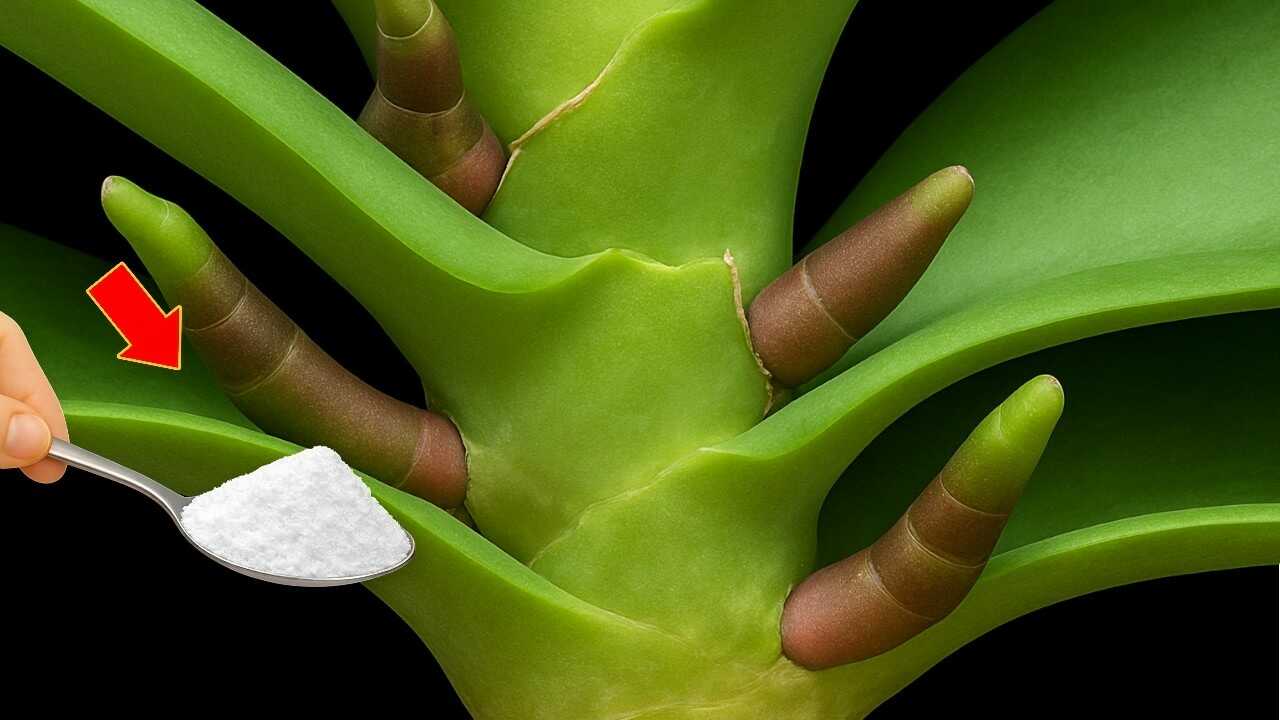
The photo shows a spoon of fine white powder — **baking soda (sodium bicarbonate)** — being presented toward emerging orchid spike buds. If your Phalaenopsis or other potted orchid has healthy leaves but won’t open buds or keeps dropping buds, a carefully prepared baking soda spray can help by reducing surface fungal pressure and giving the plant back the energy to set and open flowers. This is a targeted, supplemental trick — not a miracle cure.
Why baking soda can help non-blooming orchids
Sodium bicarbonate is a mild alkalizing agent that can create an environment on leaf and bud surfaces less favorable to certain fungal spores (for example, powdery mildew and some Botrytis-type fungi). When used at low, controlled concentrations it acts as a **fungistatic** spray that reduces leaf/bud infection, lowering plant stress so energy can be diverted toward flowering. This method complements — never replaces — correct light, temperature, watering and fertilizing.
When to use this
- Use when you suspect light surface fungal activity (white powdery spots, fine gray mold on buds, or repeated bud drop) or in humid seasons when fungal pressure is high.
- Start treatment at the first sign of bud stress and continue as described below; expect visible improvement in fungal signs and bud retention over several weeks (minimum 3–8 weeks).
- Avoid heavy use during very hot, sunny periods; apply in cooler parts of the day (morning or evening).
What you’ll need (precise)
- 1 liter (≈1 quart) lukewarm water
- 1/2 teaspoon (≈2.5 g) baking soda
- 2–4 drops of mild, unscented liquid dish soap (acts as a surfactant)
- A clean spray bottle (mist setting)
Step-by-step application
- Measure 1/2 teaspoon baking soda and dissolve it completely in 1 liter of lukewarm water. Do not pour powder directly onto the plant.
- Add 2–4 drops of mild liquid soap, mix gently but thoroughly. This helps the solution spread and stick to buds and leaves.
- Test on one leaf: spray a small area and wait 48 hours to check for any sensitivity (leaf burn or discoloration).
- If the test is fine, lightly mist the upper and lower leaf surfaces, bud sheaths and developing spikes until damp — do not drench the potting media or saturate the crown.
- Apply in the cool morning or evening; avoid spraying in direct sun or when temperatures exceed 30°C/86°F.
Dosage, frequency and seasonal notes
- Active treatment: every 7–10 days for up to 6 weeks (maximum of six consecutive sprays).
- Maintenance: if successful, reduce to once every 3–4 weeks during humid months; during cool dry periods limit to once every 6–8 weeks or only as needed.
- For small spray bottle (250 ml): use 1/8 teaspoon baking soda per 250 ml water and 1 drop of soap; keep proportions consistent.
- Do not exceed the stated concentration — higher concentrations increase risk of leaf burn and salt buildup.
Practical tips from experience
- Always use a clean bottle and fresh mixture; baking soda solutions degrade over time and may clog sprayers.
- Combine this spray with proper orchid care: steady bright indirect **light**, correct watering (allow media to dry slightly between waters), good air circulation, and appropriate fertilizer (diluted orchid fertilizer on a regular schedule).
- If bud drop persists, check for temperature fluctuations: many Phalaenopsis need a slight night temperature drop (about 3°C / 5°F) for several weeks to trigger blooming.
- Flush potting medium monthly with clear water to avoid salt accumulation from repeated sprays and fertilizing.
Common mistakes to avoid
- Do not use raw powder sprinkled onto leaves, the crown, or media — this concentrates salts and risks burning or crown rot.
- Avoid spraying during hottest sunlight hours — this causes phytotoxicity and leaf scorch.
- Don’t over-rely on baking soda as a “bloom inducer.” It treats surface fungal stress, but blooms require correct light, temperature, water, and nutrient balance.
- Do not mix baking soda with strong acids, bleach, or copper sprays — unpredictable reactions can damage the plant.
Used carefully, the spoonful of baking soda shown in the image can be a gentle, effective tool to reduce fungal stress on leaf surfaces and buds, helping your orchid redirect energy into flower production within several weeks. Try the recipe above, monitor results, and keep providing solid foundational care — then enjoy the reward when those buds finally open.
Ready to try it? Mix just one liter of the solution, test on a leaf, and follow the schedule — then come back in 4–8 weeks and compare photos of your plant. Share your results and questions; I’ll help you tweak the routine for your specific orchid.