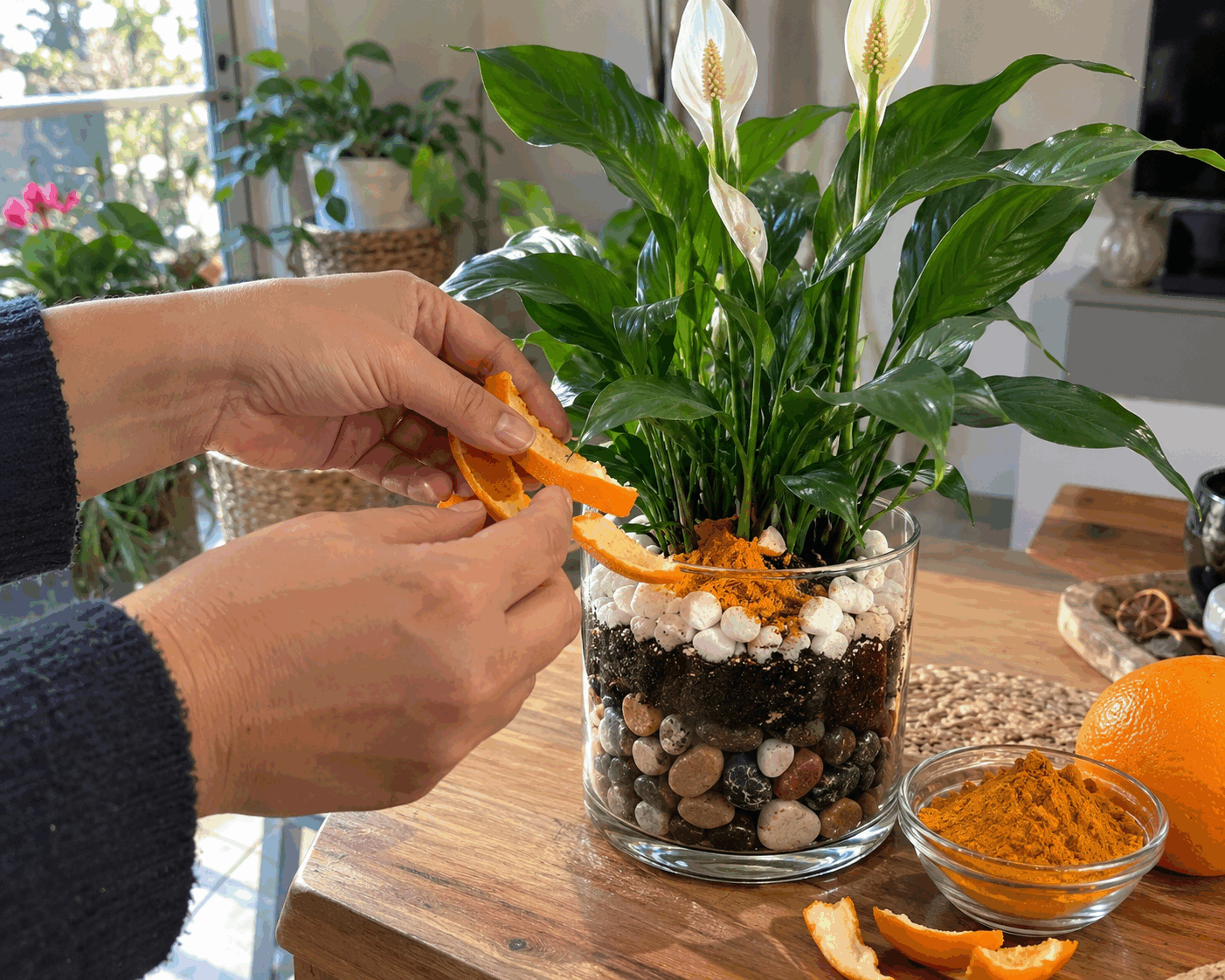
🌸Stop Using Soil for Peace Lily! This Trick Makes Roots Grow Faster & Bloom More
Growing a peace lily without conventional potting soil is possible, but changing the growing medium does not automatically produce faster roots or more flowers. A successful soil-free setup still has to supply water, oxygen, support, and appropriate nutrients. Moving a struggling plant into a jar of standing water can make the original problem harder to manage.
This guide explains the choices before you switch. It is useful whether you are considering an inert growing medium or have already seen peace lilies displayed with exposed roots. Start with a healthy plant and a clear maintenance plan. Flowering remains a separate outcome influenced by light, maturity, and the condition of the whole plant.
Understand what soil-free growing actually means
Hydroponics supplies nutrients in water instead of relying on conventional soil. Some systems use an inert medium to support the roots; others manage a moving or aerated nutrient solution. These approaches are more structured than simply washing the soil from a plant and leaving its roots submerged indefinitely. Water level, oxygen availability, and solution maintenance all matter.
Expanded clay and other inert media do not provide a complete diet by themselves. Their physical properties also differ from ordinary potting mix. The surface may look dry while moisture remains lower in the container. You need to learn how the chosen system behaves instead of transferring your previous watering schedule unchanged. A water-level indicator helps only when used correctly.
Decide whether a conversion solves your actual problem
Ask why you want to change the setup. If the problem is a dark room, a new medium will not add light. If a decorative cover traps drainage water, correcting that arrangement may be simpler than converting the whole plant. If the plant is already healthy, the choice can be about how you prefer to manage and inspect it.
Avoid treating soil-free growing as an emergency rescue for every damaged root system. A plant with extensive decay needs a careful assessment of what tissue remains alive. Moving it repeatedly between media adds disturbance. For a valuable or severely affected specimen, ask an experienced grower to identify the problem before committing to a major change in root environment.
Choose a complete system before removing the old medium
Select a container, support medium, and nutrient product intended to work together. Make sure you can inspect and maintain the reservoir without damaging the plant. The container should be stable enough for the foliage and should allow you to manage excess solution as instructed. Keep the crown above the wettest zone rather than burying it deeply for support.
Read the system’s directions while the plant is still safely in its existing pot. Confirm how much solution is appropriate, when it should be renewed, and whether water-quality measurements are needed. Do not buy unrelated pieces and assume their instructions are interchangeable. A small, manageable setup is easier to learn than several different containers converted at the same time.
Protect roots during any transition
Work with a healthy plant when conditions support active growth. Remove the old pot gently and loosen the medium with care. Avoid aggressively scrubbing every root simply to achieve a perfectly clean photograph. Damaged roots can complicate establishment. Remove clearly dead tissue only with clean tools, and keep healthy tissue intact as far as the chosen method allows.
Roots formed in a previous medium may not all respond identically to the new environment. Some adjustment can occur, and that does not justify repeated pulling, trimming, or rearranging. Secure the plant so it does not wobble while new roots develop. Follow the conversion method recommended for the system, including its initial water-level and feeding instructions, rather than improvising a stronger solution.
Oxygen is as important as water
Roots need oxygen to function. A container full of stagnant water is therefore not equivalent to a well-managed hydroponic system. The RHS overview of hydroponics emphasizes aeration alongside moisture and nutrition. Depending on the system, air spaces, circulation, or other design features help maintain a workable root environment.
Do not keep increasing the water level whenever a leaf droops. Check the actual reservoir and the root condition first. A wilted appearance can result from more than one cause, including a recent transition. Increasing submersion without understanding the system can reduce rather than improve root function. Keep notes so you can compare symptoms with the changes you made.
Use nutrients intended for the growing method
An inert medium usually needs a deliberately managed nutrient supply. Choose a suitable complete product and follow its directions for concentration and maintenance. Kitchen scraps, tea, rice water, and sweetened mixtures do not provide a predictable nutrient balance. They can also complicate cleanliness in a reservoir where you need to observe water and roots clearly.
More fertilizer does not mean faster establishment. As water is used or evaporates, the remaining solution can change in concentration. Follow the system’s instructions for topping up and replacing solution. Where pH or conductivity monitoring is required, learn the measurement procedure and use the appropriate tools. Avoid correcting readings with random household chemicals or treating a guessed number as a diagnosis.
Keep the container clean without exposing roots to cleaners
Plan how you will clean accessible container surfaces during normal maintenance. Residues, algae, and debris are easier to manage when noticed early. Keep cleaning products separate from nutrient products, and rinse components as required before they return to use. Never pour a household disinfectant into an occupied reservoir as a shortcut for maintenance.
Opaque reservoirs may reduce light reaching the solution, while transparent containers make some observations easier. Neither feature removes the need for cleaning and monitoring. Choose according to the system rather than appearance alone. Check supports, seals, and access points when maintaining the setup so that a blocked opening or unstable insert does not become an unnoticed problem.
Give the leaves suitable light and a stable location
A peace lily still needs useful indirect light after a conversion. Keep it away from intense direct summer sun, hot radiator air, and cold drafts. A location bright enough for foliage to remain healthy is also more promising for future flowering than a very dark corner. Move gradually if the plant has been kept in low light.
Do not interpret unusually elongated or weak growth as success simply because it appeared quickly. Look for healthy color, firm tissue, and normal leaf development. New growth that is supported by sound roots is more meaningful than a short burst followed by decline. Keep the foliage clean enough to inspect without applying oil or a coating intended merely to create shine.
Track roots and flowers separately
Root development and flowering are related through plant health, but they are not interchangeable measures. A plant may establish roots in a new system before producing a white spathe. That adjustment period cannot be reduced to a universal number of days. The size of the plant, previous root condition, and growing environment all influence what you observe.
Photograph the plant at intervals from the same angle. Record new leaves, changes in the reservoir, and any root deterioration you can see without disturbing the plant. If it becomes necessary to inspect more closely, do so for a specific reason. Daily removal from the container interrupts establishment and creates a less useful comparison than consistent external observations.
Common questions before you switch
Can you keep a peace lily in plain water forever? Plain water alone is not a complete long-term nutrition plan. A decorative display that survives for a while does not demonstrate that all its needs are being met. Use a maintained growing system if you choose a long-term soil-free approach, and review both nutrition and aeration.
Will a soil-free plant flower more than one in potting mix? There is no universal guarantee. A well-maintained plant in a suitable potting mix can grow and flower successfully. Compare the quality of care each method allows you to provide, not the marketing claim that one material makes every plant superior. Choose the routine you can maintain consistently.
Is the method maintenance-free? No. You may spend less time handling loose potting mix, but you take on reservoir and solution management. If you travel frequently, assess the setup’s requirements before changing your only plant. A reliable caretaker needs clear instructions about the actual system, not a vague direction to keep adding water.
A practical way to make the decision
Keep your current plant healthy while learning the proposed setup. Gather the correct equipment, understand solution maintenance, and make any transition carefully. Leave the crown properly positioned, preserve healthy roots, and observe new growth without repeatedly disturbing it. A soil-free peace lily succeeds through a coherent routine; removing soil is only one part of that routine.