🥒 Fluffy Kefir Zucchini Pancakes with a Warm Vegetable Side
# 🥒 Fluffy Kefir Zucchini Pancakes with a Warm Vegetable Side
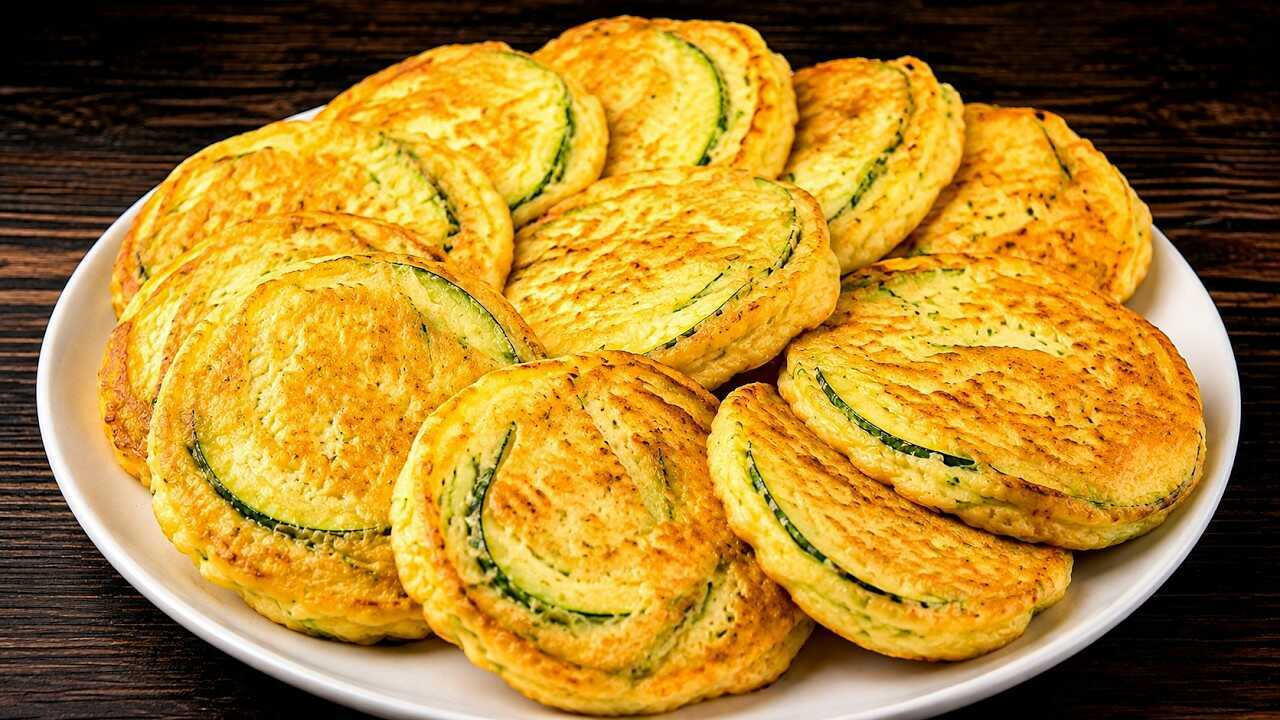
Kefir, eggs and flour create a soft batter for grated zucchini, dill and garlic. A separate vegetable side with onion, mushrooms, bell pepper, celery and corn turns the pancakes into a more complete meal.
## Table of Contents
– Ingredients
– Step-by-step method
– The key texture tip
– Why the recipe works
– Temperature and timing
– Substitutions
– Serving ideas
– Storage and reheating
– Common mistakes
– Frequently asked questions
– Final tips
## Ingredients
– 2 zucchini
– 3 eggs
– 400 ml kefir 2.5%
– salt
– black pepper
– paprika
– 400 g flour
– 1 tsp baking soda
– dill
– 2 garlic cloves
– vegetable oil
– 1 onion
– 150 g mushrooms
– 1 bell pepper
– 3 celery stalks
– 100 g canned corn
– dried garlic
## Step-by-Step Method
1. Grate the zucchini and remove part of the excess liquid so the batter does not become watery.
2. Whisk the 3 eggs with 400 ml kefir, salt, black pepper and paprika.
3. Add the 400 g flour gradually, then mix in the 1 teaspoon baking soda.
4. Fold in the zucchini, dill and 2 garlic cloves.
5. Cook portions in a lightly oiled pan over medium heat until golden on both sides and fully set in the center.
6. In a separate pan, sauté the onion and 150 g mushrooms until the mushrooms begin to brown.
7. Add the bell pepper and 3 celery stalks, then the 100 g corn.
8. Season with salt, pepper, paprika and dried garlic.
9. Serve the warm vegetable mixture alongside the zucchini pancakes.
## The Key Texture Tip
Kefir and baking soda create tenderness, but the batter still needs controlled moisture. Add the flour progressively and do not make the pancakes too thick.
## Why the recipe works
Zucchini is a high-moisture vegetable. That is the central technical issue in almost every zucchini recipe. Once cut or grated, it quickly releases water, especially after salting. If that liquid remains in the mixture, pancakes can spread, casseroles can turn watery, and egg mixtures can take much longer to set.
The most reliable solution is not to keep adding flour. First remove the excess water. Salting and squeezing grated zucchini is particularly useful for patties, pancakes and bakes. For sliced zucchini, patting the surface dry or briefly pre-cooking it may be enough.
Eggs play two roles: they provide structure and richness. In skillet recipes, the egg needs moderate heat so it can set before the underside burns. In baked dishes, the center should no longer look liquid, but overbaking can make the eggs rubbery.
Cheese contributes flavor, browning and some binding. High-moisture mozzarella should be drained well, while firmer cheeses such as Gouda or cheddar brown more easily.
## Temperature and timing
Medium heat is usually best for zucchini pancakes. High heat gives a dark surface before the middle cooks. Very low heat causes the mixture to absorb more oil and remain pale.
For oven dishes, preheating matters. A cold oven gives watery vegetables more time to release liquid before the eggs begin to set. If the source provides a temperature and time, follow it. When it does not, observe the dish rather than inventing an exact number.
The final indicators are visual: a firm center, golden edges and no pool of raw egg. Resting a bake for five minutes after cooking helps the structure stabilize.
## Ingredient substitutions
Fresh parsley, dill, chives and basil are flexible. Use one or combine several.
Gouda can usually be replaced by cheddar, Edam or another good melting cheese. Mozzarella creates a stretchier result but may release more water.
For kefir batter, natural yogurt can sometimes be used, but it is often thicker. A small amount of milk may be needed to reach a similar consistency.
If the recipe calls for flour and you want to use oat flour, add it gradually because it absorbs liquid differently.
## How to serve
Warm zucchini dishes are excellent with a cool yogurt-and-garlic sauce. A simple tomato and cucumber salad also balances fried or cheesy dishes.
For breakfast or brunch, serve with fresh tomatoes, arugula or a slice of whole-grain bread. For dinner, add a larger salad with a lemon-and-olive-oil dressing.
The richer casseroles pair well with something acidic, such as pickled cucumber or a lightly dressed salad.
## Storage and reheating
Cool leftovers completely before refrigerating them in a covered container. Dishes containing eggs, dairy and cooked vegetables should not sit at room temperature for long.
A skillet or oven usually reheats zucchini pancakes better than a microwave because dry heat restores some of the browned surface.
Casseroles can be reheated covered for most of the time, then uncovered briefly at the end. Keep cold yogurt sauces separate and add them only after reheating.
## Common mistakes
### Skipping the draining step
This is the most common reason for watery zucchini dishes.
### Adding too much flour
Flour should support the structure, not hide the zucchini. If the mixture is wet, drain it first.
### Overcrowding the pan
Too many portions lower the pan temperature and cause steaming instead of browning.
### Turning too early
A pancake releases more easily once the first side has formed a proper crust.
### Using very high heat
The outside burns while the center stays wet.
### Cutting a bake immediately
A few minutes of rest make cleaner slices.
## Frequently asked questions
### Do I need to peel zucchini?
Usually not. Young zucchini have tender skin and can be used whole after washing.
### Why salt zucchini before cooking?
Salt draws out some water, making it easier to obtain a firmer texture.
### Can I bake pancakes instead of frying them?
Usually yes. The texture will be different, but they can be shaped on parchment and baked until set and golden.
### What if the mixture is still too wet after squeezing?
Let it stand briefly, drain again, then add only a small amount of the binder already used in the recipe.
### Can I make the mixture in advance?
For grated zucchini recipes, it is better to cook soon after mixing because the vegetable continues to release water.
### Can I freeze leftovers?
Many cooked zucchini bakes can be frozen, although the texture may become softer after thawing. Freshly fried patties are usually better before freezing.
## Final tips
The difference between a good zucchini dish and a watery one is usually technique rather than a secret ingredient. Drain the vegetable, use moderate heat, keep the portions reasonably thin and let baked dishes rest before cutting.
Preserve exact source quantities when they are available, but do not invent measurements where the source is silent. That approach makes the recipe both more honest and easier to reproduce.
## A little planning makes the recipe easier
If you are cooking for several people, prepare the vegetables first and keep the egg mixture separate until the pan or baking dish is ready. This prevents salted zucchini from sitting too long and releasing another large amount of water into the final mixture.
For skillet recipes, use a wide spatula and give the first side enough time to set before trying to turn anything. If a large pancake feels too fragile, divide the mixture into smaller portions instead of forcing one oversized piece to flip.
For baked dishes, spreading the mixture in an even layer helps the center cook at the same pace as the edges. A very deep casserole may need more time than a shallow one even when the ingredient quantities are identical.
Taste the cooked vegetables before adding a final layer of cheese or sauce. Cheese, mayonnaise and some sauces are already salty, so final seasoning is easier to control at the end.
These small habits do not change the recipe, but they make the result much more consistent from one kitchen to another.