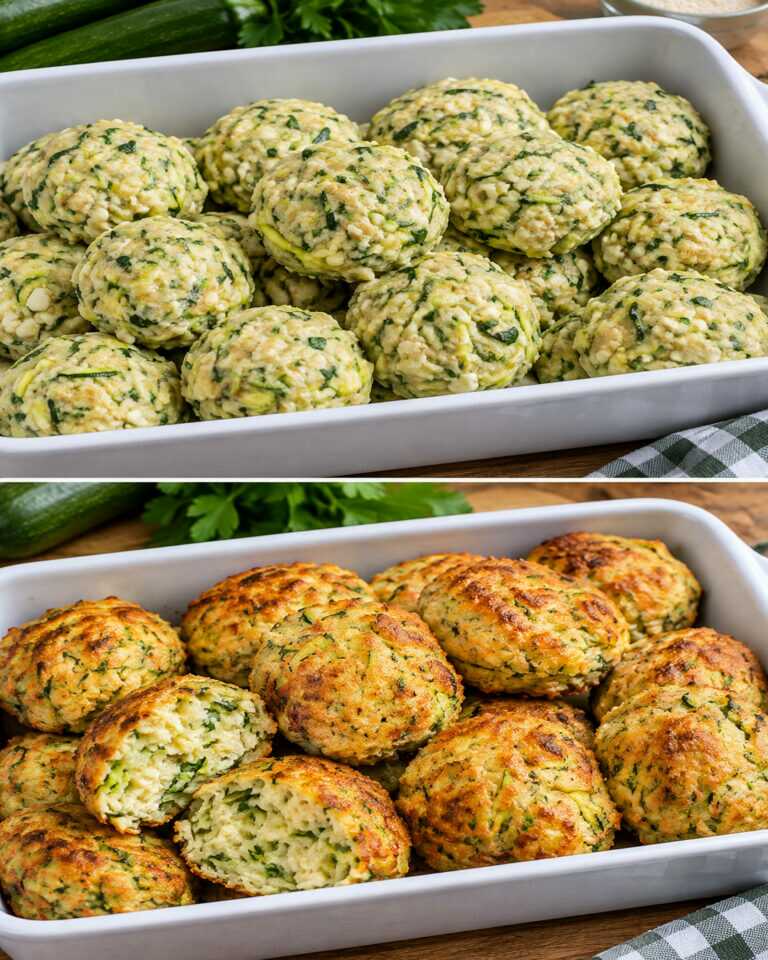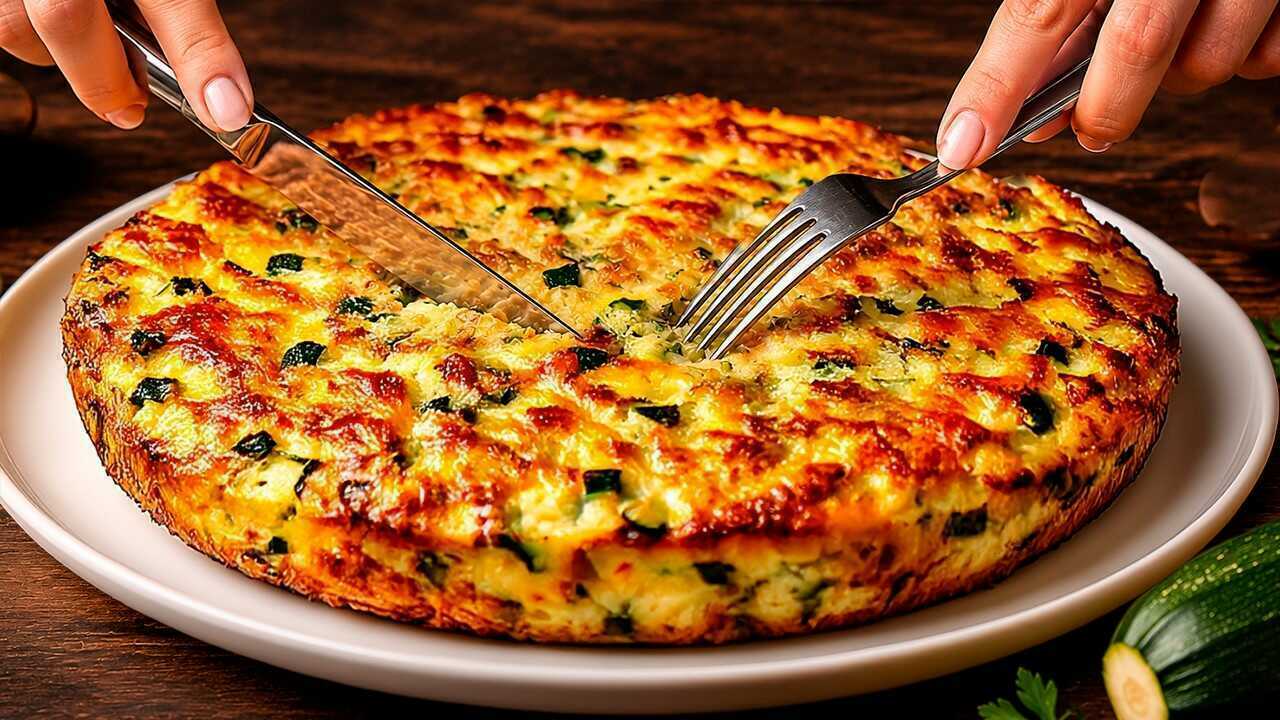
🥒 I make this zucchini 5 times a week! Vegetable, egg, cheese and garlic sauce gratin
# 🥒 I make this zucchini 5 times a week! Vegetable, egg, cheese and garlic sauce gratin
## Ingredients from the source
– 1 zucchini
– salt
– 1 onion
– olive oil
– 1 carrot
– 1 red bell pepper
– 1 tomato
– black pepper
– Italian herbs
– paprika
– 4 eggs
– 120 ml milk
– 2 cloves garlic
– 4 mushrooms
– 1–2 additional tomatoes
– green onion
– grated cheese
### Cold sauce
– 1 tablespoon Greek yogurt
– 1 tablespoon mayonnaise
– dill
– 1 clove garlic
## Step-by-step source method
Grate the zucchini, salt it and let it rest for 10 minutes, then squeeze it thoroughly.
Chop the onion and sauté it in olive oil. Add the carrot and cook for about 5 minutes. Add the red pepper and tomato, season with black pepper, Italian herbs, paprika and salt, then continue for 3–5 minutes.
Add the drained zucchini.
In another bowl, whisk 4 eggs with 120 ml milk, salt, pepper and 2 finely chopped garlic cloves. Pour over the vegetables.
Arrange 4 mushrooms, 1–2 tomatoes and green onion over the top, then add grated cheese.
Cook until the eggs are fully set and the cheese is melted and golden. The source does not provide a final oven temperature or exact time, so those values should not be invented.
For the cold sauce, mix Greek yogurt, mayonnaise, dill, 1 clove garlic and a little green onion. Keep the sauce separate until serving.
## Why moisture control matters
Zucchini is one of the most water-rich vegetables used in fritters, casseroles and savory pies. Once grated and salted it can release a surprising amount of liquid. If that water remains in the mixture, the result becomes soft, difficult to turn and slower to cook.
For grated zucchini, salting and squeezing is the most reliable technique when the source calls for it. Use your hands, a fine sieve or a clean kitchen towel. For slices, patting dry may be enough.
The goal is not to make the vegetable dry. Remove free water while keeping the flesh tender.
## Potatoes and other vegetables
Potatoes bring starch and structure, but they must be cut or grated thinly enough to cook through. If grated potatoes release large amounts of liquid, squeeze lightly without rinsing away all of the starch.
Carrots add sweetness and color. Peppers and tomatoes add aroma but also moisture. Mushrooms release a lot of water during cooking, so sauté them until the liquid has evaporated before adding them to a filling or salad.
## Eggs as a binder
Eggs create structure in zucchini fritters, frittatas and casseroles. Beat them separately before combining them with vegetables so seasonings distribute evenly.
If milk or yogurt is included, mix it with the eggs before adding flour or oats. This reduces lumps and creates a more even texture.
Egg-based dishes must be fully set in the center before serving. A golden cheese surface does not guarantee that the egg mixture underneath is cooked.
## Flour, semolina and oats
Dry binders should support the vegetables, not replace them. Too much flour produces a heavy, doughy dish.
Semolina absorbs moisture after a short rest. Oats do the same and may need several minutes before their final texture is obvious.
When the source gives a precise amount, keep it. When no quantity is given, add gradually and stop when the mixture holds together. Do not invent a fixed number.
## Cheese
Cheese adds flavor and helps browning. Firm cheeses such as Suluguni, gouda, cheddar, edam or Parmesan generally release less water than fresh mozzarella.
If you use fresh mozzarella, drain and pat it dry. Excess cheese cannot fix a wet zucchini mixture; it may actually add more moisture.
Salt carefully because many cheeses are already salty.
## Frying correctly
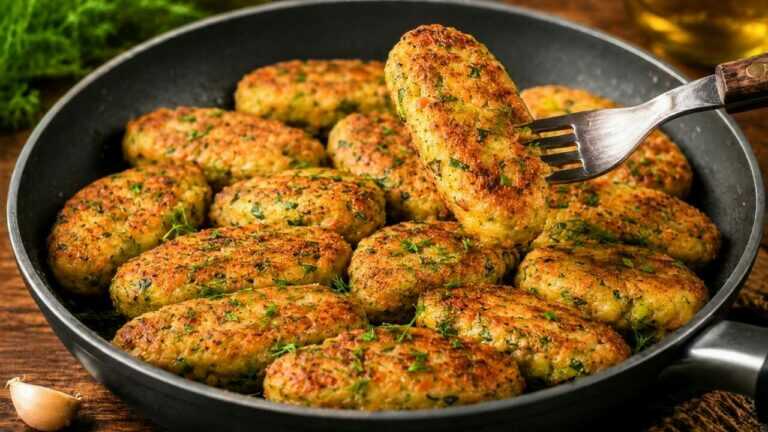
Use moderate heat. Very high heat burns the outside before potatoes or eggs cook through. Very low heat can make fritters absorb more oil and stay pale.
Do not crowd the pan. Each portion needs space so steam can escape.
Turn fritters only after the first side has formed a real crust. Trying to turn too early is a common reason for breaking.
## Baking correctly
Preheat the oven when the source gives an oven method. In a cold oven, watery vegetables have more time to release juice before the eggs or starch begin to set.
Use the source temperature and time whenever they are provided. If they are absent, do not manufacture precision. Watch for a set center, tender vegetables and a browned top.
A wide, shallow dish cooks more evenly than a very deep one.
## How to get a crisp surface
A crisp surface comes from controlling water, keeping portions reasonably thin and allowing hot air or pan heat to reach the surface.
Do not cover baked dishes for the entire cooking time if the recipe is meant to brown. For pan fritters, avoid stacking cooked pieces while they are still steaming.
Serve cold sauces separately so they do not soften the surface before eating.
## Seasoning
Zucchini works well with black pepper, smoked paprika, garlic, oregano, thyme, dill, parsley, chives and Italian herbs.
When cheese, mayonnaise, ham or another salty ingredient is present, reduce added salt.
For a first attempt, stay close to the source. Once the basic texture works, it is easier to test variations.
## Serving ideas
Savory zucchini dishes pair well with a cold yogurt-garlic sauce, fresh tomato salad, cucumber, lettuce or herbs.
Potato-heavy dishes are filling and usually need only a fresh acidic side.
A meat-and-potato casserole benefits from a crisp salad because it balances the richness of meat and melted cheese.
## Preparing a larger batch
Doubling ingredients does not mean making one layer twice as thick. Use two pans, two baking dishes or multiple batches.
A thicker layer changes cooking time unpredictably. The surface may brown while the center remains wet or the potatoes remain firm.
Keep portions similar in size so they finish at roughly the same time.
## Resting before cutting
Let large fritters, casseroles and baked meat dishes rest for a few minutes after cooking. Eggs, melted cheese, starch and meat juices stabilize during this time.
Cutting immediately can make an otherwise properly cooked dish look too wet or cause portions to fall apart.
## Storage
Cool leftovers before sealing them in a container. Trapped steam quickly softens browned surfaces.
Refrigerate dishes containing eggs, dairy or cooked meat promptly. Keep yogurt or mayonnaise sauces separate.
For reheating, a pan, oven or air fryer usually restores texture better than a microwave.
## Food safety
Ground meat must be fully cooked in the center. If using a kitchen thermometer, follow the safe internal temperature appropriate for the type of meat.
Cooked egg mixtures should not remain liquid in the center.
Do not leave dishes containing meat, eggs, mayonnaise or dairy at room temperature for long periods.
## Common mistakes
### Not squeezing zucchini
This is the most common cause of watery results.
### Adding too much flour
The dish becomes heavy and masks the vegetables.
### Making portions too thick
The outside cooks before the center.
### Using excessive heat
The surface burns.
### Turning too early
Fritters break.
### Adding wet mozzarella
Extra liquid enters the dish.
### Cutting a casserole immediately
The structure has not stabilized.
## FAQ
### Do I need to peel zucchini?
Usually not if it is young and the skin is tender.
### Can I substitute another cheese?
Yes, but moisture and salt levels change the result.
### Can fritters be baked instead of fried?
Often yes. The texture will differ, but they can be placed on baking paper and cooked until set and browned.
### What if the mixture is still wet?
Drain or squeeze it again before adding more dry binder.
### Can I prepare the mixture ahead?
With grated zucchini, it is better to cook soon after mixing because the vegetable continues to release water.
### Can leftovers be frozen?
Many cooked fritters and casseroles can be frozen, although zucchini becomes softer after thawing.
## Final practical advice
The difference between a successful zucchini recipe and a watery one is usually technique rather than a secret ingredient. Squeeze the vegetable, use moderate heat, keep portions reasonably thin and let baked dishes rest before cutting.
Preserve exact source quantities where they exist. When the source is vague, explain the technique rather than inventing measurements or times. That makes the recipe easier to reproduce and more faithful to the original.