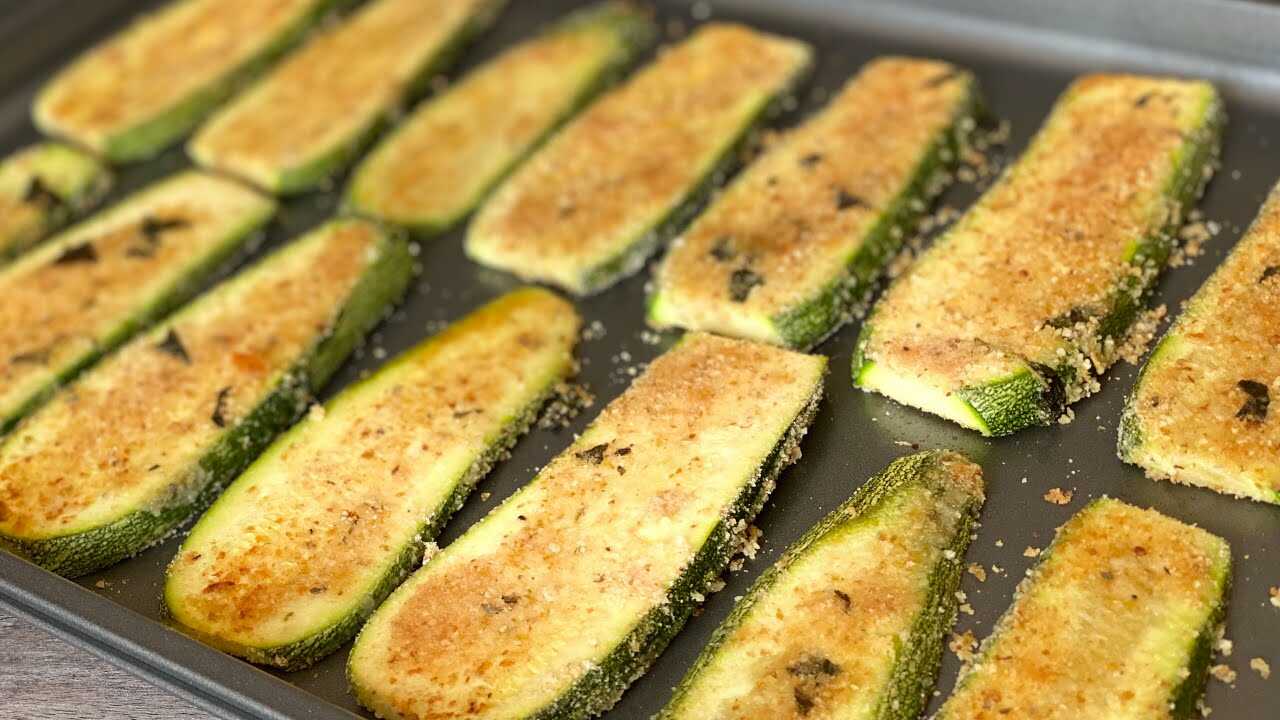
🥒 Oven-Baked Zucchini With Parmesan Crumb and Cool Yogurt Sauce
# 🥒 Oven-Baked Zucchini With Parmesan Crumb and Cool Yogurt Sauce
The source uses 4 medium zucchini, equal 1-cup measures of Parmesan and breadcrumbs, aromatic herbs and garlic, then bakes for 15 minutes at 200°C. A simple yogurt-coriander sauce is served alongside.
## Table of Contents
– Ingredients and source details
– Step-by-step preparation
– Texture and technique
– Variations
– Serving and storage
– Common mistakes
– FAQ
– Conclusion
## Ingredients
– 4 medium zucchini
– olive oil
– 1 cup Parmesan (237 ml volume)
– 1 cup breadcrumbs (237 ml volume)
– salt
– oregano
– basil
– 2 garlic cloves
### Sauce
– 1 cup yogurt (237 ml)
– salt
– black pepper
– 1 garlic clove
– coriander
## Prepare the Zucchini
Wash and cut the 4 zucchini into pieces suitable for baking. Keep the pieces similar in thickness so they finish at the same time.
Pat them dry before adding the coating. A wet surface makes crumbs clump.
## Make the Crumb Mixture
Combine 1 cup Parmesan with 1 cup breadcrumbs, oregano, basil, salt and the 2 garlic cloves.
Because Parmesan is salty, start with a modest amount of extra salt.
## Bake
Coat the zucchini lightly with olive oil, then press the crumb mixture onto the surface.
Bake for 15 minutes at 200°C / 392°F.
The source gives a short bake, so cut pieces at a size that can soften within that time. If your zucchini are unusually thick, use tenderness as the final check rather than simply extending the bake until the crumbs turn too dark.
## Make the Yogurt Sauce
Mix 237 ml yogurt with salt, black pepper, 1 minced garlic clove and coriander.
Keep chilled until serving. Add only at the table so the breadcrumb coating remains dry.
## How to Improve Browning
Use a fully preheated oven and avoid stacking the zucchini. Dry heat must reach the surface.
If the crumb stays pale, move the tray slightly higher for the final minutes while watching closely. Parmesan can go from golden to dark quickly.
## Can You Use Panko?
Yes. Panko gives a rougher, lighter crust. The result will differ from fine breadcrumbs but works well for baked vegetables.
## Serving
Serve with the yogurt sauce, grilled tomatoes, a green salad or roasted peppers. The dish works as a side or light vegetarian meal.
## Storage
Store leftovers without sauce. Reheat in an oven or air fryer rather than the microwave if crispness matters.
## FAQ
### Can I omit olive oil?
A very small amount helps crumbs adhere and brown. The source does include olive oil.
### Can I use another cheese?
Yes, but Parmesan gives a dry, concentrated flavor and crisp crust.
### Should zucchini be salted first?
The source does not specify a resting step here, so it is not necessary to invent one. Drying the surface is still helpful.
## Conclusion
This recipe is quick because the coating does most of the flavor work. Dry zucchini, a hot oven and a separate cool sauce are the keys.
## Working With the 15-Minute Bake
A 15-minute bake at 200°C is relatively short, so the zucchini pieces should not be extremely thick. If the source shows halves or large wedges, their exact size matters. Cut similar pieces so they finish together.
The Parmesan-and-breadcrumb mixture is generous: 1 cup of each, using the 237 ml cup measure from the source. That creates a substantial coating.
### Applying the Coating
A light film of olive oil helps the Parmesan and breadcrumbs stick. Too much oil can make the crumbs greasy.
Press the mixture onto the zucchini rather than simply sprinkling it loosely. A more even coating gives more consistent browning.
### Garlic and Herbs
The source uses 2 garlic cloves in the zucchini mixture plus oregano and basil. Finely minced garlic spreads flavor more evenly, but pieces on the very top can brown quickly at 200°C.
Dried herbs are less likely to burn than a large amount of fresh basil. Fresh herbs can be added after baking if desired.
### Sauce Balance
The sauce uses 1 cup / 237 ml yogurt, salt, pepper, 1 garlic clove and coriander.
Mix it before the zucchini goes into the oven and let it sit in the refrigerator. The garlic flavor becomes more integrated during those 15 minutes.
### What “Baked, Not Fried” Really Changes
The surface will be crisp in a dry, crumbly way rather than exactly like deep-fried food. That is normal. The goal is golden crumbs and tender zucchini, not an oily crust.
A wire rack over the tray can increase airflow if your setup supports it, but it is not required by the source.
### Serving
Serve immediately after a brief 2–3 minute rest. The crumbs are crispest before steam softens them.
The yogurt sauce should be served on the side, not poured over the tray.
### Reheating
Use 180–200°C dry heat until warmed through and crisp again. A microwave is acceptable for speed but sacrifices the texture.
### Variations
Coriander in the sauce can be replaced with dill or parsley if preferred. Parmesan can be partly mixed with another hard cheese, but avoid wet cheese in the breadcrumb layer.
### Final Check
Do not judge the recipe only by exact minutes. At 15 minutes, look for golden crumbs and a zucchini center that is tender but not collapsing. If your pieces are much thicker, they may require an adjustment.
## More Ways to Keep the Crumb Crisp
After coating the zucchini, press the Parmesan-breadcrumb mixture gently with your fingers. Loose crumbs that are not attached will simply fall onto the tray and toast separately.
Use a tray large enough to avoid overlapping pieces. Overlap creates wet contact points where steam collects.
If you prefer a more intensely toasted surface, you can finish with a very short burst of stronger top heat, but only if the zucchini is already tender. Watch constantly because Parmesan can darken very quickly.
The yogurt sauce can be made with Greek yogurt for a thicker dip. If ordinary yogurt is thin, you can drain it briefly in a fine sieve. The source lists coriander, but dill or parsley can be used if coriander is not liked.
Do not season the sauce too heavily before tasting it with the zucchini. The crumb mixture already contains Parmesan, garlic and salt, so the sauce works best when it is fresh and slightly tangy.
For a lunchbox, let the baked zucchini cool fully and pack the sauce in a separate small container. The crust will soften somewhat, but keeping moisture separate helps.
If the coating comes off in one sheet, the surface was probably too wet or too much oil was used. If it stays pale, the oven may not have been fully preheated.
The recipe is intentionally simple. Resist adding wet toppings before baking; tomatoes, fresh mozzarella or sauce can all undermine the dry crisp surface that makes the dish appealing.
## A Final Kitchen Note
Before serving this specific recipe, compare the result with the source method rather than with a completely different zucchini dish. The goal is to preserve the original idea, quantities and sequence while making the instructions clearer.
If one batch behaves differently, the most likely reasons are vegetable size, water content, pan size or oven behavior. Change only one variable next time. That makes it easier to understand whether the adjustment actually improved the result.
Keep sauces separate until serving, cool leftovers before covering them, and avoid adding extra flour, oil or cheese unless the texture truly requires it. These small habits make home recipes much more consistent without changing their character.