🥒 Spanish-Style Layered Zucchini Bake With Mushrooms, Tomatoes and Two Cheeses
# 🥒 Spanish-Style Layered Zucchini Bake With Mushrooms, Tomatoes and Two Cheeses
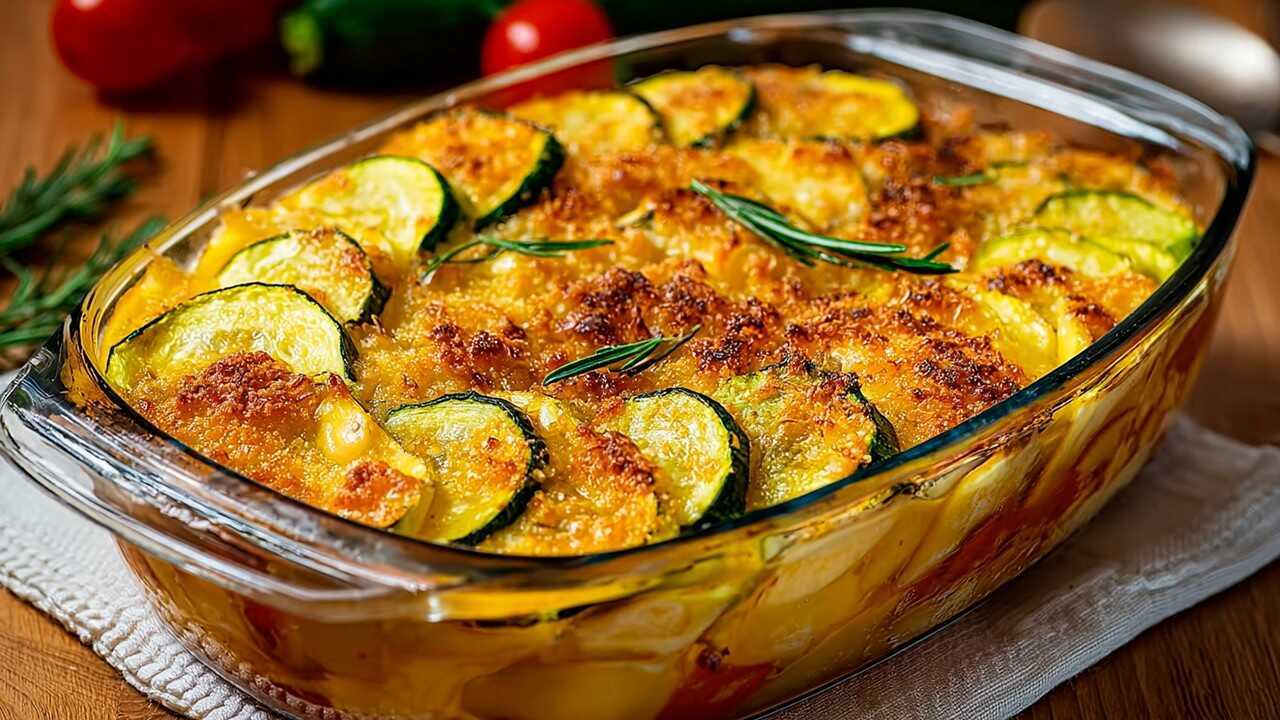
The source describes a restaurant-style layered zucchini bake. Zucchini are salted and dried, a mushroom-tomato filling is cooked separately, the zucchini slices are browned, and everything is layered with mozzarella, Parmesan and breadcrumbs before baking.
## Table of Contents
– Ingredients and source details
– Step-by-step preparation
– Texture and technique
– Variations
– Serving and storage
– Common mistakes
– FAQ
– Conclusion
## Ingredients and Source Times
– 3 zucchini
– salt
– 1 onion
– olive oil
– 1 red bell pepper
– mushrooms
– 3 tomatoes
– 2 garlic cloves
– red paprika
– oregano
– mozzarella
– Parmesan
– breadcrumbs
## Prepare the Zucchini
Slice the 3 zucchini, salt them and mix well.
Leave for 10–15 minutes.
Pat the zucchini dry with paper towel before cooking. This removes the water drawn out by the salt and helps the slices brown.
## Cook the Filling
Chop 1 onion and fry over medium heat in olive oil.
Finely chop 1 red bell pepper and fry for 3 minutes.
Slice the mushrooms, add them and cook for 5–7 minutes.
Grate the 3 tomatoes coarsely. Add them to the mushrooms and cook for 5 minutes.
Finely grate 2 garlic cloves and add them. Cook another 2–3 minutes.
Season with salt, red paprika and oregano. Mix well and cook for another 5 minutes.
## Brown the Zucchini
Heat a little olive oil and fry the dried zucchini slices on both sides until golden.
Do not crowd the pan. If the slices release water instead of browning, cook in smaller batches.
## Layer the Bake
Grate mozzarella and prepare Parmesan.
Layer zucchini, filling and cheese repeatedly until all ingredients are used.
Finish with breadcrumbs and Parmesan.
## Bake
Bake for 25–30 minutes at 180°C / 350°F.
Let the finished casserole rest for several minutes before cutting so the layers stabilize.
## Why This Method Works
The recipe deliberately removes water in several stages: salting and drying the zucchini, frying the zucchini separately, cooking mushrooms until they lose moisture and simmering grated tomato before assembly.
That is why the final bake can develop layers instead of turning into a watery vegetable stew.
## Cheese Choices
Low-moisture mozzarella works especially well because it melts without releasing as much water as fresh mozzarella. Parmesan brings salt and browning.
Taste the filling before adding extra salt because both cheeses contribute seasoning.
## Serving
Serve with a green salad, arugula or a small spoonful of yogurt-garlic sauce. The bake is rich enough to stand alone as the main dish.
## Storage and Reheating
Refrigerate after cooling. Reheat in the oven, covered for most of the time and uncovered at the end to refresh the top.
## FAQ
### Can I skip frying the zucchini first?
You can, but the final dish will likely be wetter and less concentrated.
### Can mushrooms be replaced?
Yes, with pre-cooked eggplant or spinach.
### Can I prepare the filling one day ahead?
Yes. Refrigerate it and assemble the casserole the next day.
### Why grate the tomatoes?
It creates a quick fresh tomato base that cooks down evenly.
## Conclusion
This recipe is more work than a one-pan zucchini bake, but each separate cooking step has a purpose: removing water, concentrating flavor and creating clean layers.
## Why This Recipe Uses Several Separate Cooking Stages
The source spends time salting zucchini, cooking the filling, browning zucchini slices and then baking the layered dish. That may look unnecessary, but each step removes water and builds flavor.
Zucchini salted for 10–15 minutes releases moisture. Patting it dry prepares it for frying.
Mushrooms cook for 5–7 minutes because they first release water. Grated tomato then cooks for 5 minutes, garlic for another 2–3 minutes, and the seasoned filling for another 5 minutes. This produces a concentrated filling instead of a raw watery layer.
### Frying the Zucchini
Use enough olive oil to prevent sticking but avoid soaking the slices. Cook in batches so each piece touches the pan.
Brown both sides. This creates flavor and partially cooks the zucchini before layering.
### Layering With Two Cheeses
Mozzarella gives melt and stretch. Parmesan brings salt and browning.
If possible, choose low-moisture mozzarella. Fresh mozzarella should be drained thoroughly.
Add breadcrumbs and Parmesan at the top for a drier crust.
### The Final 25–30 Minutes at 180°C
Because most vegetables have already been cooked, this stage is mainly about bringing the layers together, heating the center and browning the surface.
Rest the casserole for several minutes after baking. It will slice more cleanly.
### Making It Ahead
The filling can be prepared a day ahead and refrigerated. Zucchini slices can also be salted and browned earlier, though they are best assembled once cool.
Do not layer everything with raw watery ingredients and leave it overnight. The liquid will migrate through the dish.
### Serving
A leafy salad, arugula or a simple yogurt sauce works well. Avoid another heavy starch because the casserole is already rich with cheese and breadcrumbs.
### Reheating
Cover for the first part of reheating to keep the center moist. Uncover near the end to crisp the top.
### Common Problems
If water pools at the bottom, the zucchini or mushroom-tomato filling was too wet.
If the top burns, the cheese layer is too close to the upper element or the dish needs to be loosely covered.
If slices fall apart, rest longer before cutting.
### Final Check
This recipe is a good example of deliberate moisture reduction. Every separate stage is there to create a layered bake rather than a vegetable stew.
## Extra Planning for the Layered Bake
This recipe is easiest when treated as four separate components: zucchini slices, vegetable filling, mozzarella, and the Parmesan-breadcrumb topping.
Prepare the filling completely before browning the zucchini. This prevents the browned slices from sitting too long and becoming soft while you finish the sauce.
The grated tomato stage should be cooked until the mixture looks concentrated rather than watery. If the filling is still loose after the stated cooking stages, give it a little more time rather than assembling immediately.
When frying zucchini, wipe the pan between batches if browned residue starts to burn. A clean pan surface gives more even color.
Layer in a wide dish so you create several thin layers rather than one deep stack. Thin layers heat evenly during the 25–30 minute bake.
If using fresh mozzarella, press or drain it before grating. Low-moisture mozzarella is even easier for this type of casserole.
The breadcrumb-Parmesan finish should be dry when it enters the oven. Do not drizzle tomato sauce over it.
After baking, rest uncovered so steam can escape. Covering immediately softens the top.
For leftovers, reheat portions rather than the entire casserole if possible. Smaller portions warm faster and are less likely to dry out.
The source calls the recipe restaurant-inspired, and the separate browning steps are what create that effect. Skipping them makes the dish easier but changes both texture and flavor.
## A Final Kitchen Note
Before serving this specific recipe, compare the result with the source method rather than with a completely different zucchini dish. The goal is to preserve the original idea, quantities and sequence while making the instructions clearer.
If one batch behaves differently, the most likely reasons are vegetable size, water content, pan size or oven behavior. Change only one variable next time. That makes it easier to understand whether the adjustment actually improved the result.
Keep sauces separate until serving, cool leftovers before covering them, and avoid adding extra flour, oil or cheese unless the texture truly requires it. These small habits make home recipes much more consistent without changing their character.