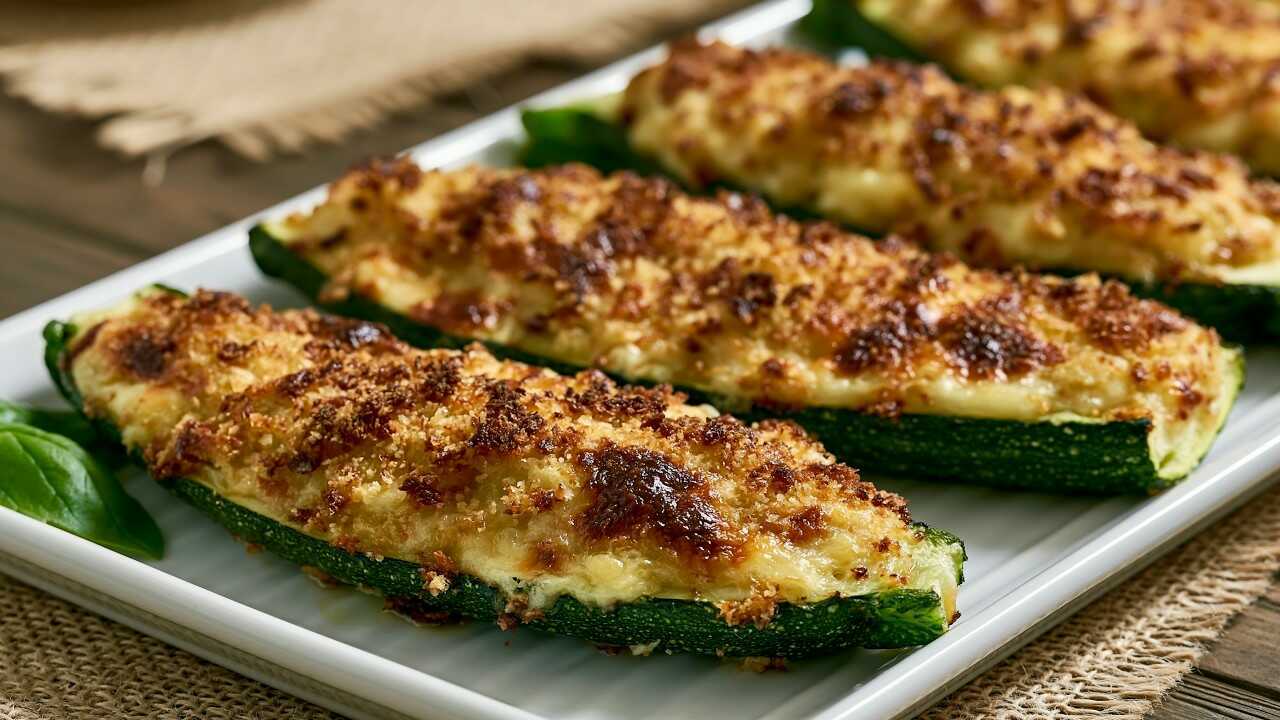
🥒 Stuffed Zucchini With Parmesan and Breadcrumbs — Simple, Crisp and Tender
# 🥒 Stuffed Zucchini With Parmesan and Breadcrumbs — Simple, Crisp and Tender
This is a straightforward stuffed-zucchini recipe built around fresh zucchini, Parmesan, breadcrumbs, chopped zucchini flesh, garlic and egg. The source gives no exact gram amounts, so this version preserves the ingredient list without inventing quantities.
## Table of Contents
– Ingredients and source details
– Step-by-step preparation
– Texture and technique
– Variations
– Serving and storage
– Common mistakes
– FAQ
– Conclusion
## Ingredients
– fresh zucchini
– Parmesan
– breadcrumbs
– chopped zucchini flesh
– garlic
– egg
– salt
– black pepper
– oregano
– olive oil
## How to Prepare the Zucchini
Wash the zucchini and cut them lengthwise. Scoop out the center carefully with a small spoon, leaving walls thick enough to hold their shape during baking. Do not scrape all the way to the skin.
Chop the removed flesh. If it looks very watery, cook it briefly in a pan so some moisture evaporates before it goes into the filling. This one step makes a major difference because raw zucchini flesh can release a surprising amount of water in the oven.
## Make the Filling
Combine the chopped zucchini flesh with egg, minced garlic, Parmesan and breadcrumbs. Season with salt, pepper and oregano.
Because the source does not specify quantities, add breadcrumbs gradually. The filling should be moist and spoonable, not dry like stuffing crumbs. Parmesan adds both flavor and salt, so taste the mixture before adding much extra salt.
## Fill and Bake
Spoon the mixture into the zucchini shells and drizzle lightly with olive oil. Bake until the zucchini is tender but still holds its shape and the top is golden.
No exact baking temperature or time appears in the source. It is better to follow visible signs than invent a number: the filling should be fully set, the top should be lightly browned and the zucchini should yield to a fork without collapsing.
## How to Keep Stuffed Zucchini From Becoming Watery
Choose medium zucchini when possible. Very large ones often contain more watery seed pulp, while very small ones do not leave enough room for filling.
Do not overfill with liquid ingredients. If you add extra vegetables such as mushrooms, tomato or spinach in your own variation, cook and drain them first.
Let the baked zucchini rest for a few minutes before serving. Steam settles and the filling firms slightly.
## Variations
You can replace Parmesan with another hard grating cheese, but flavor and saltiness will change. Fresh parsley or basil can replace oregano. A small amount of finely chopped onion can be added if cooked first.
For a more substantial filling, add cooked lentils, cooked minced meat or rice, but keep the zucchini flesh and breadcrumb balance in mind so the mixture does not become loose.
## Serving Ideas
Serve with a tomato salad, arugula, yogurt-garlic dip or a simple lemon dressing. Because the zucchini already includes cheese and breadcrumbs, a fresh side is usually more useful than another heavy starch.
## Common Mistakes
The most common problems are shells scraped too thin, wet filling, too much salt from cheese, and overbaking. Stuffed zucchini should be soft enough to eat with a fork but firm enough to lift from the baking dish.
## FAQ
### Do I need to peel zucchini?
No. Young zucchini skin helps the boats keep their shape.
### Can the filling be made ahead?
Yes. Keep it refrigerated and fill the zucchini shortly before baking.
### Can I use panko?
Yes. Panko gives a coarser, lighter texture than fine breadcrumbs.
### Can I freeze stuffed zucchini?
You can, but the vegetable will be softer after thawing.
## Final Note
The success of this recipe comes from moisture control rather than complicated ingredients. Keep the shells sturdy, the filling concentrated and the breadcrumb quantity modest, and the result stays tender instead of soggy.
## Choosing the Best Zucchini for Stuffing
Medium zucchini are usually the easiest to work with. Very small ones have little room for filling, while oversized zucchini can contain large seeds and watery flesh. Try to choose pieces of similar size so they bake at roughly the same rate.
After scooping, the shell should still be strong enough to lift with a spatula. A wall that is too thin can tear once the filling becomes hot. A wall that is too thick can remain crunchy while the filling is already cooked.
### Managing the Chopped Flesh
The source specifically includes chopped zucchini pulp, which is a good way to avoid waste. That pulp should not go straight into the filling if it is dripping wet. Sautéing it briefly with garlic allows water to evaporate and concentrates flavor.
Breadcrumbs should be added in response to texture. A watery filling needs more than a dry one, but the goal is never to turn the mixture into stiff dough. Parmesan also absorbs a little moisture while adding salt and umami.
### Building Flavor
Garlic and oregano are the main aromatic ingredients in the source. You can vary the profile with parsley, basil or thyme, but there is no need to bury the zucchini under too many seasonings.
Parmesan is strong and salty, so taste before adding much extra salt. Black pepper can be added more freely because it does not affect structure.
### Baking Without a Source Temperature
When no temperature is provided, use the equipment and method shown in the original source if available. If you are adapting the recipe independently, the correct endpoint is more important than an invented time: the filling should be set, the crumb should be golden and the shell should be tender but not collapsed.
A rest of about 5 minutes after baking helps the filling firm slightly and makes serving easier.
### Optional Additions
Cooked mushrooms, spinach, lentils or minced meat can make the filling more substantial. Any extra watery vegetable should be cooked and drained first. Raw meat should never rely on a very short zucchini bake unless you are sure it has enough time to reach a safe fully cooked center.
### Serving
A lemony salad works especially well because the filling contains Parmesan and breadcrumbs. A yogurt-garlic sauce is another good match.
For a buffet, smaller zucchini can be cut into shorter stuffed sections. Keep the filling compact so it stays inside while guests serve themselves.
### Leftovers
Reheat in an oven or air fryer rather than a microwave if you want the crumb topping to remain dry. If the filling is left over before baking, it can be used in an omelet or spooned over toast after being fully cooked.
### What Not to Do
Do not add a large amount of raw tomato without cooking it first. Do not scrape the zucchini shell paper-thin. Do not overuse breadcrumbs to solve every moisture problem. And do not assume that more Parmesan automatically improves texture; too much can make the filling salty and dense.
### Final Check
Before baking, the filling should look moist but hold on a spoon. The boats should sit flat in the dish. The top should have enough crumb and cheese to brown, but the zucchini itself should still be the main ingredient.
For the cleanest slices, let the baked zucchini rest briefly before serving so the filling can firm up and excess steam can escape.