
🥒 Sweet Zucchini, Onion and Potato Pancakes — Plus 2 Bonus Vegetable Recipes
# 🥒 Sweet Zucchini, Onion and Potato Pancakes — Plus 2 Bonus Vegetable Recipes
The source actually contains three separate recipes, so this article keeps them distinct instead of blending them together. The first is a kefir-based zucchini, onion and potato pancake. The second combines potatoes, Parmesan, feta and a beet-mandarin salad. The third is a broccoli-and-potato skillet with tomatoes. Every quantity and time explicitly given in the source is preserved.
## Table of Contents
– Ingredients and source details
– Step-by-step preparation
– Texture and technique
– Variations
– Serving and storage
– Common mistakes
– FAQ
– Conclusion
## Recipe 1 — Zucchini, Onion and Potato Pancakes
### Ingredients
– 30 ml kefir
– 1/3 teaspoon baking powder
– 1 onion
– 1 celery stalk
– salt
– black pepper
– 3 small zucchini
– 1 potato
– 1 egg
– 2–4 tablespoons whole-wheat flour
– oil for frying
### Method
1. Mix 30 ml kefir with 1/3 teaspoon baking powder and let it stand for 5 minutes.
2. Chop the onion and celery.
3. Grate or finely prepare the 3 small zucchini and 1 potato.
4. Add 1 egg, salt and pepper.
5. Stir in 2–4 tablespoons whole-wheat flour.
6. Let the mixture rest for 15 minutes.
7. Fry the pancakes over medium to medium-low heat for about 3 minutes per side.
The 15-minute rest matters because the flour has time to hydrate. If the zucchini releases a lot of liquid during that rest, do not immediately add more flour. Stir, check the bottom of the bowl and drain free liquid first.
## Recipe 2 — Potato, Parmesan and Feta Plate With Beet Salad
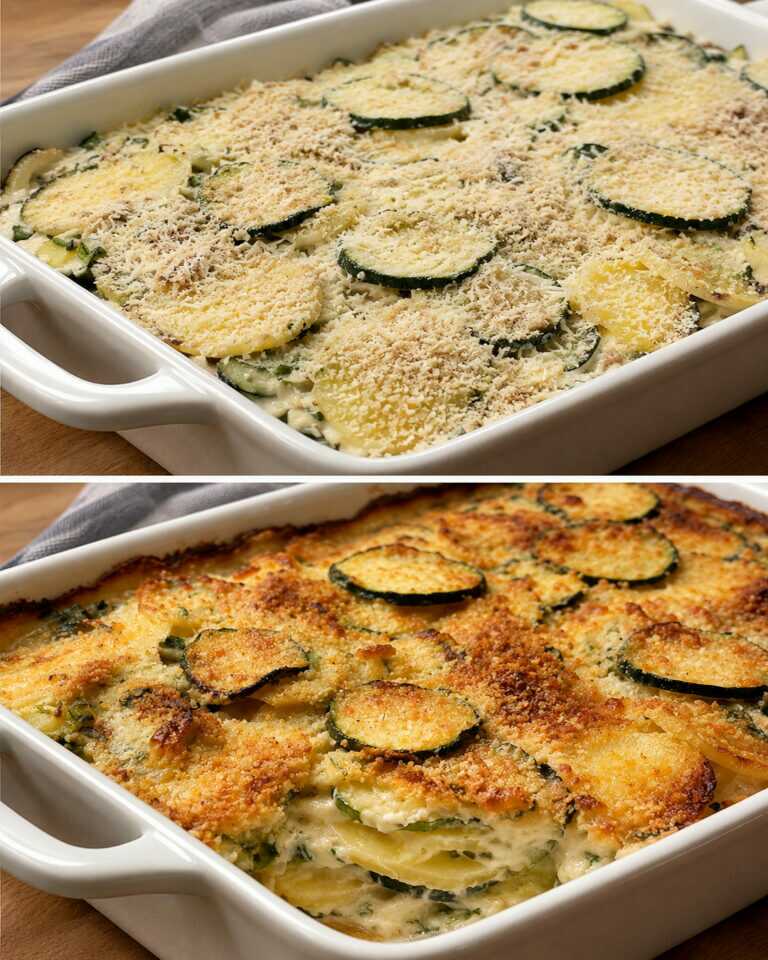
The source lists parsley, breadcrumbs, Parmesan, salt, pepper, garlic, boiled potatoes, 2 eggs, olive oil, feta, mint, more garlic, olive oil and marinara sauce.
A separate salad uses boiled beets, mandarin, goat cheese, chives, 1 tablespoon balsamic vinegar, 1 tablespoon olive oil and salt.
The source does not provide complete gram weights for this second recipe, so none are invented here. Treat the ingredient list as the authoritative framework: boiled potatoes form the base, eggs help bind, breadcrumbs and Parmesan provide structure, while feta, mint and marinara bring contrast. The beet salad should be kept separate so its acidity and juice do not soften the potato preparation.
## Recipe 3 — Broccoli, Potato and Tomato Skillet
The source provides:
– 450 g broccoli
– 4 potatoes
– butter
– olive oil
– paprika
– 1 onion
– 6 tomatoes
– salt
The potatoes are fried for about 5 minutes before the onion is added. Broccoli follows, then the tomatoes. Since no exact quantities are given for butter or olive oil, use only enough to coat the pan and prevent sticking rather than turning the vegetables greasy.
## How to Make the First Pancakes Hold Together
The main technical challenge is moisture. Zucchini and potato both release water after grating. If that water stays in the batter, the pancakes spread and demand more flour. Squeeze or drain the vegetables before final mixing. Whole-wheat flour absorbs more slowly than white flour, which is another reason the resting time is useful.
Cook a small test pancake first. If it browns before the center sets, reduce the heat. If it breaks even after the first side is well browned, the batter may still be too wet. Fix moisture before adding more flour.
## Serving and Storage
Serve the pancakes with yogurt, sour cream or a fresh herb sauce. The second recipe already includes marinara, feta and a bright beet salad, while the broccoli skillet works well as a lighter vegetable plate.
Cool leftovers fully before refrigerating. Reheat pancakes in a dry skillet, oven or air fryer rather than the microwave if you want to restore some crispness.
## Practical Notes for the Three-Recipe Source
Because this source includes three recipes, organization matters more than usual. If you plan to cook more than one of them on the same day, prepare the vegetables first and keep each recipe in its own bowl. The pancake mixture should not sit for hours after salting because zucchini continues to release moisture. The beet salad, by contrast, can be assembled close to serving so the mandarin and goat cheese stay fresh.
For the first recipe, the 30 ml kefir and 1/3 teaspoon baking powder form a small acidic-leavening system. The 5-minute wait gives the mixture time to react before it meets the vegetables. The second 15-minute rest happens after flour is added; that gives whole-wheat flour time to absorb moisture. These two resting periods have different jobs and should not be confused.
The first pancake should always be a test piece. Use it to judge salt, thickness and pan temperature. If it spreads too much, drain the batter before adding more flour. If it browns in less than 3 minutes but remains raw inside, lower the heat. If it stays pale after 3 minutes, the pan may be too cool.
The second recipe is best treated as a plate of components rather than one dense mixture. Boiled potatoes, Parmesan, breadcrumbs and eggs create a sturdy savory element; feta, mint and marinara bring salt, freshness and acidity. The beet salad should remain separate because beet juice can stain and soften the potato preparation. The source provides exactly 1 tablespoon balsamic vinegar and 1 tablespoon olive oil for the salad, so those quantities should be retained.
The third recipe is simpler but benefits from order. The 4 potatoes begin first because they need more heat. After 5 minutes, the onion goes in, followed by the 450 g broccoli and then 6 tomatoes. Tomatoes release water, so they are best added after the potatoes have started to brown.
### Ingredient Variations
Whole-wheat flour in the pancakes can be replaced with regular wheat flour, but the batter may need a slightly different amount because absorption differs. The source gives a range of 2–4 tablespoons, which is useful: start low and increase only if the mixture genuinely needs it.
The celery stalk can be omitted if unavailable, although it adds freshness. Parsley, mint and chives from the second recipe are not interchangeable in flavor, but each contributes a distinct fresh note.
For the third recipe, broccoli can be cut into small florets so it cooks at a similar pace to the potatoes. Large florets may remain firm while the potato browns.
### How to Serve
Serve recipe 1 with a cool yogurt dip, sour cream or the marinara already appearing elsewhere in the source. Recipe 2 works well as a more complete composed plate because it already includes potato, cheese and salad. Recipe 3 can be served as a vegetable side or light meal.
### Storage
Pancakes store best once completely cooled. Refrigerate in a covered container and reheat in a skillet or oven. The beet salad should be stored separately from the potato component. Broccoli and potato can be refrigerated together but will be softer after reheating.
### Final Check
The most important lesson from this source is to keep each recipe independent. Do not merge their ingredients into one dish. Preserve the exact quantities where supplied and let texture guide the ingredients whose amounts were never specified.