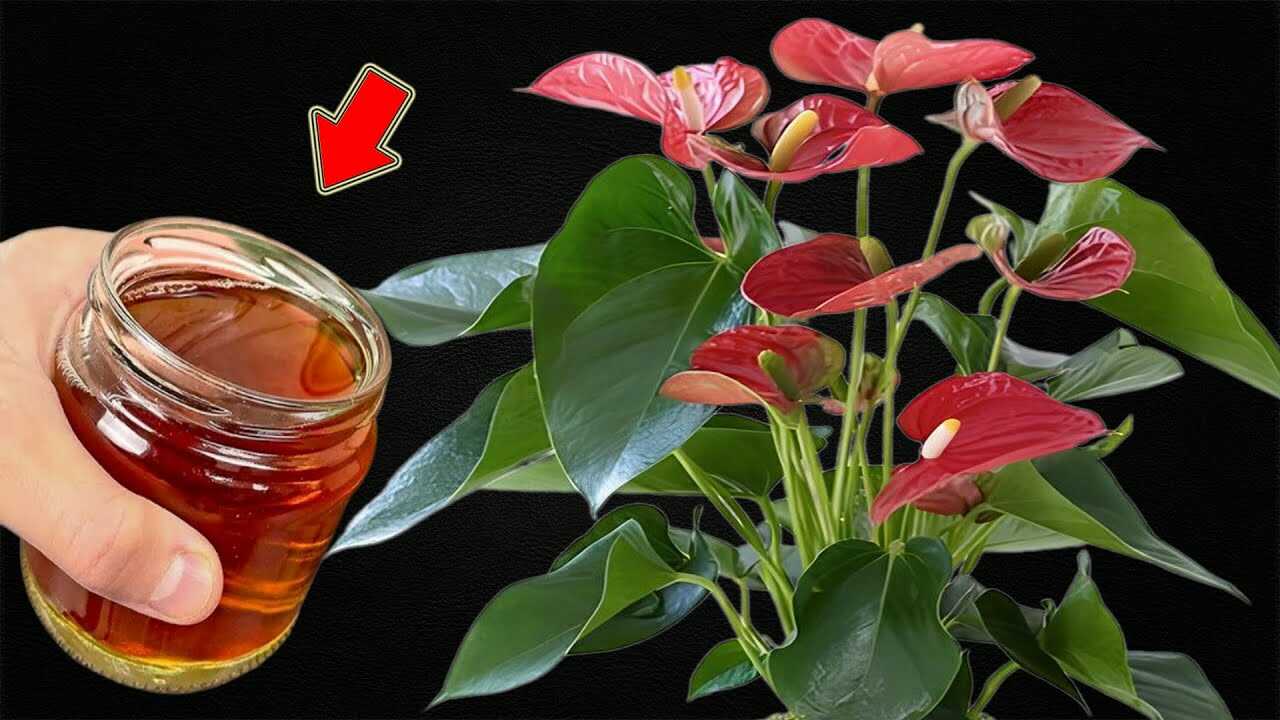
1 Cup A Week! Thousands Of Flowers Bloom All Year Long!
1 Cup A Week! Thousands Of Flowers Bloom All Year Long!
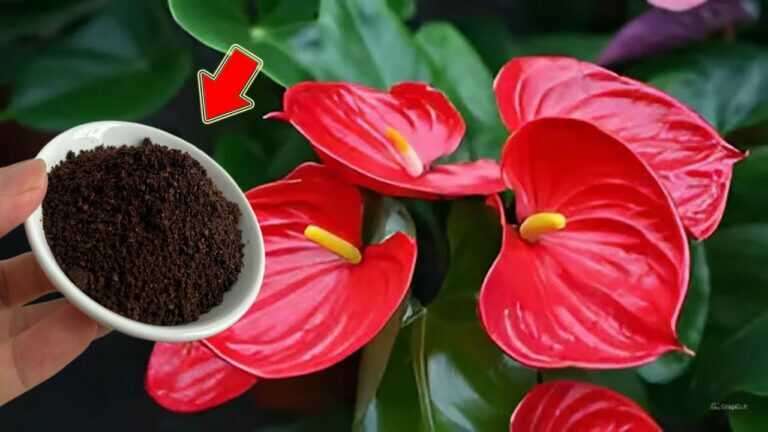
That little jar of golden liquid in the photo is clearly **honey** — thick, amber, and viscous. In this article I’ll show you how a small weekly cup of a diluted honey solution can support your flowering houseplants (like anthuriums shown) by helping cuttings root, protecting wounds from pathogens, and gently feeding beneficial soil microbes. This is a practical, complementary trick — not a replacement for proper light, watering, drainage or balanced fertiliser.
Why honey works (short, factual explanation)
Honey contains **simple sugars** (glucose and fructose) that provide a quick energy source for microbes, and it has documented **antimicrobial properties** (low pH and enzymatic production of hydrogen peroxide in many raw honeys). Gardeners have long used raw honey as a natural wound sealant on plant cuttings because it reduces infection risk and can improve chances of rooting. These effects are supportive — they do not supply plant hormones like auxin, so honey is a supplement, not a miracle fertilizer.
My exact recipe: 1 cup a week
- What you need: raw honey (unpasteurised preferred), lukewarm water, a clean measuring cup.
- Concentration: Dissolve 1 teaspoon (≈5 ml) of raw honey into 1 cup (240 ml) of lukewarm water. Stir until fully mixed. This produces a dilute, safe sugar solution that won’t overwhelm the soil microbiome.
- Application: Use 1 cup of this solution per medium pot (10–20 cm / 4–8 in diameter) once a week during the active growth season (spring and summer).
- Winter schedule: Reduce to once every 3–4 weeks in autumn and winter when growth slows.
Step-by-step use
- Water your plant lightly first so the soil is slightly moist — never apply sugary solutions to bone-dry soil.
- Prepare the honey solution as described and allow it to cool to ambient temperature.
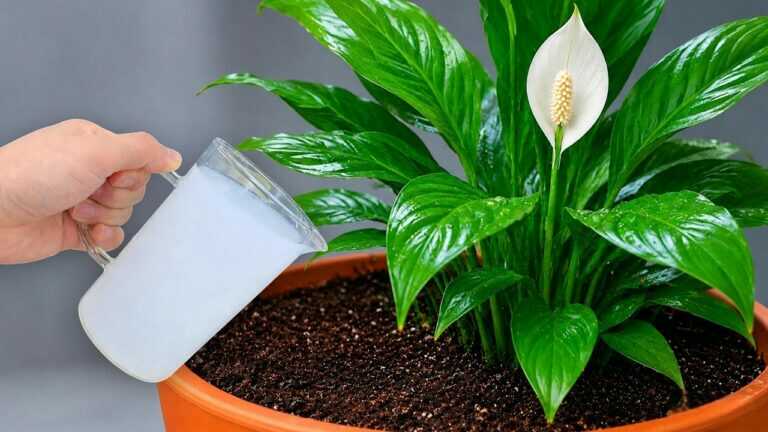
- Pour the 1 cup solution around the topsoil, avoiding direct contact with leaves or flowers to prevent stickiness and pests.
- Allow excess to drain; ensure pots have good drainage so sugars don’t pool and create anaerobic conditions.
- Resume normal care (balanced fertiliser every 4–6 weeks for flowering plants) — honey is an additive, not a replacement.
How honey helps flowering plants like anthuriums
Used properly, honey will:
- Protect fresh cut surfaces on divisions or cuttings from fungi and bacteria when used as a dipping agent.
- Provide a small, immediate energy source to benefit **beneficial soil microbes**, which can speed nutrient mineralisation and indirectly support bloom production.
- Reduce early rot risk on cuttings thanks to honey’s antimicrobial activity, improving rooting success over several weeks.
Rooting cuttings (optional extra)
- For new anthurium cuttings, dip the cut stem base briefly into raw honey, then plant into a sterile, well-draining mix. Keep humidity high and expect rooting to show over 4–10 weeks.
- Do not use honey together with synthetic rooting hormone at the same time — choose one method to evaluate results.
Realistic timeline
Expect any visible improvement in flowering or rooting to develop over a period of several weeks to a few months. A sensible window to judge results is **6–12 weeks** of weekly applications in the active season. If you stop seeing benefit, revert to regular fertiliser and cultural care and reassess.
Practical tips from experience
- Use raw honey when possible — it retains more natural enzymes linked to antimicrobial action.
- Always dilute — undiluted honey directly on soil will attract pests and can create sticky buildup.
- Combine this practice with a phosphorus-containing flowering fertiliser (follow package rates) for best bloom response.
- Keep good airflow and bright, indirect light for anthuriums — honey won’t compensate for poor light or waterlogged roots.
Common mistakes to avoid (real botanical errors)
- Applying undiluted honey to the pot surface — leads to ants, mold and root suffocation.
- Using sugary solutions as a substitute for balanced fertiliser — sugars do not supply N-P-K or trace elements that plants need for healthy blooms.
- Pouring the solution onto dry soil — this risks localized high sugar concentration and osmotic stress.
- Expecting instant flowering within days — measurable changes require consistent use over weeks; don’t over-apply.
Safety and caveats
If you notice increased ant activity, sticky residues on leaves, or any smell of fermentation, stop the honey treatment and flush the pot with fresh water. Honey is a benign household product but can alter the microbial balance if overused. Always pair this technique with proper light, potting mix, drainage and routine fertilisation.
Conclusion — give the jar a try
This small weekly ritual — just 1 cup of diluted honey solution per plant each week during the growing season — is a low-cost, low-effort complement to normal care that can improve rooting success and support the microbial life that helps flowers bloom. Be patient: measure progress over 6–12 weeks, watch for pests or stickiness, and keep your basics (light, water, drainage, fertiliser) on point. Try it on one plant first, observe, and then expand if you see steady benefit. Happy gardening — your next wave of blooms could be just a few weeks away!