1 Spoon a Week! Suddenly Your Orchid Is Producing New Roots and Flowers All Year Round
1 Spoon a Week! Suddenly Your Orchid Is Producing New Roots and Flowers All Year Round
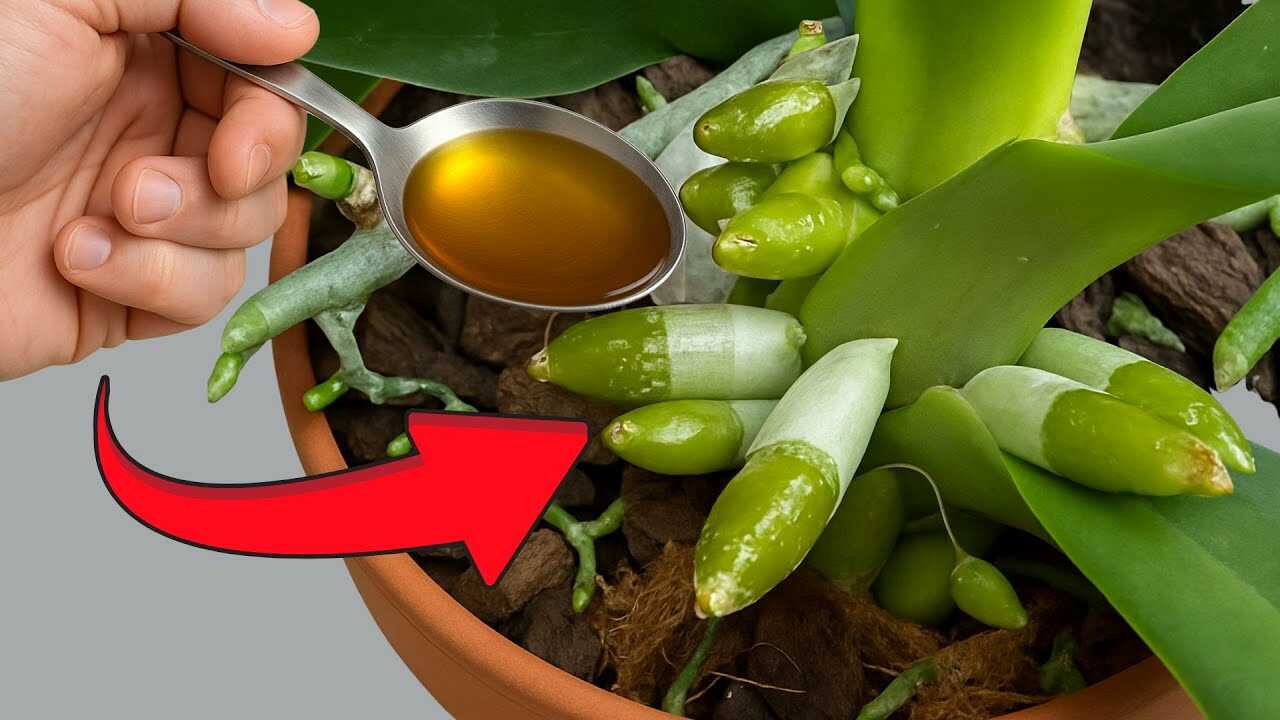
In the photo you can see a metal spoon holding a small amount of a clear, amber liquid — this is a concentrated liquid seaweed extract (kelp). That golden-brown solution is exactly the ingredient this trick uses. Applied correctly, diluted kelp delivers natural plant hormones and trace minerals that help orchids push out new **roots** and set more **flower spikes** over time.
Why liquid seaweed works for orchids (science-backed)
Liquid seaweed extracts (commonly from Ascophyllum nodosum) contain measurable amounts of **cytokinins, auxins, betaines** and micronutrients. These compounds are documented to improve root initiation, stress tolerance and overall plant vigor. Seaweed isn’t a complete fertilizer — it doesn’t replace nitrogen/phosphorus/potassium — but it acts as a growth stimulant and metabolic support when used as a supplement.
Step-by-step: One spoon a week routine (precise and safe)
- Measure the spoon: Use 1 teaspoon (5 mL) of concentrated liquid seaweed extract. The headline’s “1 spoon” refers to a small teaspoon — be precise.
- Prepare the dilution: Mix the 1 teaspoon (5 mL) into 1 liter (1000 mL) of room-temperature water and stir. This yields a mild solution safe for orchids.
- Application method — pot drench: For a typical small orchid pot (8–12 cm / 3–5 in), pour 50–100 mL of the diluted solution evenly onto the potting medium so it wets the bark and roots. Avoid pouring directly into the plant crown.
- Optional foliar boost: Once every 2–3 weeks you can lightly mist leaves (avoid saturating the crown) with the same diluted solution to deliver hormones to leaf tissues. Do this in the morning so leaves dry quickly.
- Frequency by season: Spring–summer (active growth): apply the pot drench once per week. Autumn: reduce to every 2 weeks. Winter (dormant or slow-growth): apply once every 3–4 weeks. Always keep the weekly dosing consistent when in the active growth period.
- Duration to expect results: Expect visible improvement in root production and plant vigor after at least 6–8 weeks of regular weekly treatments; meaningful changes to flowering patterns commonly appear over one full growth season.
Practical tips from experienced growers
- Use labeled products: Choose a kelp/seaweed product with clear concentration instructions. If the product label differs, follow the manufacturer’s recommended dilution for delicate houseplants and adjust to the amounts above.
- Warm water and gentle applications: Use room-temperature water to avoid shocking roots. Apply in the morning to allow the medium to drain and dry before nightfall.
- Avoid the crown: Never pour the solution directly over the crown of Phalaenopsis-style orchids — moisture trapped in the crown can cause rot.
- Combine with balanced feeding: Use seaweed as a supplement alongside a light, balanced orchid fertilizer (follow fertilizer schedule). Seaweed supports growth but does not supply full macronutrients.
- Monitor light and humidity: Seaweed helps, but orchids still need proper **light**, **watering**, and **drainage** to respond positively.
Common mistakes to avoid (real botanical pitfalls)
- Too concentrated: Applying undiluted kelp or using much higher doses can stress roots and create salt buildup. Stick to 1 teaspoon per liter.
- Overwatering: Using seaweed doesn’t replace proper drainage. If you already overwater, the extra application can worsen root rot.
- Applying in cold dormancy: Don’t treat heavily in winter when the plant is dormant; activity is low and roots won’t respond the same way.
- Using culinary oils or cooking residues: The amber liquid in the picture looks like oil to some, but edible oils will block pores and are harmful — use true commercial seaweed extract only.
- Pouring into the crown: This invites crown rot, especially on Phalaenopsis. Direct the drench into the potting medium only.
What to look for and when
After 6–8 weeks of weekly applications during the active season you should see more fine, green aerial and substrate roots and firmer, healthier pseudobulbs or leaves. Flower spike frequency and longevity often improve over a full season with consistent use. Track progress with photos every month to notice subtle changes.
Final encouragement and CTA
A teaspoon of liquid kelp a week — applied as a gentle drench to the potting medium — is a simple, science-backed supplement that supports **root growth**, **stress resilience**, and can help your orchid produce more reliable flowering over time. Try the routine for one full growth season (spring–autumn) and pair it with correct light, watering, and fertilizer. If you notice positive changes, keep a log and adjust frequency by season.
Ready to try? Measure the teaspoon, dilute in a liter of water, and start your weekly drench this growing season — your orchid will thank you with stronger roots and, with patience, more blooms.