1 Spoon a Week! Suddenly Your Orchid Is Producing New Roots and Flowers All Year Round
1 Spoon a Week! Suddenly Your Orchid Is Producing New Roots and Flowers All Year Round
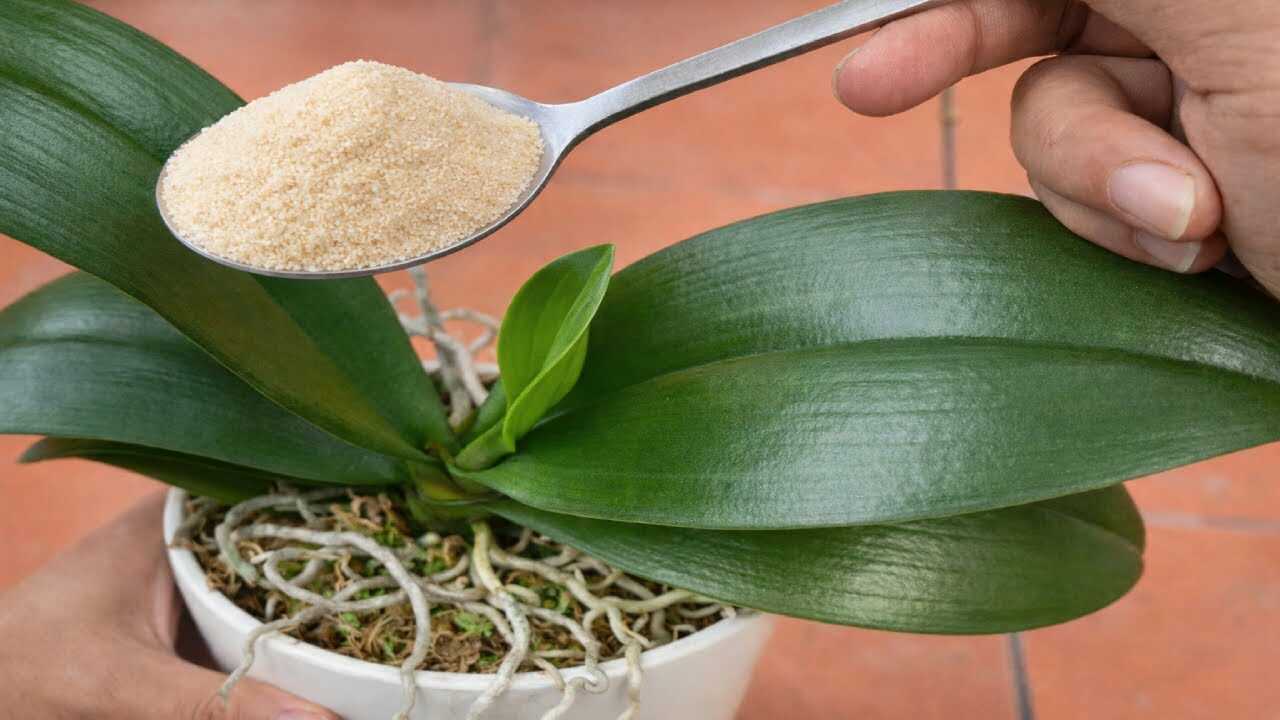
In the photo you can see a spoon of fine, pale-brown granular powder held above a potted Phalaenopsis — that powder is best interpreted as powdered kelp (dried seaweed meal). Used correctly, a small weekly dose of kelp can complement core orchid care by supplying trace minerals, amino acids and natural plant-growth compounds that support root development and flowering.
Why powdered kelp helps orchids (the real botanical reason)
Seaweed extracts contain low levels of natural plant hormones (notably auxins and cytokinins), a broad spectrum of trace elements and amino acids. Multiple horticultural studies and extension resources show that kelp-based products can improve root initiation, enhance stress tolerance and help plants set flowers more reliably when used as a supplement to regular fertilization. Kelp is not a balanced N-P-K fertilizer — it is a biostimulant that supports plant metabolism and microbial activity in the potting medium.
Step-by-step: how to use 1 teaspoon of powdered kelp per week
- Measure precisely: use 1 teaspoon (≈5 ml) of powdered kelp per 1 litre (≈1 quart) of room-temperature, de-chlorinated water.
- Dissolve and rest: stir the powder into the water until mostly suspended. Let sit 10–30 minutes, then stir again. If the powder does not fully dissolve, strain through a fine mesh or use a bottle with a tight lid and shake vigorously.
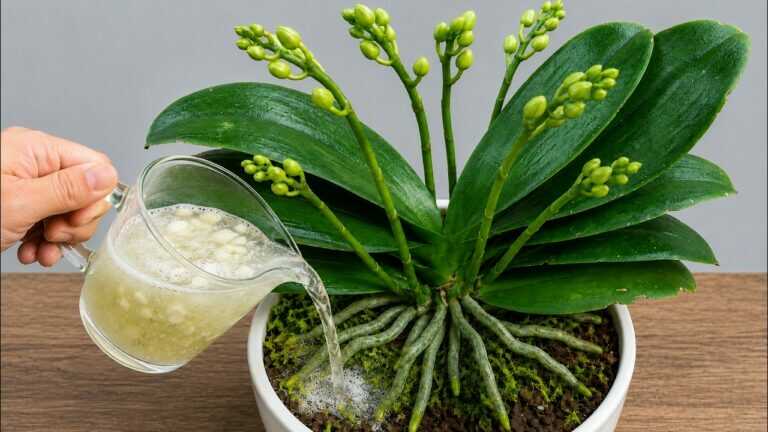
- Application method — root drench (preferred): pour about 100–200 ml of the diluted kelp solution evenly around the potting medium of a standard 10 cm (4″) Phalaenopsis pot. Avoid pouring directly onto the crown of the plant to prevent crown rot.
- Application method — foliar spray (optional): transfer diluted solution to a spray bottle and mist leaves lightly (undersides too), once per week, in the morning so leaves dry quickly. Do not spray if temperatures are low or humidity is very high.
- Frequency and season: apply once a week during the active growth season (spring and summer). Reduce to once every 2–3 weeks during autumn and winter when the plant’s growth slows.
- Duration and expected timeline: continue weekly dosing alongside balanced orchid fertilizer and good cultural care for at least 6–12 weeks to see consistent increases in root production and stronger spikes/flowers.
Practical tips from real orchid growers
- Combine with proper fertilization: kelp is a stimulant, not a complete feed. Continue using a balanced, water-soluble orchid fertilizer at label strength (commonly weekly or biweekly) and then use kelp as the weekly biostimulant.
- Use neutral water and good drainage: orchids dislike waterlogged media. Apply kelp solution as a drench that flows through the pot and drains away; this prevents salt buildup.
- Watch the crown: always avoid pooling liquid in the central crown of Phalaenopsis to prevent rot — apply around roots and base of leaves instead.
- Rotate applications: if you already use other biostimulants (mycorrhizae, humic acids), alternate so you do not overload the medium; kelp plays well with these but balance matters.
- Store powder correctly: keep dried kelp in a cool, dry, airtight container to preserve activity.
Common mistakes to avoid (true botanical cautions)
- Overdosing: more is not better. Excess organic amendments can cause microbial spikes and salt buildup that harm roots. Stick to the 1 teaspoon per litre guideline.
- Skipping basic care: kelp will not fix poor light, incorrect watering, compacted medium, or lack of airflow. This method is a supplement to good culture, not a replacement.
- Applying to a saturated pot: never drench waterlogged media — roots that are oxygen-starved won’t respond to biostimulants.
- Using impure products: avoid powders labeled with added N-P-K fertilizer salts or preservatives if your goal is a pure kelp biostimulant; read labels.
- Expecting instant results: visible new roots and stronger blooming typically appear after several weeks of consistent treatment (allow 6–12 weeks).
Conclusion — try one teaspoon weekly, but treat it as a boost, not a miracle
That pale, granular powder in the spoon makes a lot of sense as powdered kelp. When used at 1 teaspoon per litre as a weekly drench or light foliar spray, kelp can provide trace hormones, micronutrients and amino acids that support root growth and more reliable flowering — provided you keep up with good light, watering, drainage and balanced fertilization. Start today: mix one teaspoon in a litre, drench around the roots once a week, monitor response over 6–12 weeks, and adjust frequency in winter. Share your progress — a little weekly care can make a steady, visible difference.