A simple spoonful! The care steps to know to restart your ZZ plant’s growth
A ZZ plant can keep its glossy leaves for a long time while appearing to make no progress. That pause does not automatically mean it needs a spoonful of fertilizer or a homemade mixture. Zamioculcas grows at its own pace, and the conditions around its roots matter as much as what is visible above the pot. Start by separating a stable, slow-growing plant from one that is gradually declining.
A useful inspection takes only a few observations: leaf firmness, the moisture deeper in the container, drainage, and the light at the plant’s actual position. These checks help you choose one meaningful adjustment. They also prevent a familiar mistake: adding more water and nutrients to a plant whose roots are already struggling in wet soil.
Read the plant before trying to restart growth
Look at the existing leaves and their bases. Firm foliage with no increasing yellowing may indicate a slow period rather than an urgent problem. A soft base, an unpleasant smell, or several deteriorating stems needs closer attention. Do not judge the entire root system from the color of one older leaf.
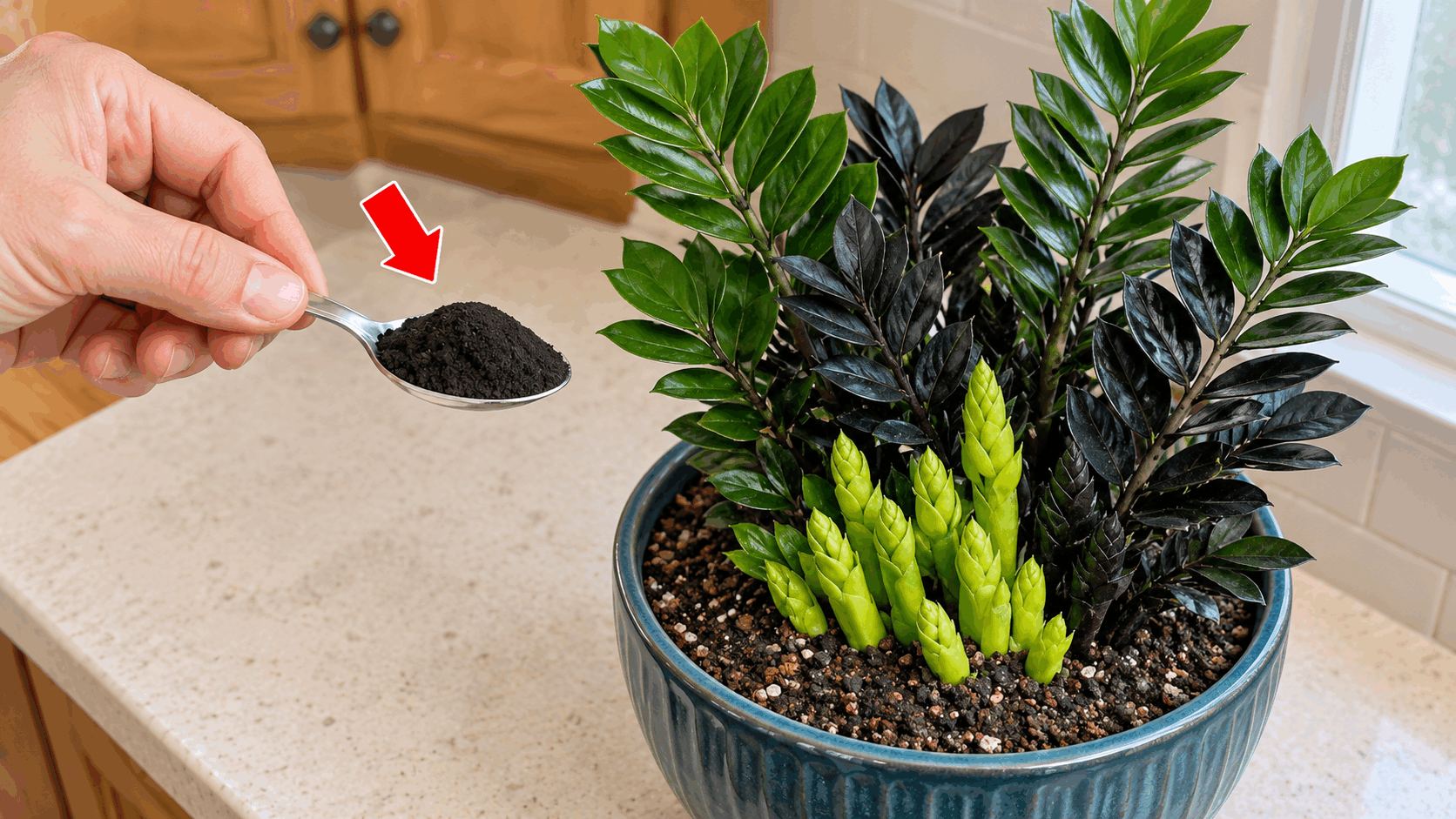
ZZ plants have thick underground structures that store water. This reserve helps explain their tolerance of relatively dry conditions and their difficulty with persistent saturation. A new shoot emerges from the base and gradually opens. Leave tightly folded young leaves alone instead of trying to separate them with your fingers.
Take a photograph and record when the plant was last moved or repotted. Compare later images from a similar angle. A new shoot near the soil line can be easy to miss if you only look at the tallest stems. Recording actual changes is more useful than repeatedly deciding the plant looks exactly the same.
Reassess the light at leaf level
A ZZ plant is often chosen for a darker room because it can tolerate conditions that challenge other houseplants. Tolerance, however, does not promise vigorous new growth in every dim corner. Look at the distance from the window, curtains, nearby buildings, and furniture that blocks daylight. Brightness at the center of a room is not the same as light reaching the leaves.
If the plant is clearly in a very dark place, move it gradually toward a suitable area with indirect light. Do not suddenly put long-shaded foliage against hot glass in strong sun. Watch for pale or dry patches on the side facing the light and adjust the exposure rather than adding water to compensate for heat damage.
Once you choose a sensible location, keep it reasonably consistent. Daily moves make it difficult to understand the response. Check for cold drafts and concentrated heat from a nearby appliance. A change in location can alter how quickly the pot dries, so reassess watering after a move instead of following the old schedule automatically.
Let the pot guide watering
Check below the surface before watering. The top layer may look dry while the center remains damp, particularly in a large container or dense mix. Combine the feel of the growing medium with the weight of the pot. Over time, the difference between a freshly watered container and one that has dried becomes easier to recognize.
Allow the mix to dry thoroughly between waterings rather than supplying a small automatic drink every week. When water is needed, wet the root zone evenly and let the excess drain completely. Empty the outer decorative pot or saucer. A drainage hole is useful only when water can actually leave the growing container and remain away from its base.
If water immediately runs down the side without moistening the mix, inspect the condition of the root ball. Compacted or extremely dry material can wet unevenly. Do not keep pouring into the outer pot and assume the roots received a balanced drink. Slow, observed watering is more informative than counting cups alone.
What coffee grounds and charcoal do not replace
Coffee grounds and charcoal sometimes appear together in advice about restarting a ZZ plant. They are not a measured substitute for suitable light, drainage, and a balanced growing medium. A wet layer of grounds can also make the surface harder to inspect and may form a compact covering. More material on top does not mean more useful nutrition below.
Charcoal is a broad name for products with different purposes. Horticultural material is not interchangeable with barbecue briquettes, ash, or an unidentified black powder. Additives in a fuel product can make it unsuitable for a plant pot. A spoonful is not a universal dose simply because two products have a similar color.
Some growing mixes include horticultural charcoal as one component, but that does not mean sprinkling it onto every established plant will remove rot or trigger a shoot. Evaluate the entire mixture. If it is too dense, a surface topping does not rebuild the air spaces throughout the root zone. Correct the actual problem instead of attributing broad powers to an ingredient.
Feed only when the conditions support growth
A suitable houseplant fertilizer can be used during healthy active growth according to its label. Check whether a recent potting mix already contains fertilizer and avoid combining products without accounting for both. Stronger concentrations do not guarantee faster results and make it harder to track what the roots are receiving.
Use the product’s measuring method. A spoon of concentrate and a spoon of already diluted solution are very different applications. Record the date and dilution, especially if another person also cares for the plant. Keep the product in its labeled container and do not store an unknown solution beside drinking water.
Do not feed simply because a plant looks tired after repotting or because an old leaf has changed color. First decide whether the roots are healthy and whether watering is appropriate. Fertilizer cannot revive dead tissue or make up for chronic darkness. Good feeding is part of a coherent routine, not a replacement for one.
Repot for a reason, not for every pause
Consider repotting when the underground growth has outgrown the container, when the mix has lost its useful structure, or when a root problem needs inspection. A healthy slow-growing ZZ plant does not need its roots disturbed every week. Repeated handling can damage fresh growth and turn observation into an additional source of stress.
Choose a container proportionate to the actual root system. A much larger pot can hold unused moisture around a small plant. Use an airy mix suitable for a plant sensitive to prolonged wetness, and keep the drainage clear. Do not rely on a decorative layer of stones to compensate for a sealed container.
If you find soft, deteriorated parts, distinguish them from firm living tissue before cutting. Use clean tools and remove only clearly damaged material. If the base is extensively affected or you cannot tell what is viable, obtain experienced advice. After any necessary repotting, keep the plant stable and adjust watering to the new mix.
Clean the leaves without adding a coating
The naturally glossy leaves can collect ordinary household dust. Wipe suitable intact leaves gently with a soft, lightly damp cloth while supporting them. Use clean water and avoid saturating the base. There is no need to apply cooking oil, dairy products, or furniture polish to make the foliage look healthier.
Inspect the undersides and the points where leaves join the stem. If you see pests, sticky deposits, or unusual damage, identify the issue before using a treatment. A random sequence of sprays can obscure the original symptoms. Keep the plant out of reach of children and pets that might chew it, and wash your hands after handling.
Build a routine that makes improvement visible
Set a regular reminder to inspect the plant, not to water automatically. Check the pot, drainage, leaf firmness, and light conditions. Record any meaningful change, such as moving the plant or starting a labeled fertilizer. A short note is enough; the goal is to avoid repeating an action simply because you forgot the previous one.
New growth may follow a period in which the plant only becomes more stable. Existing yellowed tissue will not necessarily return to green. Look for firm new shoots and the absence of continuing decline. Do not impose a deadline from a viral photograph, because the starting condition and growing environment are different in every home.
The next useful step is usually straightforward: inspect the outer pot, assess drying, and decide whether the location offers enough light. Make the most justified correction and give the plant time to respond. A simple spoon can measure a known product, but consistent conditions are what allow a ZZ plant to use its stored resources and grow again.