Add Starch to Vinegar and You’ll Wish You Had Tried This Sooner!
Add Starch to Vinegar and You’ll Wish You Had Tried This Sooner
Vinegar is a popular household cleaner, especially for removing limescale, water spots, and soap residue. But because it is so thin, it often runs off vertical surfaces before it has enough time to work.
Adding starch changes that. When heated correctly, starch thickens the vinegar mixture and turns it into a cleaning gel that stays in place longer. This makes it especially useful around faucets, shower glass, sinks, tiles, and other areas where mineral deposits tend to accumulate.
You can also prepare a lighter liquid version for glass and everyday cleaning.
Why Vinegar and Starch Work Well Together
White vinegar contains acetic acid, which can help dissolve:
- Limescale
- Hard-water deposits
- Soap residue
- Dried water spots
- Some mineral stains
Starch does not increase the acidity of vinegar. Its main purpose is to thicken the liquid so that it clings to the surface instead of dripping away immediately.
This longer contact time can make cleaning easier, especially on vertical surfaces.
How to Make the Thick Cleaning Gel
You Will Need
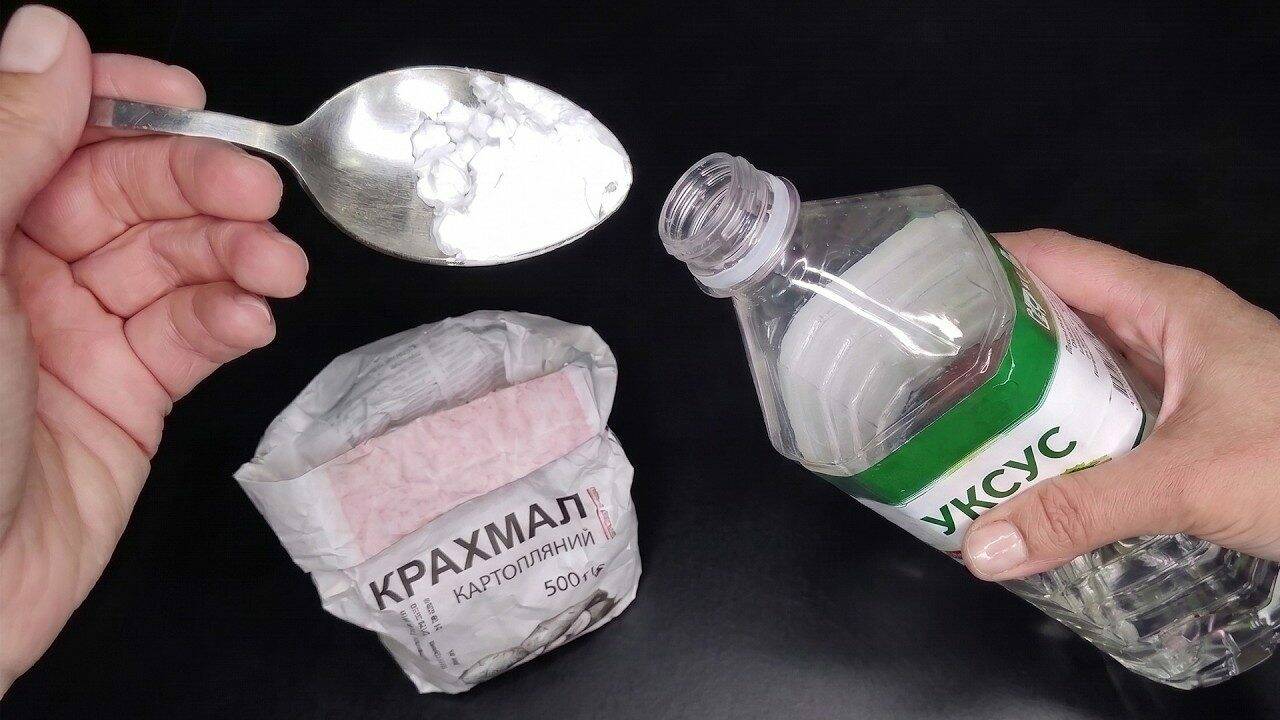
- 1 tablespoon potato starch or cornstarch
- A small amount of cold water
- 100 ml white vinegar
- A small saucepan
- A whisk or spoon
Instructions
- Place the starch in a saucepan.
- Add a small amount of cold water.
- Stir until the mixture is smooth and free from lumps.
- Gradually pour in the vinegar while stirring continuously.
- Place the pan over low heat.
- Warm the mixture while stirring, but do not allow it to boil.
- Continue stirring until it becomes thick and slightly translucent.
- Remove it from the heat.
- Whisk vigorously until the gel is smooth.
- Let it cool before using.
The mixture usually thickens within one or two minutes.
Always work in a well-ventilated area, as warmed vinegar produces a strong smell. Do not inhale the vapors directly.
How to Clean Limescale Around a Faucet
Hard water often leaves white, yellow, or chalky buildup around the base of a faucet.
Method
- Apply the cooled gel to the stained area with an old toothbrush.
- Spread it around the faucet base and other affected sections.
- Leave it in place for 10–15 minutes.
- Gently scrub with the toothbrush.
- Wipe away the loosened residue with a damp sponge.
- Rinse thoroughly with cool water.
- Dry with a clean cloth.
Because the gel is thick, it remains on the stain and slowly softens the mineral buildup.
Using the Gel on Shower Glass
The same mixture can help remove water spots and soap film from glass shower doors.
Instructions
- Lightly dampen the glass.
- Apply a thin layer of the gel with a sponge.
- Leave it for about 10 minutes.
- Wipe the surface with a damp sponge.
- Rinse thoroughly.
- Dry with a microfiber cloth or glass cloth.
For heavily soiled glass, wash away grease and loose dirt first. Otherwise, the gel may simply spread the grime.
Do not use rough scrubbers that may scratch the glass or its coating.
Cleaning Bathroom Tiles
The gel can also be used on many glazed ceramic tiles.
Apply it to areas with dried water drops or soap residue, leave it briefly, and rinse thoroughly.
Avoid leaving vinegar on grout for long periods, especially if the grout is damaged or unsealed. Frequent acid exposure may weaken some grout materials over time.
Test the mixture in a small hidden area first.
Cleaning a Stainless-Steel Sink
White mineral deposits often develop on stainless steel, especially around the drain and faucet.
Method
- Apply the gel to the stained sections.
- Leave it for 5–10 minutes.
- Scrub gently with a soft sponge or brush.
- Rinse thoroughly.
- Dry immediately with a clean cloth.
Drying the sink helps prevent new water spots from forming.
Always clean stainless steel in the direction of the grain and avoid abrasive pads.
Can It Be Used on Pots and Pans?
The gel may help remove mineral discoloration from stainless-steel cookware.
However, it should only be used on surfaces that tolerate vinegar.
Do not use it on:
- Cast iron
- Aluminum unless the manufacturer allows acids
- Nonstick coatings
- Copper with a protective finish
- Natural stone cookware or surfaces
Rinse cookware thoroughly before using it again.
How to Make a Liquid Vinegar-and-Starch Spray
A lighter mixture can be useful for glass, mirrors, appliance doors, and everyday cleaning.
Ingredients
- ½ tablespoon cornstarch
- ½ cup cold water
- ½ cup white vinegar
Preparation
- Add the cornstarch to the cold water.
- Stir until completely smooth.
- Add the vinegar.
- Pour the mixture into a spray bottle.
- Shake well before each use.
Because starch may settle at the bottom, the bottle must be shaken each time.
Prepare only a small amount and use it within a few days. Store it in a clearly labeled container away from children and pets.
How to Use It on Windows and Mirrors
If your windows still look streaky after cleaning, this solution may help remove light residue.
Instructions
- Clean heavily soiled glass first.
- Shake the bottle well.
- Spray a small amount onto the surface.
- Wipe with a clean microfiber or glass cloth.
- Buff until dry.
Using too much solution may leave a starch film, so apply it sparingly.
A second dry cloth can help remove any remaining haze.
Cleaning a Washing-Machine Door
The liquid mixture can help remove:
- Water spots
- Detergent residue
- Fingerprints
- Light soap film
Spray it onto a cloth rather than directly into the machine’s seals or electrical areas.
Wipe the glass, then go over it with a clean damp cloth and dry it thoroughly.
This method only cleans the visible surface. It does not replace regular cleaning of the drum, detergent drawer, filter, seals, and drainage system.
Cleaning Around the Kitchen Sink
The liquid solution may also help remove light white marks from counters near the sink.
Apply it with a cloth, leave it for two or three minutes, then wipe with clean water and dry.
However, first confirm that the countertop material is safe for vinegar.
Surfaces You Should Never Clean with Vinegar
Vinegar is acidic and can damage certain materials.
Do not use this gel or spray on:
- Marble
- Granite
- Limestone
- Travertine
- Terrazzo containing natural stone
- Unsealed grout
- Waxed surfaces
- Some wood finishes
- Electronic screens
- Rubber seals unless approved by the manufacturer
Acid can dull, etch, discolor, or weaken these surfaces.
Always test the cleaner in a small, hidden area before using it widely.
Important Safety Precautions
Never mix vinegar with:
- Chlorine bleach
- Ammonia
- Hydrogen peroxide in the same container
- Commercial toilet cleaners
- Unknown cleaning chemicals
Mixing vinegar with bleach can release toxic chlorine gas.
Also avoid heating vinegar excessively. Warm it only gently and keep the room ventilated.
Label homemade cleaners clearly and never store them in drink bottles or food containers.
Gel or Spray: Which One Should You Choose?
Use the thick gel for:
- Faucet bases
- Vertical shower glass
- Sink edges
- Localized limescale
- Areas where the cleaner needs to remain in place
Use the liquid spray for:
- Windows
- Mirrors
- Washing-machine doors
- Light daily cleaning
- Small water spots
The gel offers longer contact time, while the spray is faster and easier for large, smooth surfaces.
Final Thoughts
Combining starch and vinegar creates a simple cleaner with a useful advantage: it stays on the surface longer.
The gel can help soften limescale and soap residue around faucets, sinks, tiles, and shower glass, while the liquid version can be useful for windows and appliance doors.
Use both mixtures carefully, apply them only to acid-safe surfaces, rinse thoroughly, and never combine vinegar with other strong cleaning products.
With the right precautions, this inexpensive household mixture can make many everyday cleaning jobs much easier.