
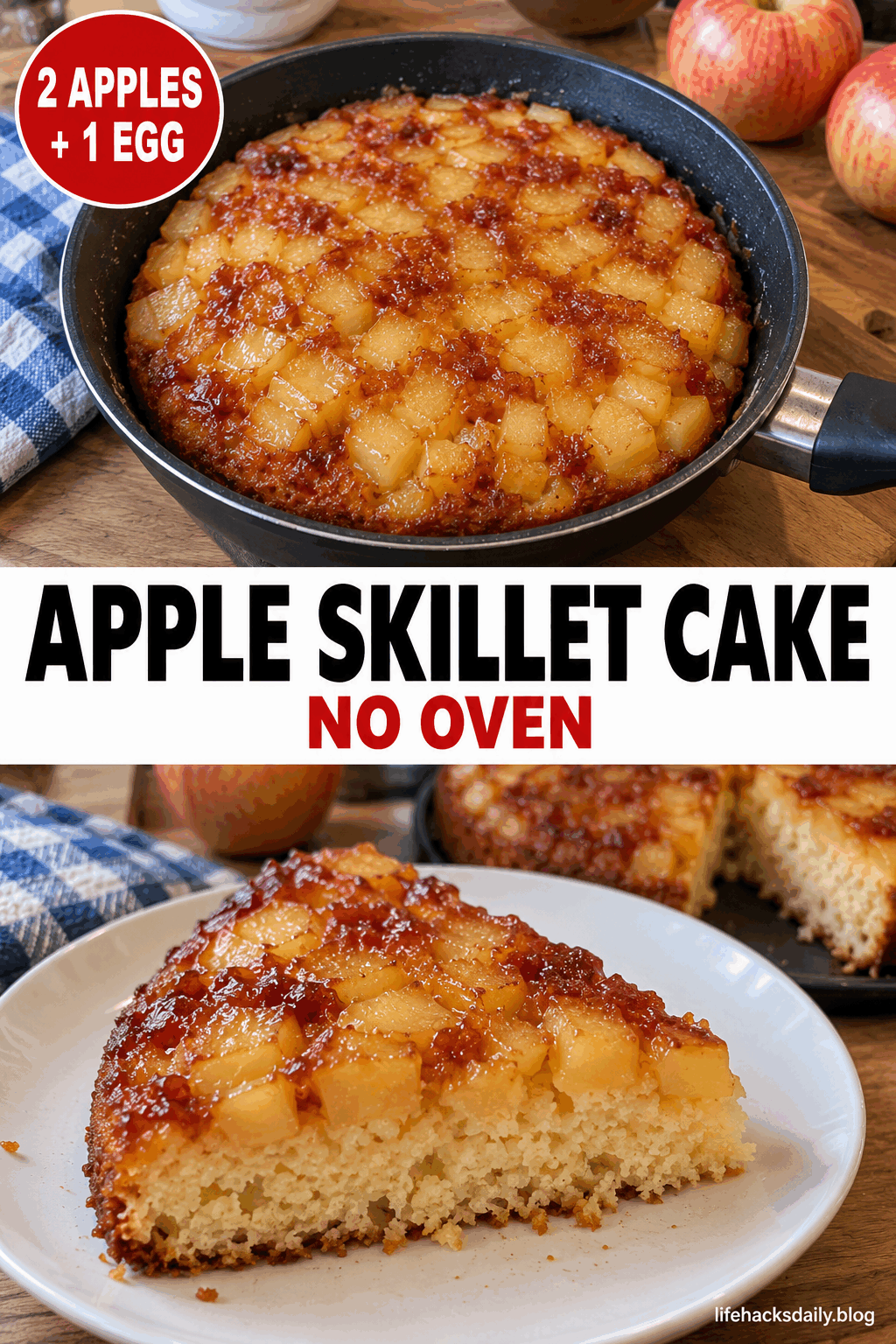
2 Apples and 1 Egg! A Soft Skillet Cake You Can Make Without an Oven
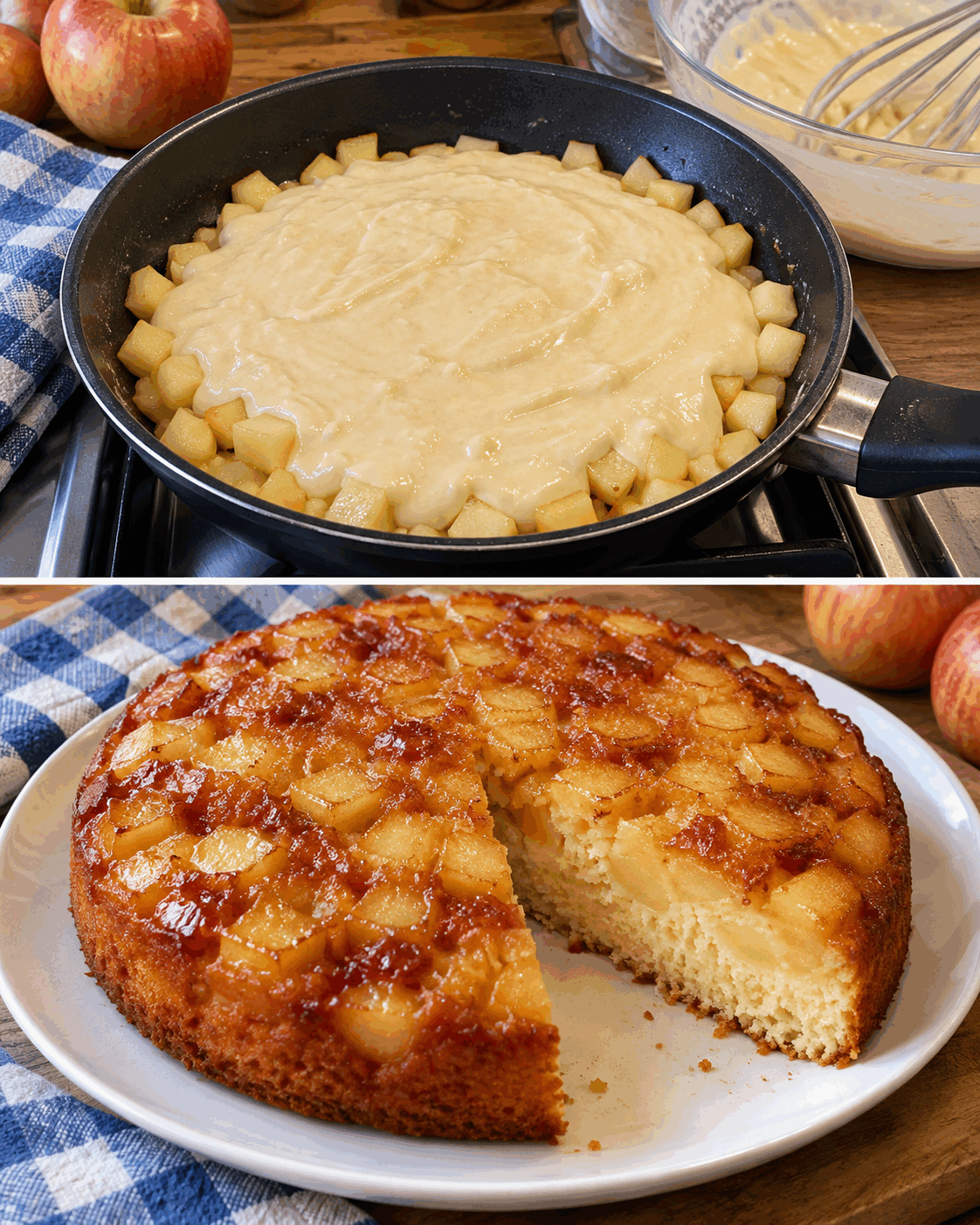
Two apples and one egg are the starting point for a small, soft apple cake that cooks entirely on the stove. The apples soften in the skillet first, then a simple batter goes over the fruit. Once the cake is turned, the apple pieces become the golden top, with a tender layer of cake underneath.
This is an everyday cake made with all-purpose flour, milk, oil, and a modest amount of sugar. It is not a sugar-free or flour-free recipe. What makes it useful is the cooking method: a covered skillet and gentle heat let you make a family dessert while leaving the oven switched off.
Timing, servings, and the right skillet
Allow about 15–20 minutes for preparing the fruit and batter, followed by roughly 30–35 minutes of cooking and a short rest. The cake makes six small slices. Use a nonstick skillet with an inside base about 7–8 inches across, reasonably deep sides, and a close-fitting lid. A clear lid makes checking easier.
Ingredients
- 2 medium apples, about 300 g after peeling and coring
- 1 medium egg
- 120 g all-purpose flour
- 100 ml milk
- 45 g granulated sugar for the batter
- 15 g granulated sugar for the apples
- 35 ml neutral oil, such as canola oil
- 6 g baking powder
- 10 g butter for the skillet
- A small pinch of salt
- A little ground cinnamon, optional
Golden Delicious apples are a practical option because they soften readily and have a mild flavor. A slightly tart variety also works, provided it is not unusually dry or mealy. The sugar in this recipe balances the batter and helps the fruit take on a little color; it is not intended to form a hard caramel layer.
How to make the apple skillet cake
-
Peel and core the apples, then cut them into small pieces about half an inch across. Spread the butter over the base of the skillet, sprinkle in the 15 g of sugar, and distribute the apple pieces evenly. Add a small pinch of cinnamon if you like, keeping it light enough for the apple flavor to remain clear.
-
Set the skillet over your smallest burner and cover it. Cook the apples over low heat for about 6–8 minutes, until they begin to soften and release a little juice. Gently move the pan to distribute the liquid. If one patch starts browning quickly, lower the heat before continuing rather than letting the sugar catch.
-
Meanwhile, whisk the egg with the 45 g of sugar and the salt in a bowl. Pour in the oil, followed by the milk, and whisk until combined. You do not need a mixer or a thick, foamy egg mixture. Scrape around the bottom of the bowl so there are no unmixed streaks left.
-
Combine the flour and baking powder, then sift them into the wet ingredients in two additions. Stir just until the flour disappears. The batter should fall from the whisk in a thick ribbon and spread over the apples without needing to be pressed down. Avoid prolonged beating after the flour has been incorporated.
-
Pour the batter evenly over the softened fruit and gently level the surface with a spoon. Cover the skillet and cook over very low heat for around 20–25 minutes. Do not keep lifting the lid during the first part of cooking. After about 20 minutes, look for a set surface and edges beginning to release.
-
When the cake is stable and the center no longer moves like liquid batter, turn off the heat. Place a heatproof plate wider than the skillet over the top. Using dry oven mitts, hold plate and pan securely together and turn the cake onto the plate. Slide it back into the skillet with the apples facing upward.
-
Cover and finish cooking gently for another 5–8 minutes. Check the cake layer with a skewer; it should not come out coated in raw batter. Let the cake rest in the pan for five minutes with the heat off, then transfer it to a serving plate. Allow it to become warm rather than piping hot before slicing.
Small details that make the method easier
The lowest useful heat setting matters more than speed. A hot burner can brown the base while the top still looks raw. This cake cooks under a lid, so the trapped heat helps the upper layer set. If the base is coloring too quickly, move the skillet briefly away from the burner and lower the heat.
Wait until the cake is stable before turning it. A soft, liquid center cannot support the apple layer during the flip. Use a plate that comfortably covers the whole pan, not a small plate that leaves the edges exposed. If your skillet is especially heavy, ask another person to help rather than trying to manage an awkward turn.
Variations and serving ideas
Serve a warm slice on its own or with a spoonful of plain yogurt. The fruit topping already provides moisture, so a heavy frosting is unnecessary. If you add sweetened cream, syrup, or ice cream, treat those as separate serving choices. They are not included in the ingredient quantities or the six small slices described here.
Storing leftovers
Once the cake has cooled, cover it and refrigerate it. Because the topping is moist, aim to eat the leftovers within two days. Do not seal a warm cake in a tightly closed container; trapped steam makes the surface damp. Cut only the slices you need so the remaining cake stays easier to handle.
To warm a slice, use a covered skillet over gentle heat for a short time and check it frequently. You are warming cooked cake, not browning it again from the beginning. A microwave can also warm an individual portion, but a long heating time may make the cake layer firmer and the apples much hotter than expected.
Frequently asked questions
Can I leave out the sugar?
The original proportions include 45 g of sugar in the batter and 15 g with the apples. Omitting both changes the flavor and the browning of the fruit. For a predictable first result, keep the recipe as written. If you need a no-added-sugar dessert, choose a recipe developed around that requirement rather than treating this one as sugar-free.
Why is the bottom dark but the center undercooked?
The heat is probably too strong for the pan and burner combination, or the skillet may be too small and deep. Lower the heat and make sure the lid fits well. Do not use a dark bottom alone as proof that the cake is ready to turn; the batter also needs to become stable across the center.
Can I use a different size of pan?
A small difference is usually manageable, but a much wider or narrower pan changes the depth of the batter. The stated times are a guide for a base about 7–8 inches across. If you use another size, judge the set center and check for raw batter instead of relying only on the clock.
Does the cake need to be flipped?
Turning it brings the apple layer to the top and lets the other side finish cooking gently. Wait until the cake is firm enough to support itself, and use a sufficiently large heatproof plate. Do not attempt to lift a soft cake with a small spatula; it is more likely to break under the fruit.
Prepare the apples first, keep the heat low, and give the center time to set before turning. Those simple steps make this small apple cake a practical dessert for a day when you do not want to use the oven.