
Cocoa, Yogurt and Oats! A Moist Cake With No Flour or Added Sugar
Cocoa, plain yogurt, and rolled oats make a small chocolate cake with a moist, tender crumb and no added sugar. Ripe bananas provide the sweetness, while eggs help the mixture hold together. There is no flour in the ingredient list, and the batter comes together in a bowl with a fork and a hand whisk.
Expect a rich cocoa flavor and a closer, softer texture than a traditional butter cake. This is not a tall, airy chocolate sponge. It slices like a small loaf cake once it has had time to settle, making it easy to serve with coffee or a glass of milk without frosting or a sugary drizzle.
Time, servings, and the loaf pan
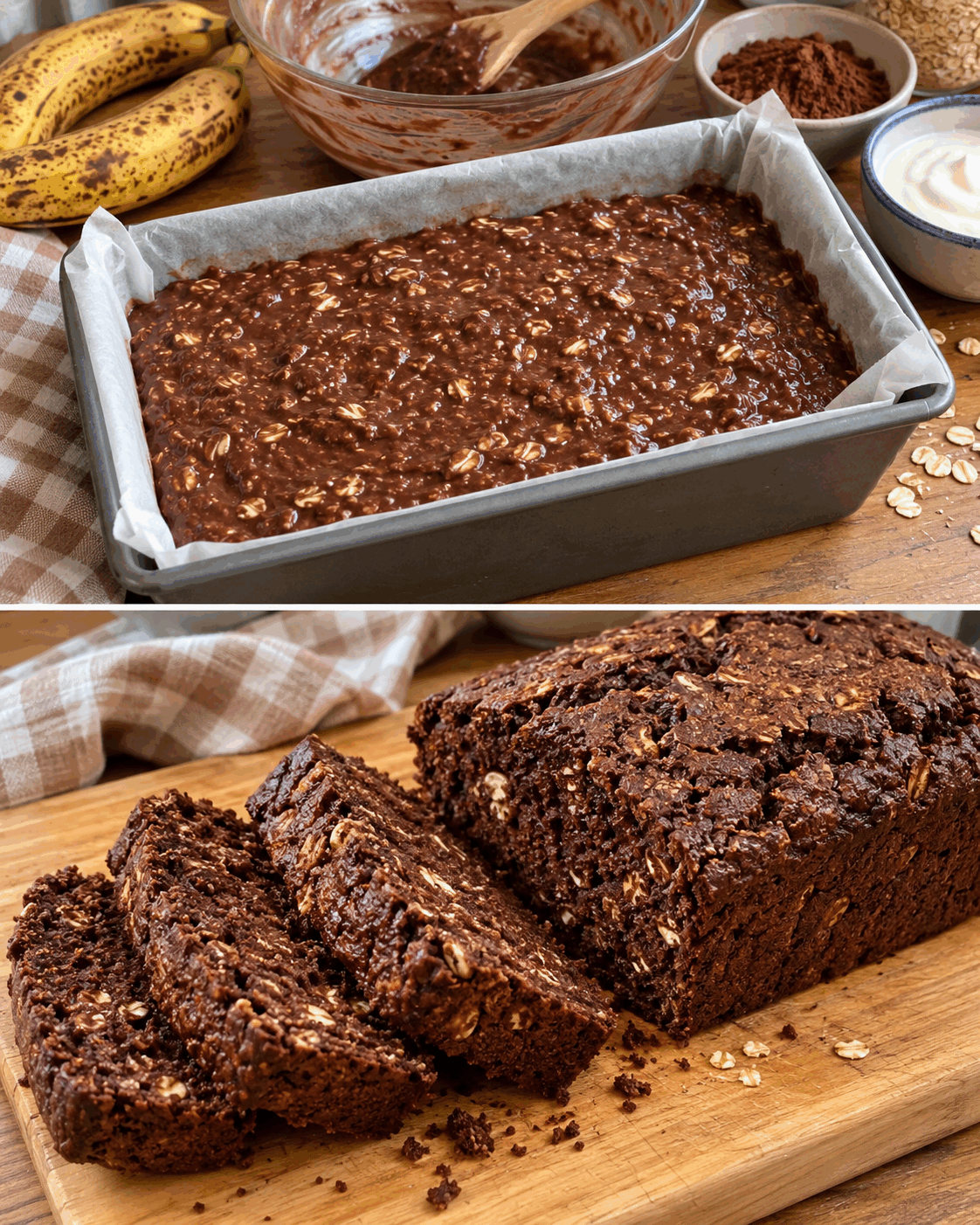
Allow about 15 minutes for preparation, 10 minutes for the oats to soak, and 35–40 minutes for baking. A loaf pan approximately 8 inches long works well for six generous slices. Line it with parchment paper, leaving a little overhang on two sides so the cooled cake can be lifted out without pulling at its tender edges.
Ingredients
- 120 g plain small rolled oats
- 125 g plain yogurt with no added sugar
- 2 very ripe bananas, about 200 g peeled
- 2 medium eggs
- 25 g unsweetened cocoa powder
- 80 ml plain milk
- 6 g baking powder
Choose bananas with some brown spots on the skins. They mash more easily and provide a rounder sweetness than firm, barely ripe bananas. Check that the cocoa is unsweetened baking cocoa rather than a sweetened drink mix. Plain small oats also make the batter easier to manage than a thick breakfast blend containing dried fruit or other additions.
The recipe contains the sugars naturally present in the bananas and milk, so “no added sugar” is more accurate than “sugar-free.” It does not include honey, syrup, sugar, sweetened yogurt, or chocolate chips. Adding those ingredients would change the description and the flavor of the cake, rather than simply decorating the same recipe.
Preparation
-
Heat the oven to 175°C, about 350°F, using conventional heat. Line the loaf pan with a strip of parchment paper that extends over two sides. Measure the ingredients before starting and place an oven rack in the middle position, away from the upper heating element, so the loaf can bake more evenly.
-
Peel the bananas and mash them thoroughly in a large bowl with a fork. A few small pieces are fine, but avoid leaving large chunks that make the batter uneven. Add the eggs, yogurt, and milk. Whisk by hand until everything is combined; there is no need to beat the eggs until they become foamy.
-
Stir in the rolled oats and leave the mixture to rest for 10 minutes. Meanwhile, sift the cocoa powder and baking powder together into a small bowl. Sifting breaks up dry cocoa lumps that could otherwise leave bitter pockets in the finished slices. After soaking, the oat mixture should look thicker but still easy to stir.
-
Add the cocoa mixture to the bowl and stir down to the bottom until the color is even. If unusually thick oats have absorbed so much moisture that the batter will not loosen, add one tablespoon of milk and check again. Do not turn it into a thin, pourable pancake batter; a soft, heavy mixture is suitable here.
-
Scrape the batter into the prepared pan and gently smooth the top. Bake for around 35–40 minutes, beginning to check after 30 minutes. The surface should be set, and a thin skewer inserted in the center should not carry liquid batter. A few moist crumbs are normal in a cake containing this much fruit.
-
Let the cake rest in its pan for 15 minutes, then lift it out using the parchment overhang and place it on a wire rack. Wait until it is at least warm rather than hot before slicing. For the neatest pieces, cool it completely and wipe a thin knife between cuts through the soft crumb.
Getting the texture right
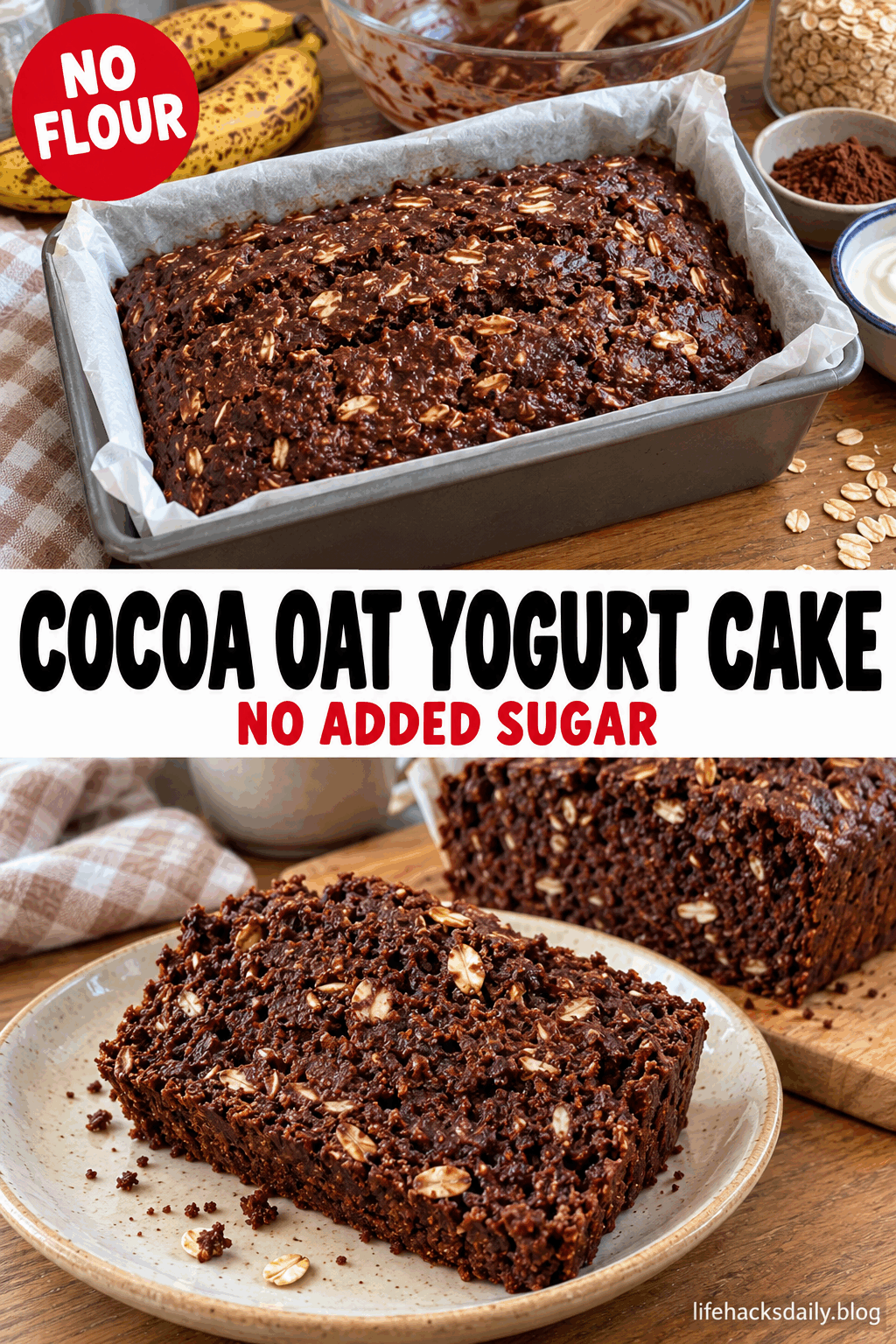
The short soaking time allows the oats to start absorbing moisture from the milk and yogurt. Thick oats may need a little more time, while very fine oats hydrate more quickly. Judge the mixture after its rest instead of adding liquid as soon as everything is stirred together. A batter that falls heavily from the spoon is appropriate.
Pan size also affects the result. In a wide baking dish, the mixture spreads into a thin layer and cooks more quickly. In a deep, narrow loaf pan, the middle takes longer to set. Keep the small loaf format for your first bake, and check the center rather than waiting for the surface to become very dark.
Cocoa powder changes the appearance of the batter, so color alone is not a useful test for doneness. Look for a set surface and check the crumb in the middle of the loaf. Overbaking can make the edges dry while the center still feels naturally moist from the bananas. That moisture does not need to be baked away completely.
Simple variations
You can serve a slice with plain yogurt and a few fresh banana pieces, or enjoy it without any topping. The cake already has a soft texture, so it does not need syrup to make it comfortable to eat. For tidy portions, place the cooled loaf on a board and slice only what you plan to serve.
Storage and warming
Once completely cool, cover the cake and keep it in the refrigerator. Aim to eat it within two to three days because the crumb contains fruit, yogurt, milk, and eggs. Do not seal the loaf while it is still warm. Condensation can make the surface wet and leave the parchment sticking more firmly to the soft sides.
For longer storage, freeze individual slices with a small piece of parchment between them. Thaw only the number you need in the refrigerator. If you prefer a warm slice, heat it briefly rather than repeatedly warming the whole cake. Too much reheating can dry the outside even though the banana-rich center remains relatively soft.
Frequently asked questions
Will this taste like a regular sweet chocolate cake?
The sweetness comes from ripe bananas rather than added sugar, so the flavor is different from a heavily sweetened frosted cake. The cocoa remains noticeable, and the crumb is moist and fairly close. Choose ripe bananas and unsweetened cocoa as listed instead of expecting an airy sponge or a very sugary chocolate dessert.
Can I use large rolled oats?
Yes, but they may take longer to soften and leave more visible pieces in the crumb. Give the batter its full rest before deciding whether it needs more liquid. If the oats are especially thick, lightly pulse them first without turning the entire quantity into flour. Keep the ingredient weight the same for a predictable starting point.
Why does the loaf break when I slice it?
A hot loaf is more delicate because the moist crumb has not had time to settle. Let it rest in the pan, then cool it on a rack before cutting. Use a thin, sharp knife and wipe it between slices. Very early slicing, an underbaked center, or an unusually large amount of banana can all make portions less stable.
Is no flour the same as gluten-free?
No. The recipe uses rolled oats instead of flour, but ordinary oats may have contact with gluten-containing grains. Baking powder and other ingredients also need checking if you require a gluten-free version. Use appropriately labeled products and clean equipment rather than assuming that the absence of wheat flour automatically covers every dietary requirement.
Let the oats soak briefly, bake until the center is set, and give the loaf time to cool. Cocoa, yogurt, and ripe bananas will provide a simple chocolate cake that needs neither frosting nor added sugar to feel complete.