
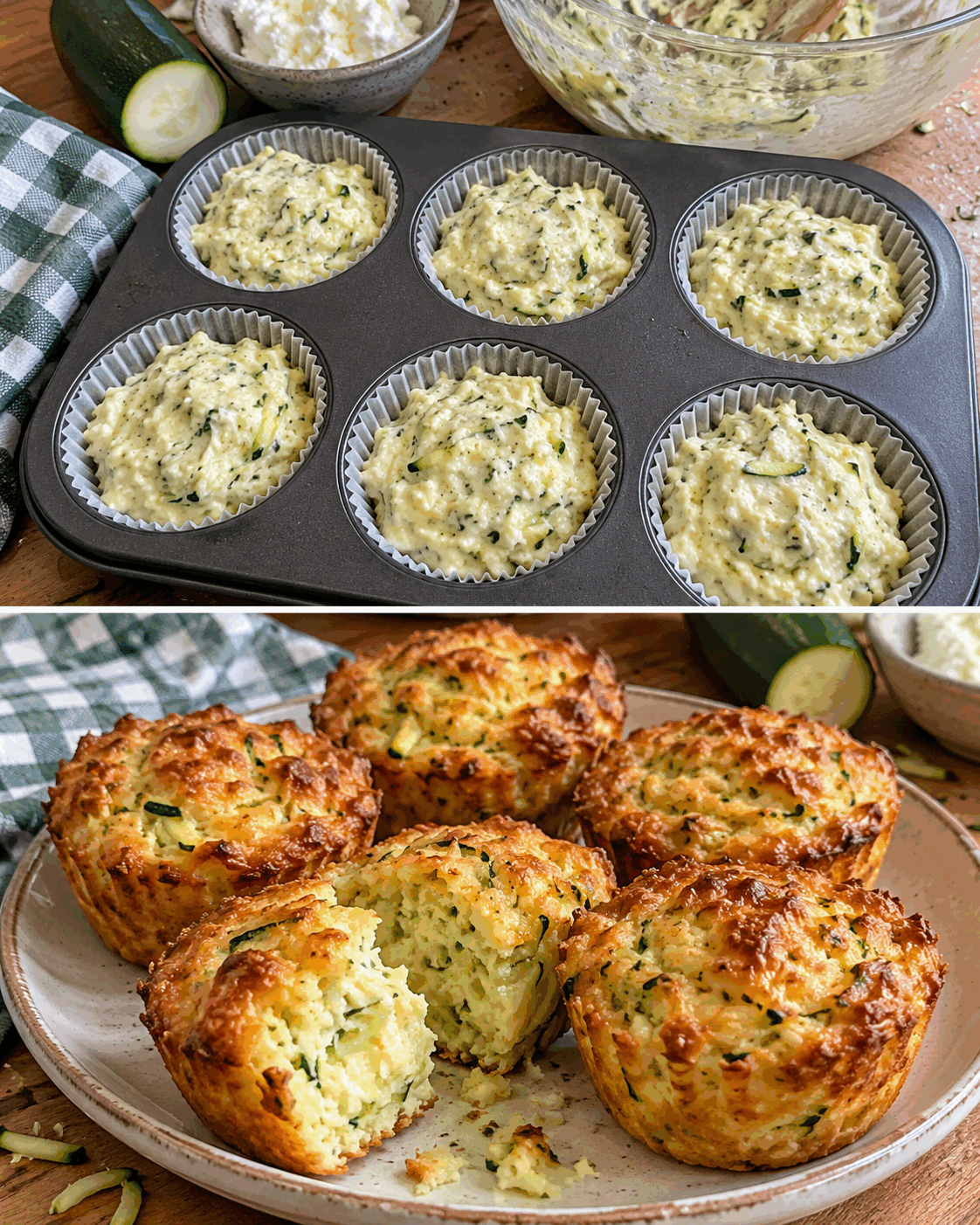
Zucchini and Ricotta! Tender Baked Cups With Golden Tops
Zucchini, ricotta, and eggs make tender little baked cups with lightly golden tops. The vegetables are grated and squeezed before they go into the mixture, so the centers stay soft without turning watery. A small amount of Parmesan and finely ground oats gives the cups flavor and a little more structure.
These are savory individual portions, not sweet breakfast muffins. They work as a simple light meal with a salad or as a vegetable side alongside another dish. The preparation is straightforward, but squeezing the zucchini and draining any loose liquid from the ricotta are worth doing carefully before filling the muffin pan.
Time and servings
Allow about 20 minutes for preparation, including the short draining time, followed by 25–30 minutes in the oven. The mixture makes six generous cups in a roomy muffin pan or six small ovenproof molds. A standard shallow pan may hold less, so divide the mixture evenly without filling every cavity right to the rim.
Ingredients
- 500 g zucchini, weighed before trimming
- 200 g ricotta, drained if needed
- 2 medium eggs
- 30 g finely grated Parmesan
- 30 g finely ground rolled oats
- 1 tablespoon olive oil, plus a little for the pan
- 1 tablespoon chopped parsley
- Half a teaspoon of salt, divided
- A little freshly ground black pepper
Medium zucchini are a convenient choice because they are easy to grate and usually have small seeds. If you use a large, mature vegetable, remove the spongy center before weighing the prepared amount. Choose plain ricotta, without sweetened additions. The oats are a binder here, while the zucchini and cheese remain the main ingredients you notice.
Preparation
-
Heat the oven to 180°C, about 350°F, using conventional heat. Lightly oil six muffin cavities or small baking molds. If your pan tends to stick, use parchment liners suitable for baking. Set the pan on a stable tray so the individual portions are easy to transfer into and out of the oven.
-
Wash and trim the zucchini, then grate it on the coarse side of a box grater. Toss with a small pinch of the measured salt and leave it in a colander for 10 minutes. Wrap the grated zucchini in a clean kitchen towel and squeeze firmly over the sink, working in smaller batches if that is easier.
-
Place the ricotta in a mixing bowl. If there is a visible pool of liquid in its container, drain that away first. Add the eggs and olive oil, then stir until fairly even. Mix in the Parmesan, ground oats, parsley, remaining salt, and a little black pepper. There is no need to use an electric mixer.
-
Fold in the squeezed zucchini and check that the vegetables are distributed throughout the mixture. The filling should be soft and spoonable without a layer of watery liquid separating at the bottom. Divide it among the six prepared cavities and level the tops gently. Leave a little space below the rim to make the cups easier to handle.
-
Bake for about 25–30 minutes, until the tops are lightly golden and the centers are set. A cup should no longer wobble like raw egg mixture when the pan is moved gently. Deeper molds may need longer than shallow ones. If the tops are browning quickly, move the pan slightly lower rather than immediately increasing the heat.
-
Let the cups rest in the pan for 10 minutes before loosening the edges with a silicone or wooden utensil. Lift them out carefully and serve warm. Cut one open to check the center: it should be tender and moist with visible zucchini, but not runny. Avoid stacking the cups while they are still releasing a lot of steam.

Why squeezing the zucchini matters
Fresh zucchini contains enough moisture to thin the filling as it heats. A brief drain and a firm squeeze remove much of the loose liquid before baking. The aim is not to make the vegetable dry and hard. It should remain flexible and slightly damp, while no longer dripping freely when you pick up a handful.
Ricotta also varies. A very wet product can make the mixture looser even when the zucchini has been squeezed well. Drain visible liquid instead of trying to correct every wet mixture by adding large amounts of oats. Too much binder can turn the cups dense and move the texture away from the soft vegetable-and-cheese result intended here.
Flavor variations and serving
Parsley gives a mild, fresh flavor. You can replace it with a small amount of chopped dill, basil, or chives. Keep the quantity modest, especially with stronger herbs, so the ricotta remains noticeable. A little finely grated lemon zest is another option; use the outer colored peel rather than the bitter white layer underneath.
Serve two cups with sliced tomatoes, cucumber, or a simple green salad for an easy plate. They are also useful beside roasted vegetables or another main dish. There is no need for a heavy sauce, but a spoonful of plain yogurt with herbs can work well. Keep any accompaniment separate until you are ready to eat.
Storing and reheating
Cool leftover cups, then place them in a covered container in the refrigerator. Aim to eat them within two days. Do not leave the warm pan out overnight, and do not seal steaming cups immediately in a tightly packed box. Condensation makes the tops wet and can soften their edges more than you want.
Reheat only the portions you need, in an ovenproof dish at a moderate temperature until hot through. Cover loosely if the tops are already quite golden. They may release a little moisture after refrigeration, which is normal for a zucchini dish. Avoid reheating the same batch repeatedly or leaving warmed leftovers at room temperature for long periods.
Frequently asked questions
Can I skip squeezing the zucchini?
It is not recommended for this particular mixture. The zucchini may release enough water to leave a loose center and a puddle around each cup. A short drain and a firm squeeze are easier than trying to fix the filling later. Keep the vegetable slightly damp, but remove the water that runs out freely.
Can I use cottage cheese instead of ricotta?
Cottage cheese has a different texture and can contain more loose liquid, so it is not an exact one-for-one match in every brand. For the first batch, use ricotta as written. If you do experiment later, drain the alternative well and expect a different crumb rather than assuming the baking time and structure will remain identical.
Why are the cups sticking?
The pan may need a little more careful greasing, or the cups may have been lifted while still very hot and delicate. Let them rest for the stated 10 minutes, then loosen the edges gently. Do not scrape a coated pan with a metal knife. Parchment liners can make a sticky pan easier to use for the next batch.
Can I bake the mixture as one dish?
Yes, use a small, shallow baking dish rather than a deep loaf pan. The cooking time will change with the depth of the filling, so check that the center is set and hot through. Individual cups are convenient because they portion easily and expose more surface to the oven, giving each serving its own lightly golden top.
Give the zucchini a firm squeeze and let the baked cups settle before lifting them from the pan. The result is a simple savory dish with a tender ricotta center and a useful vegetable in every portion.