Are rats moving into your home? Discover poison-free options
Finding signs of rats at home calls for a coordinated response. Poison-free options can include removing food sources, correcting access points, and using appropriate mechanical traps. No household scent or single device guarantees immediate elimination. The most effective plan connects what you observe with actions you can inspect and maintain.
Start by keeping children and pets away from affected areas and avoiding direct contact with droppings or nesting material. Photograph evidence from a safe position and note where it appears. A clear record helps you assess whether activity is continuing and gives a pest professional useful information if the situation needs more than routine household measures.
Confirm the signs before choosing equipment
Gnaw marks, damaged food packaging, droppings, and repeated sightings can indicate rodent activity. None should be handled casually to identify it. Look at the location and pattern, and consider whether the animal could be a mouse rather than a rat. The distinction matters because traps and access assessments differ. When uncertain, ask for identification rather than guessing from a single mark.
Do not assume a daytime sighting proves a particular population size. It is a reason to investigate, not a reliable count of the animals hidden in the building. Check accessible areas near stored food, waste, and possible entrances without entering unsafe crawlspaces or disturbing electrical equipment. Record fresh observations separately from old damage so your follow-up remains meaningful.
Remove accessible food and water
Store dry foods in sound containers that resist access, and remove loose food from shelves and floors. Check pet food, bird seed, and stored supplies as well as kitchen cupboards. A bag placed on a high shelf is not necessarily protected. Clean spills with a method appropriate to the surface and dispose of damaged food packaging safely.
Manage garbage in well-maintained containers and empty it as needed. Do not leave pet food available overnight where it can attract rodents. Check for leaks or persistent water near appliances, and arrange repairs where necessary. These actions do not replace trapping or exclusion, but they reduce the resources that allow activity to continue unnoticed.
Inspect possible entry points
Look for gaps around accessible pipe penetrations, damaged doors, and openings where building components meet. Assess both the interior and the outside areas you can reach safely. An entrance may be above floor level, so a check limited to a single low corner can miss part of the problem. Avoid climbing or dismantling structure without appropriate access.
Suitable exclusion requires materials and methods that fit the opening and the building. Do not block required ventilation, drainage, or appliance clearances. For uncertain routes, extensive damage, or animals potentially remaining in enclosed spaces, seek professional help with the sequence of exclusion and removal. Simply covering the most visible opening may leave other routes active.
Choose a trap designed for the animal
For poison-free control, an appropriately sized mechanical snap trap is one established option. The CDC guidance on trapping rodents distinguishes rat traps from mouse traps and emphasizes keeping devices away from children and pets. Read the manufacturer’s instructions before placement, handling, or resetting. Do not improvise a stronger mechanism.
A protective placement or suitable enclosure may be needed so non-target animals and people cannot reach the device. That protection must still allow the trap to work as intended. If you cannot create a safe location, use a qualified service rather than leaving an exposed trap in a busy room. Poison-free does not mean a device can be handled without precautions.
Place devices according to observed activity
Use evidence to guide placement, following the trap instructions. Rats often travel along edges and sheltered routes, but the details of your home matter. A trap placed where it is convenient for you may not intersect their movement. Avoid moving furniture or appliances in ways that damage cables, gas connections, or water lines to create access.
Some rats may avoid unfamiliar objects. Professional advice or the trap instructions may address how to introduce a device safely before it is activated. Keep any bait small and controlled, and never distribute food around the room as an experiment. The aim is targeted trapping combined with reduced food access, not adding several new feeding points.
Check and maintain the plan
Inspect traps at the frequency required by their instructions and the situation. Record what was checked, whether there was activity, and whether fresh signs appeared elsewhere. A catch is useful information, but it does not prove that every entry route is closed or that all rodents are gone. Continued observation remains necessary after an apparent improvement.
Do not reset or handle a contaminated device bare-handed. Follow appropriate cleanup procedures and the product’s maintenance guidance. If the device is damaged, replace or service it as directed rather than bending parts back into an uncertain position. Maintain child and pet protection throughout the process, including while the trap is being inspected or moved.
Why glue boards and live capture are not simple alternatives
Different traps create different welfare and exposure issues. The CDC advises against glue traps and live traps in its household rodent guidance, including concern about frightened animals urinating. A live animal in a container is also not a problem solved by carrying it through the home. Bites, contamination, and handling risks remain.
If local rules or your circumstances require a particular approach, consult an appropriate professional or local authority. Do not make homemade devices that drown, burn, electrocute, or otherwise injure animals unpredictably. A controlled, suitable method with regular inspection is more practical than an improvised contraption whose operation and non-target risks are unclear.
Clean droppings without dispersing dry material
Do not sweep or vacuum dry rodent droppings, urine, or nesting material. Disturbing them can send contaminated particles into the air. The CDC cleanup guidance describes wetting contamination with an appropriate disinfectant, allowing the required contact time, and removing it with disposable material while wearing suitable gloves. Follow the instructions for the actual product and surface.
Collect and dispose of contaminated cleanup materials as directed, clean the affected hard surfaces appropriately, and wash hands after removing gloves. Never mix disinfectants or combine bleach with acids or ammonia. For a heavy infestation, enclosed building, ventilation contamination, or uncertain exposure, obtain professional guidance before attempting the cleanup yourself. The scale and setting change what protection is needed.
Treat carcasses and nests as a separate cleanup task
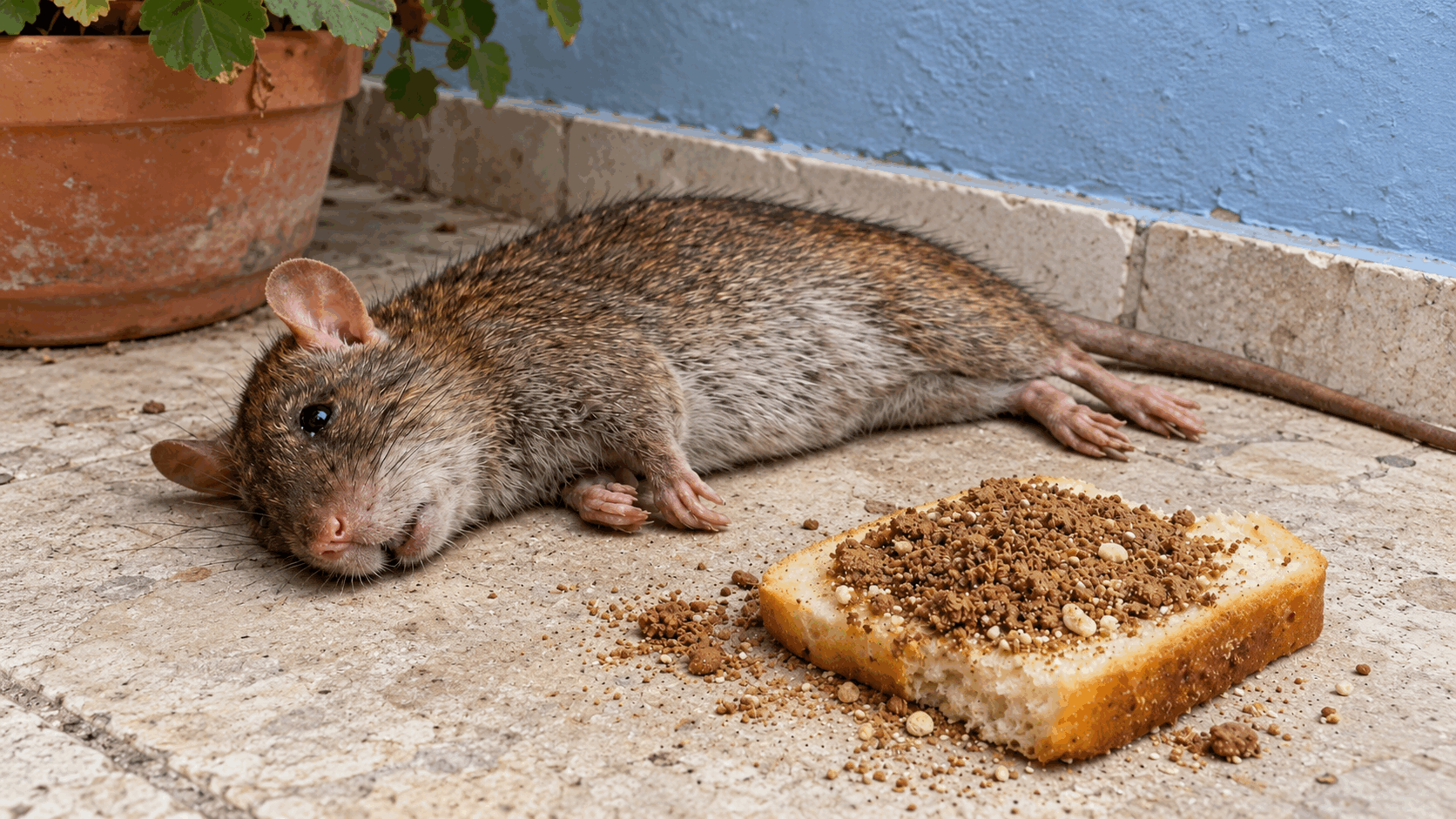
Removing a dead rodent is not the same as picking up an ordinary household object. Keep people and pets away and follow the relevant public-health guidance for wet disinfection, handling, packaging, and disposal. Use the required protective equipment and avoid direct contact. If the animal is inside a wall or another inaccessible location, arrange appropriate assistance.
After cleanup, inspect the surroundings for the reason the animal could enter and remain there. A nest or carcass may reveal an access route or a food source that was not obvious earlier. Do not spray fragrance into the area and assume the job is finished. Odor reduction is separate from removal, disinfection, and preventing another entry.
Know when household measures are insufficient
Persistent fresh signs, repeated catches, inaccessible activity, damaged wiring, or a large affected area justify professional assessment. A shared building may require coordinated action because one apartment’s measures do not control the entire structure. Notify the responsible property contact when the issue involves common areas or building maintenance, following the relevant arrangement for the property.
Choose help that explains inspection, exclusion, trapping, follow-up, and cleanup responsibilities. Ask what evidence will indicate that activity has stopped and what maintenance you should continue. A service plan is more useful when you understand which openings were repaired and which conditions still need attention. Avoid relying only on a promised number of minutes or a single visit.
Keep a simple prevention routine afterward
Continue checking food storage, waste containers, and repaired entry points. Revisit places where signs previously appeared and keep them accessible for inspection. New damage or fresh droppings should prompt a timely review. Do not wait until you see another animal if other evidence is already present.
Poison-free control works as a connected routine, not as a magic ingredient. Appropriate traps address animals already present, exclusion reduces entry, and sanitation limits resources. Safe cleanup deals with contamination separately. Keeping those functions clear makes the plan easier to follow and helps you recognize when specialist help is the next useful step.