
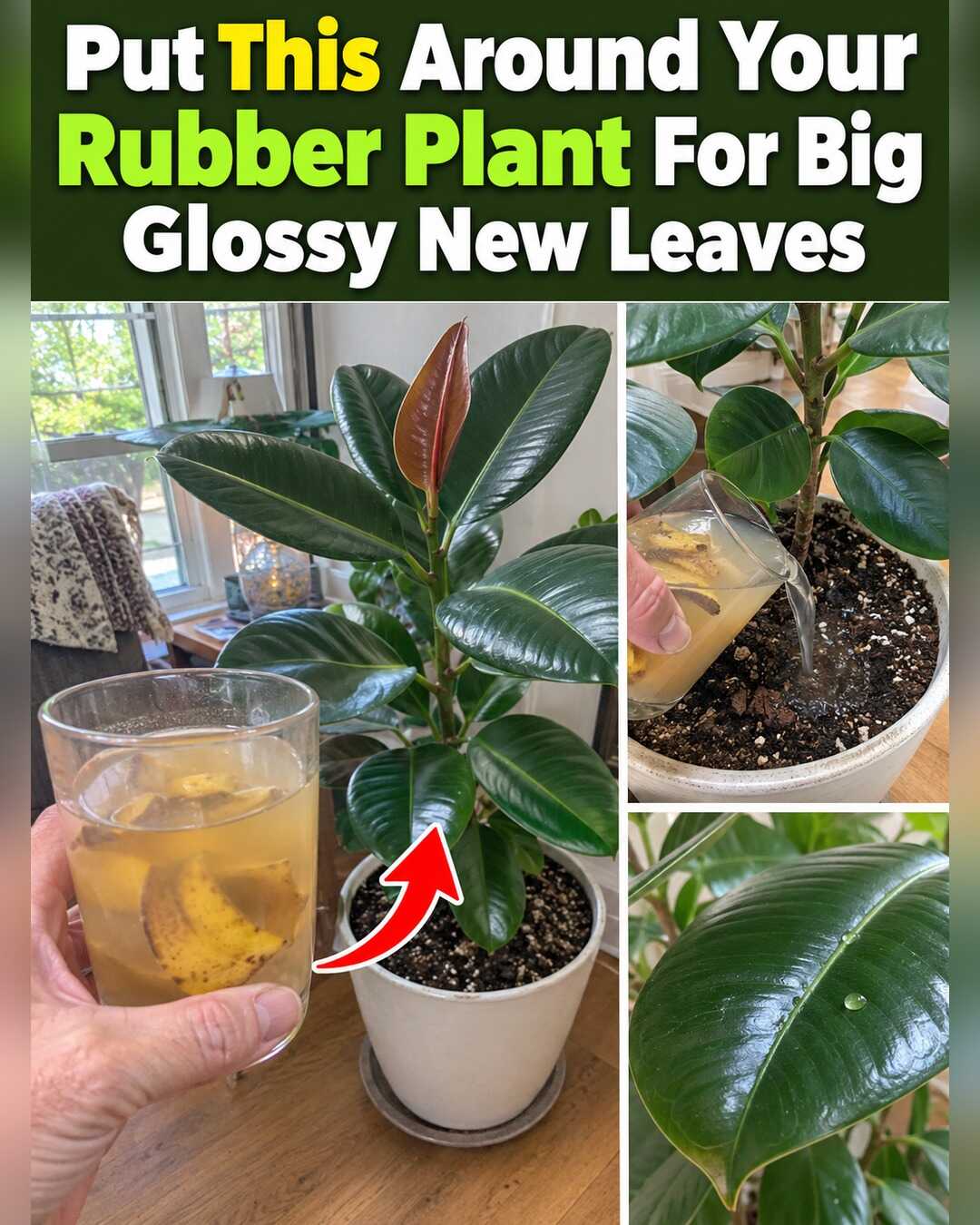
Put THIS Around Your Rubber Plant for Big Glossy New Leaves
The thing to put around your rubber plant is banana peel water. Soak one peel in a jar of water for two days, strain it, and pour about 1 cup around the base of the plant every two to three weeks in the growing season. Many home gardeners swear by it for bigger, glossier new leaves.
The rubber plant (Ficus elastica) is a favorite because of its thick, shiny leaves and its bold look. But in a house with short winter days, new leaves can come in small and slow, and older leaves can look dull and dusty. A gentle kitchen “tea” can give it a little extra boost.
What you need
- 1 ripe or very ripe banana peel (organic if you can, or wash it well)
- A clean glass jar of about 2 cups
- Room-temperature water
- A strainer
- A watering can or a measuring cup
- A rubber plant in a pot with drainage holes
The method, step by step
-
Cut the peel. Chop one banana peel into small pieces, about the size of a postage stamp. Smaller pieces release more into the water than a whole peel.
-
Soak it. Put the pieces in the jar and cover them with about 2 cups of water. Leave the jar on the counter, away from the sun, for 48 hours. Stir once a day.
-
Strain. Pour the water through a strainer into a clean container. Discard the peel pieces in the compost or the trash. Do not put them on the soil, because they attract fruit flies as they rot.
-
Check the plant. Press a finger into the soil. If the top inch is dry, it is time for a drink. Never feed a plant sitting in soggy soil.
-
Water around the base. Pour about 1 cup of the banana water slowly around the base of the plant, not on the leaves. Keep pouring until a little water comes out of the drainage holes.
-
Empty the saucer. After 15 minutes, tip out any water that has collected in the saucer so the roots do not sit in it.
-
Repeat. Do this every two to three weeks from spring through early autumn, and about once a month in winter if the plant is still growing.
Why it works
Banana peels contain potassium, along with small amounts of magnesium, calcium and phosphorus. These are nutrients that plants use for strong stems, healthy leaves and steady growth. A soak in water lets a little of it dissolve.
The water is a very mild fertilizer, so it is not a replacement for regular plant food, but it is a nice extra for plants that are doing well and need a small lift. Rubber plants are heavy feeders in spring and summer, which is why they often respond.
The glossy leaves also depend on good light and clean surfaces. That is why the care steps below matter as much as the banana water itself.
What results to expect
Be realistic: banana water is a gentle helper, not magic. In most homes the change shows up over a month or two, not overnight. Look for larger new leaves than the last ones, a deeper green and a firmer, shinier surface.
Take a photo of the plant today and another one six weeks from now. Counting new leaves is the best way to see what is working. Measure the newest leaf with a ruler if you like, and compare it with the next one.
If you see no change after two months, the cause is almost always light. A rubber plant in a dim room will stay small no matter what you pour on it. Move it closer to a bright window before changing anything else.
Mistakes to avoid
- Do not use the water after it turns slimy or smells bad. Soak for two days only, then use or discard it. It should smell mild, not sour.
- Do not bury the peel in the pot. It can attract gnats and mold and does not help the plant faster.
- Do not overwater. Rubber plants hate wet feet. Yellow, drooping lower leaves are the first sign.
- Do not use it more than once every two weeks. More is not better and a build-up of salts can burn the roots.
- Do not pour it on cold soil in a dark corner. The plant is resting in low light, so feed less in winter.
Bonus tips for bigger, glossier leaves
Give the plant bright, indirect light. A spot near a south or east window, a few feet back from the glass, is ideal. Rotate the pot a quarter turn every week so it grows evenly instead of leaning.
Wipe the leaves with a soft damp cloth every two weeks. Dust blocks light and makes the leaves look dull. A little wipe is the quickest way to get that shine people admire.
Look for the new leaf. It appears as a pink or burgundy sheath at the top of the stem, then slowly unrolls. Do not touch it, and do not move the plant to a new place while it is opening.
If the plant has grown tall and bare, you can prune it just above a leaf. A new branch will often grow from just below the cut, and the plant becomes fuller over time.
Repot every two to three years in spring, only one pot size up. A rubber plant that is too cramped will slow down, no matter what you feed it.
Frequently asked questions
How often can I use banana peel water on my rubber plant?
Once every two to three weeks in spring and summer is plenty. In fall and winter, once a month at most, and skip it altogether if the plant is not growing and the soil stays damp.
Can I use the water for other houseplants?
Yes, most houseplants tolerate it. Pothos, monstera and philodendron are common choices. Succulents and cacti need much less, so use it very rarely on them.
Will banana water attract fruit flies?
The strained water, poured into the soil, rarely does. Fruit flies are attracted to rotting peel, so discard the peel and don’t let the soaking jar sit for more than two days.
Why are my rubber plant leaves dropping?
The most common reason is too much water. Others are low light, cold drafts or a sudden move. Check the soil first, then the light, and change one thing at a time.
How long until I see new leaves?
If the plant gets enough light, you may see a new leaf in four to eight weeks in the growing season. In winter, growth is slow, so be patient and keep the care steady.
Can I use a dried banana peel?
Fresh or slightly ripe peels work best for soaking. Dried peels can be ground into a powder, but this adds more steps and can attract pests, so the soak is simpler.
A free banana peel and a jar of water are an easy way to give your rubber plant a little extra care. Pair them with good light and clean leaves and watch for those big glossy new leaves.