
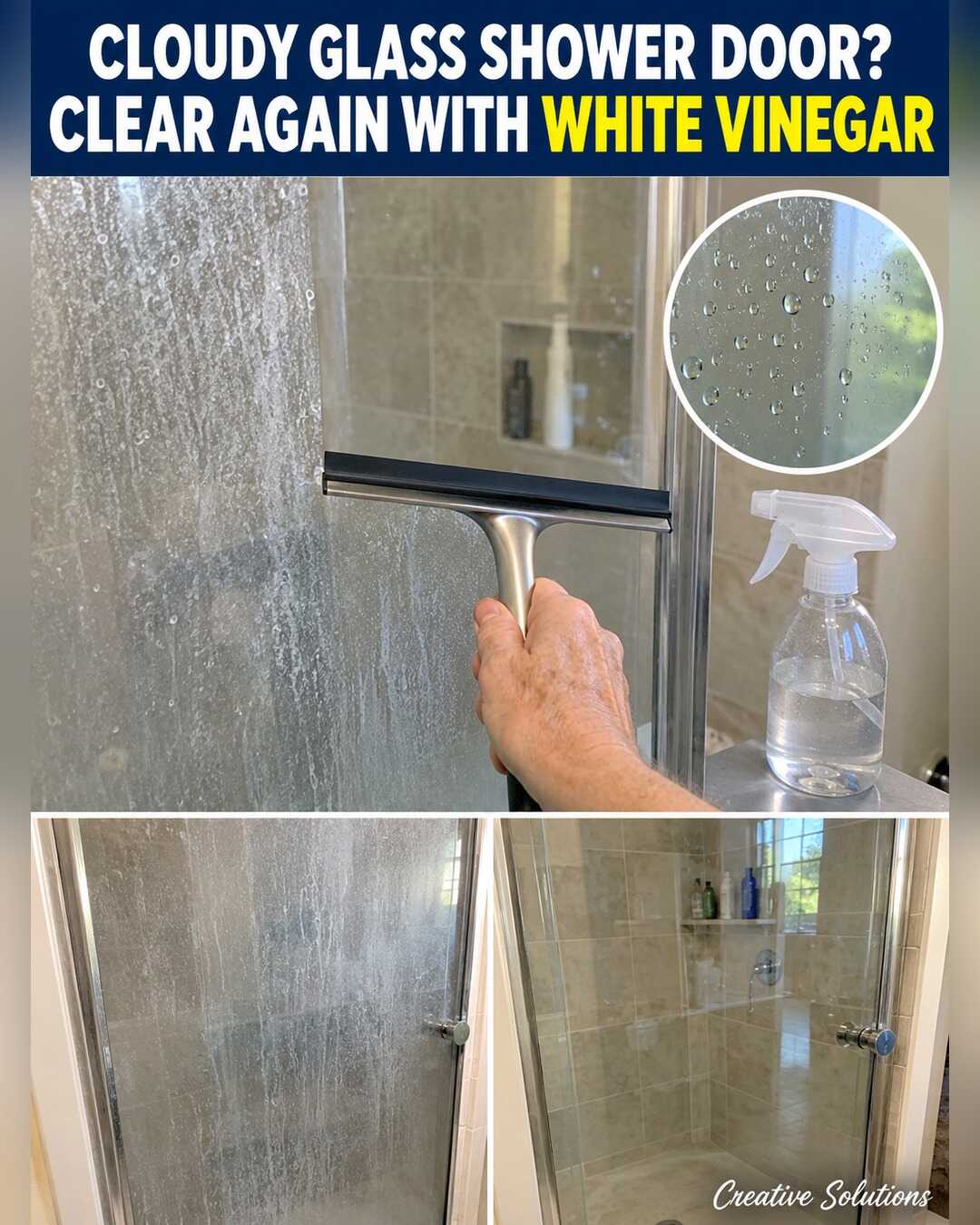
Cloudy Glass Shower Door? Clear Again With White Vinegar and a Squeegee
The thing that clears a cloudy glass shower door is plain white vinegar, along with a rubber squeegee. Vinegar dissolves the hard-water film, and the squeegee keeps it from coming back. You do not need hard scrubbing or an expensive cleaner.
That white haze is not dirt in most homes. It is a thin layer of minerals left behind when water dries on the glass, mixed with a little soap. It builds up a bit more each week until the glass looks dull and foggy, even right after you clean it.
What you need
- White vinegar (5 percent acidity, the ordinary kind)
- Warm water
- A clean spray bottle
- A rubber squeegee (a small one from the dollar store is fine)
- 2 soft microfiber cloths
- An old soft toothbrush for the corners and the track
- Rubber gloves, if your skin is sensitive
The method, step by step
-
Open a window or turn on the fan. Vinegar is safe, but the smell is strong in a small bathroom. A little fresh air makes the job much more pleasant.
-
Mix the spray. Fill the spray bottle with equal parts white vinegar and warm water. For very heavy buildup, use the vinegar straight, warmed for 20 seconds in the microwave in a glass cup (not the spray bottle).
-
Spray the whole door. Start at the top and work down so the liquid runs over the glass. Soak it well, especially along the bottom third, where the film is usually thickest.
-
Wait 10 minutes. This is the step that does the work. The vinegar needs time to soften the mineral film. Do not let it dry; spray the glass again if it starts to dry out.
-
Wipe the stubborn spots. Use a damp microfiber cloth in small circles on any spots that are still white. Use the toothbrush on the metal frame and the corners of the glass, where the film hides.
-
Squeegee from top to bottom. Hold the squeegee at a slight angle and pull it down in straight overlapping strips. Wipe the blade on the cloth after each pass so the water does not run back onto the glass.
-
Rinse and dry. Rinse the door with clean water to remove any vinegar, then squeegee once more and buff the edges with a dry microfiber cloth. The glass should look clear right away.
How to tell what kind of cloudiness you have
Before you start, do a simple test. Spray a small corner of the glass with water. If the haze looks clearer while the glass is wet and returns as it dries, it is a mineral film, and vinegar will work very well.
If the glass looks cloudy even when wet, with a rough or frosty feel, it may be etched. If it feels greasy or slick instead, it is likely soap scum. For soap scum, add a squirt of dish soap to the warm water and wipe first, then follow with the vinegar spray.
Most shower doors have a mix of both, which is why the vinegar soak followed by a good wipe and squeegee works so well. Take a photo before you start. The difference after 15 minutes is often a pleasant surprise.
Why it works
Hard water leaves calcium and magnesium deposits on glass. These are alkaline minerals, and vinegar is a mild acid, so it can break them down gently without damaging the glass itself.
The squeegee does the second half of the job. If water droplets are pulled off the glass after every shower, there is nothing left to dry and leave a new film. This is the secret behind glass that stays clear for weeks.
Warm water and a short soak are better than aggressive scrubbing. Rubbing a dry, gritty film into the glass can leave tiny scratches that catch even more residue later.
Mistakes to avoid
- Never mix vinegar with bleach. The combination releases a harmful gas. If you used a bleach product recently, rinse the shower well first.
- Skip vinegar on natural stone. Marble, travertine and granite can be etched by acid. If your shower has stone tile, keep the spray off it and rinse any drips quickly.
- Do not use steel wool or rough pads. They scratch the glass and make the cloudiness permanent.
- Do not let vinegar sit on metal trim for hours. Rinse brass, brushed nickel and other finishes after the soak.
- Do not skip the final rinse. Leftover vinegar can leave streaks and a sharp smell.
Bonus tips and variations
Keep the squeegee hanging on a hook inside the shower and make it a 30-second habit after each shower. This is the easiest way to keep the door clear without any cleaner at all.
For the tracks, pour a little vinegar into the groove, let it sit for 15 minutes and scrub with the old toothbrush. Then wipe away the loosened grime with a cloth.
For a baked-on, chalky film, make a paste with baking soda and a little water. Rub it gently on the glass with a damp cloth, then spray with vinegar, let it fizz for a minute and wipe off. Rinse well afterward.
If the glass stays cloudy after two rounds, it may be etched, which means the surface itself has been worn by years of hard water. In that case, vinegar will not bring back full clarity, but it will still remove the film on top and make the glass look much better.
A weekly light spray of half vinegar, half water, followed by the squeegee, takes about two minutes and prevents heavy buildup from coming back.
Frequently asked questions
How often should I clean a glass shower door with vinegar?
For a door that is already clear, once a week is plenty. For a very cloudy door, do the full 10-minute soak the first time, then repeat once a week until the film is gone and you can switch to quick maintenance.
Is vinegar safe for glass?
Yes. Plain household vinegar is safe on glass. It can harm natural stone, some rubber seals if left for hours and certain metal finishes, so rinse these off after cleaning.
Can I use lemon juice instead of white vinegar?
Lemon juice is also acidic and can help, but it is usually weaker and leaves a sticky residue unless rinsed very well. White vinegar is cheaper, steadier and easier to rinse off.
Why is my door still cloudy after cleaning?
Either the film was very thick and needs a second soak, or the glass is etched. Try a longer soak, with warm vinegar, and use a baking soda paste on stubborn spots before deciding it is etched.
Will the smell stay in my bathroom?
The vinegar smell fades within an hour, especially with a fan or an open window. Rinsing the door well helps, and a drop of lemon essential oil in the spray bottle is optional.
Do I really need a squeegee?
You can dry the door with a microfiber cloth instead, but a squeegee is faster and leaves fewer streaks. It is the cheapest tool that keeps the glass clear between cleanings.
With a spray bottle of white vinegar and a squeegee, a cloudy shower door can look new again in one afternoon. Keep up the quick weekly routine and the glass will stay clear.