
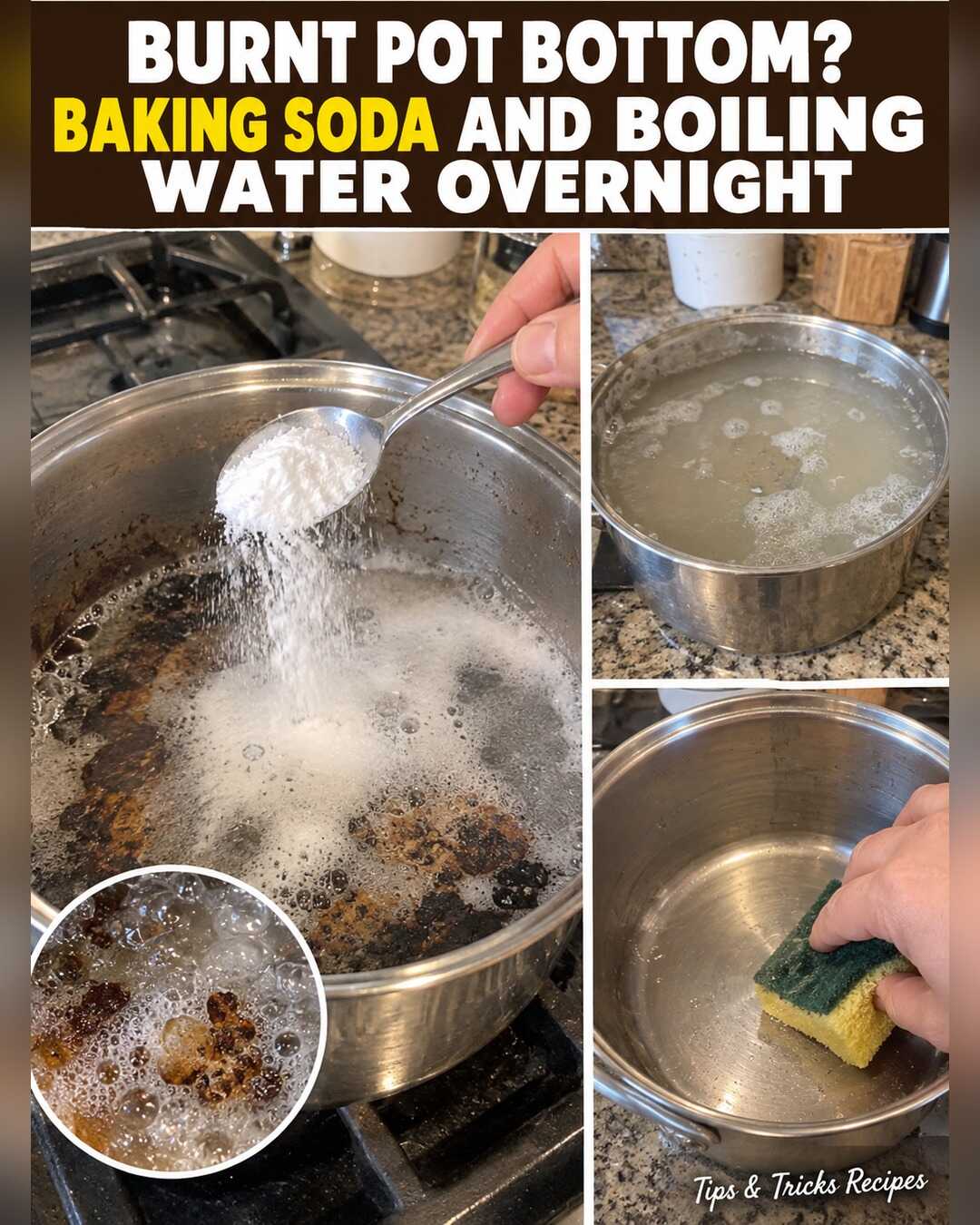
Burnt Pot Bottom? Baking Soda and Boiling Water Overnight Lifts the Layer
It happens to everyone. The phone rings, the rice keeps cooking, and when you come back there is a black layer stuck to the bottom of your favorite pot. Scrubbing hard only makes you tired, and often scratches the metal.
There is a patient way to deal with it. Baking soda, hot water and a night’s rest do most of the work for you. Here is the method, step by step, with a few important warnings about which pots to use it on.
What You Need
- Baking soda (about 3 to 4 tablespoons for a medium pot)
- Water, enough to cover the burnt area by an inch or two
- A wooden spoon or silicone spatula
- A non-scratch sponge or a soft dish brush
- Dish soap and a dry towel
- A heatproof surface and oven mitts for handling the hot pot
Step-by-Step Method
- Check what your pot is made of. This method suits stainless steel, enamel-coated and glass cookware. Do not use it on aluminum, because baking soda can darken it, and be careful with non-stick pans, since harsh scrubbing damages the coating.
- Scrape off any loose food with a wooden spoon or silicone spatula. Never use a metal tool, which can leave scratches. Empty the pot and give it a quick rinse.
- Add enough water to cover the burnt layer by an inch or two. Put the pot on the stove and bring the water to a gentle boil. Stay close, and use a medium heat so it does not boil over.
- Turn off the heat and carefully add the baking soda, one spoonful at a time. It will fizz and foam up, which is normal. Stir gently with the wooden spoon until it dissolves.
- Let the pot sit on a safe, stable surface where no one will bump it. Leave it overnight, or at least for 8 hours. The hot water softens the burnt layer slowly. Do not cover the pot tightly.
- In the morning, pour out the water. You may see pieces of burnt food floating or already lifted from the bottom. Pour carefully, since the water may still be warm.
- Use the non-scratch sponge to wipe the bottom of the pot. Most of the layer should come off easily. If some spots remain, make a paste with a spoonful of baking soda and a little water, and rub gently in circles.
- Wash the pot with dish soap and warm water, rinse well, and dry with the towel. If a faint mark remains, repeat the overnight soak once more instead of scrubbing harder.
Why It Works
Baking soda is mildly alkaline. When it dissolves in hot water, it helps loosen baked-on food, especially sugar and starch, so the burnt layer releases from the metal rather than clinging to it.
Time does the heavy lifting. The long soak lets water seep under the crust. The fizzing and gentle heat in the first minutes start the process, and the rest happens while you sleep.
Since this method needs almost no scrubbing, it protects your pot. Hard scrubbing with steel wool or a rough pad often leaves scratches, and food burns on scratched surfaces more easily next time.
How to Avoid Burnt Pots in the First Place
The best clean-up is the one you never need. Most burnt pots come from high heat and a distracted moment, so a few simple habits make a big difference in your kitchen.
Use a heavy-bottomed pot for foods that burn easily, like rice, milk, porridge and tomato sauce. Thick bottoms spread heat more evenly, and the food is less likely to stick in one hot spot at the bottom of the pot.
Keep the heat at medium or low once the liquid is simmering, and stir from time to time, scraping the bottom with a wooden spoon. Set a timer on your phone, even for short jobs, so you do not forget about the stove.
If something does stick, take the pot off the heat right away and add a little water. Dealing with it at once is far easier than a layer that has been cooked on for another ten minutes.
A last tip: after cleaning, dry your pot completely before storing it, and hang or stack it so the bottom does not rub on other pans. A pot that is cared for this way keeps its shine, and food releases from it much more easily.
Mistakes to Avoid
- Using baking soda on aluminum pots. It can cause dark stains that are hard to remove.
- Pouring cold water into a very hot pot. The sudden change can warp thin metal. Let it cool slightly first.
- Scraping with a metal knife or fork. It scratches the surface.
- Mixing baking soda with vinegar in a closed pot. The foam can overflow, and the two cancel each other out. Use only one.
- Leaving the pot where children or pets can reach it. Water that stays warm overnight can still cause a burn.
- Using this on a cracked or chipped enamel pot, where water can get under the coating.
Bonus Tips and Variations
- For a lightly burnt pot, a shorter soak of one hour in hot water and a spoonful of baking soda may be enough.
- A few drops of dish soap in the soaking water help lift greasy residue.
- To prevent burning, use a heavier pot for rice, milk and sauces, keep the heat low, and set a timer.
- After cleaning, a little baking soda paste on the outside of a stainless steel pot can lift stains around the bottom edge.
- Wooden spoon marks are normal. Do not worry if a faint ring stays, since stainless steel often keeps a trace of heat discoloration.
Frequently Asked Questions
Which pots can I use this method on?
Stainless steel, enamel-coated and glass cookware are good choices. Avoid aluminum, which baking soda can darken, and be gentle with non-stick surfaces. If you are unsure, check the care guide from the maker.
Do I really need to leave it overnight?
Overnight gives the best results, but for a light burn, a few hours may be enough. The longer soak softens the crust so you can wipe it off without hard scrubbing.
How much baking soda should I use?
About 3 to 4 tablespoons for a medium pot, with enough water to cover the burnt area. Add it slowly after turning off the heat, because it fizzes and can foam up.
Is it safe to leave a pot of hot water overnight?
Let it cool naturally on a stable surface where no one can bump it, and keep it away from children and pets. If you prefer, let it soak for a few hours instead and finish before bed.
What if the burnt layer is still there in the morning?
Repeat the soak once more. Very thick layers sometimes need two rounds. A paste of baking soda and water on stubborn spots helps. Avoid steel wool, which scratches.
Can I add vinegar to the mix?
It is better not to. Vinegar and baking soda neutralize each other, so you lose the benefit of both. Pick one method per soak, and rinse well between them.
Baking soda, hot water and a night of patience can loosen a burnt layer that looked impossible to clean.
Choose the right pot, skip the harsh scrubbing, and your cookware will serve you for years.