
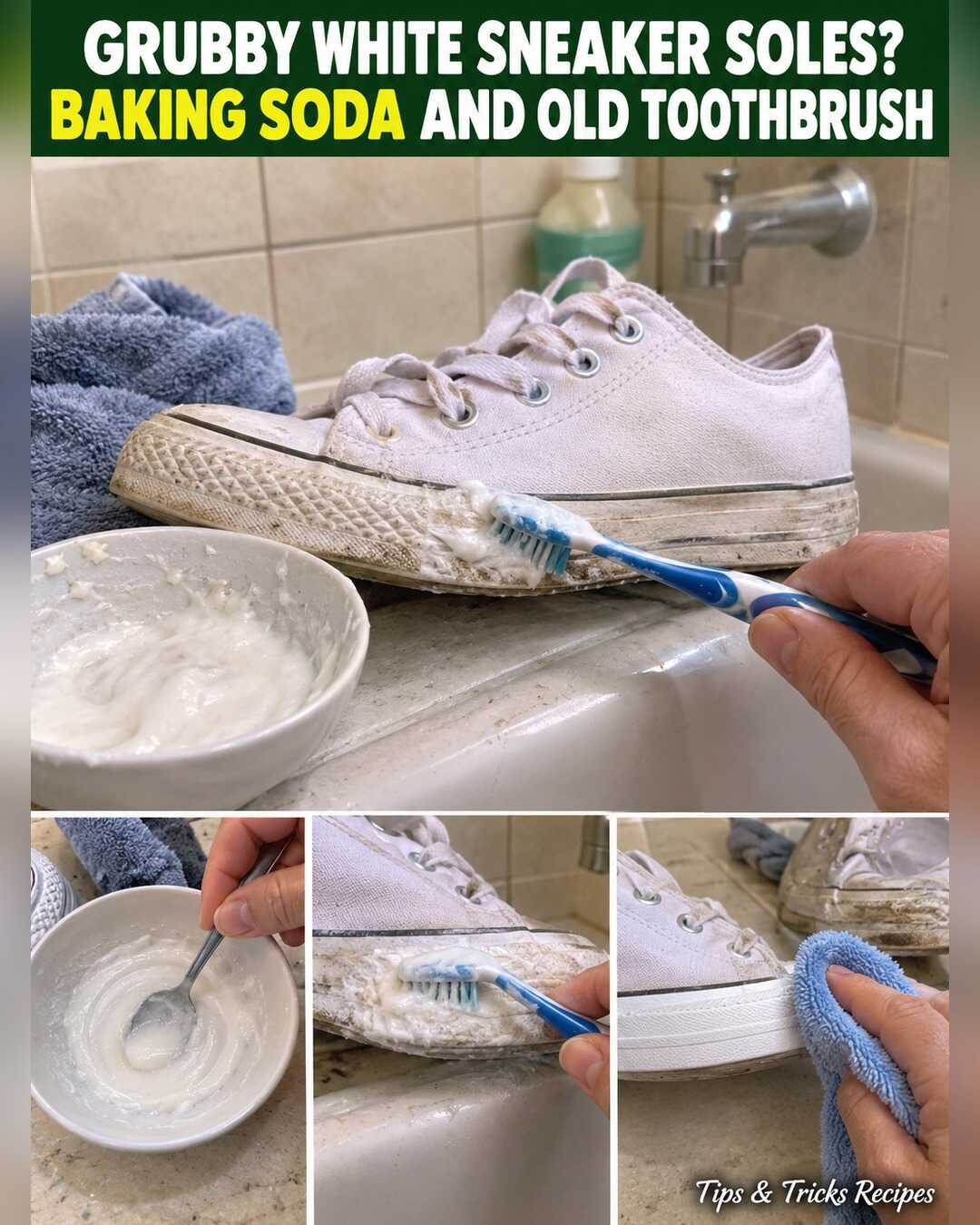
Scuffed White Sneaker Soles? Baking Soda Paste and an Old Toothbrush Brighten Them
White sneakers look great for about a week. Then the soles pick up gray streaks, black scuffs and that dingy yellow edge that no amount of wiping seems to fix. It can make an otherwise clean pair look worn out.
Before you give up on them, try a simple paste from your kitchen. Baking soda and a little water, with an old toothbrush, lifts a surprising amount of dirt from rubber soles. It takes about ten minutes, and costs almost nothing.
What You Need
- Baking soda (about 2 tablespoons)
- Water, just a little
- A small bowl and a spoon
- An old toothbrush with medium bristles
- A damp cloth and a dry cloth
- An old towel or newspaper to protect the surface
- Optional: a toothpick to clear dirt out of the tread
Step-by-Step Method
- Take out the laces and put them aside. Brush off loose dirt and dried mud from the soles and the sides with a dry cloth or the dry toothbrush. Pay attention to the grooves.
- Mix two tablespoons of baking soda with about one tablespoon of water in the bowl. Stir until you get a thick paste, like toothpaste. If it is runny, add a bit more baking soda.
- Place the sneaker on the towel with the sole facing you. Use a piece of tape or a folded cloth to cover the fabric edge next to the sole if you want extra protection. Keep the paste off any fabric or suede.
- Dip the toothbrush in the paste and spread a thin, even layer over the rubber sole and the side edge. Do not soak the shoe. A small amount is enough.
- Scrub in small circles for about a minute per shoe, using light to medium pressure. Work along the edge in short sections. You will see gray color coming off into the paste.
- Let the paste sit for 5 to 10 minutes. This gives the baking soda time to loosen the dirt. For deep scuffs, repeat the scrub once more after the wait.
- Wipe the paste away with a clean, damp cloth. Rinse the cloth often and wipe until no white residue is left. Use a toothpick to dig any leftover grit out of the tread.
- Dry the soles with a dry cloth and let the shoes air-dry away from direct heat. Put the laces back in once the shoes are completely dry. Admire the difference between the sole and the sneaker you have not cleaned yet.
Why It Works
Baking soda is a very mild abrasive. Its fine crystals are soft enough not to scratch rubber, yet firm enough to lift surface dirt when you rub gently. Mixed with a little water, it becomes a paste that stays in place on the sole instead of falling off.
The toothbrush adds control. Its small head gets into the grooves and along the edge where a sponge cannot reach, and its bristles are firm enough to move the dirt without being harsh.
Baking soda also helps with light odor on the surface it touches. That is a nice extra, but the main job here is lifting grime.
How to Keep White Soles Cleaner
White soles show everything, so a little regular care helps more than a big clean now and then. A quick wipe with a damp cloth after you come in from a wet or dusty day takes thirty seconds and stops dirt from setting into the rubber.
Try to dry your shoes naturally. Stuff them lightly with clean paper towels if they are damp inside, and place them in a spot with fresh air. Avoid sunny window sills for hours, because strong sun can slowly yellow white rubber.
If you walk a lot on city streets, give the soles a paste clean every two weeks. Little by little, the habit saves you from having to scrub away old, deeply set dirt, which is always much harder than fresh dirt.
Rotate between two pairs when you can. Shoes that get a day of rest dry out fully, hold their shape better, and last longer overall, which is good news for your wallet as well.
Finally, remember that nothing replaces patience. If a scuff does not move on the first try, rest the shoe for a day and do a second round with fresh paste. Gentle repeats work better than one hard scrub, and they keep the rubber in good shape.
Mistakes to Avoid
- Using it on suede, nubuck or leather. Those materials need their own cleaner. This paste is for rubber soles and plain canvas edges.
- Scrubbing too hard. Heavy pressure can scuff the rubber’s surface and make it look duller.
- Soaking the shoes. Too much water can loosen glue and leave water marks on canvas.
- Drying on a radiator or in direct sun for hours. Heat can yellow white rubber and weaken the glue.
- Mixing the paste with bleach. Bleach can turn rubber yellow and is not needed here.
- Leaving the paste to dry hard. Wipe it off while still slightly damp.
Bonus Tips and Variations
- For marks that stay, a clean white melamine eraser sponge, slightly damp, can lift black scuffs from rubber. Test it on a small spot first.
- Use the same paste on white rubber trim of old sandals or rubber boots.
- Clean the soles every week or two, and the dirt never gets deeply ingrained. A quick wipe after a wet day also helps.
- Store your white sneakers away from dark leather shoes and newspapers, since color and ink can rub off onto the soles.
- Check the care label or manufacturer’s advice if your sneakers have special foam or a coated finish.
Frequently Asked Questions
Is baking soda safe for sneaker soles?
For ordinary rubber soles, yes. It is a gentle abrasive and does not scratch when used with light pressure. Avoid it on suede, leather and special coated materials, and test a hidden spot if you are unsure.
How long should I leave the paste on?
About 5 to 10 minutes after the first scrub is enough. You do not need to leave it for hours. Wipe it off while it is still a little damp, because dry powder is harder to remove.
Will this work on yellowed soles?
It can help with surface dirt, but yellowing caused by age, sun or heat often goes deeper and may not fully disappear. Expect the soles to look cleaner and brighter, not brand new.
Can I use this on canvas?
You can use a little at the edge, where canvas meets the sole, if you rub lightly and wipe well. Do not scrub the canvas hard or soak it. If you have care instructions for the fabric, follow them.
What if the paste leaves white marks?
That means some residue is still on the shoe. Wipe again with a damp cloth, rinsing it between passes, then dry. Residue is common on textured soles, so a toothpick or the toothbrush can help in the tread.
Can I put my sneakers in the washing machine instead?
Some can be washed, some cannot. Check the label. Hand-cleaning the soles with a paste is gentler on glue and shape, and it targets the dirt right where it is.
A spoonful of baking soda, a splash of water and an old toothbrush are enough to freshen up scuffed white soles.
Do it once every week or two, and your sneakers will keep looking tidy for much longer.