
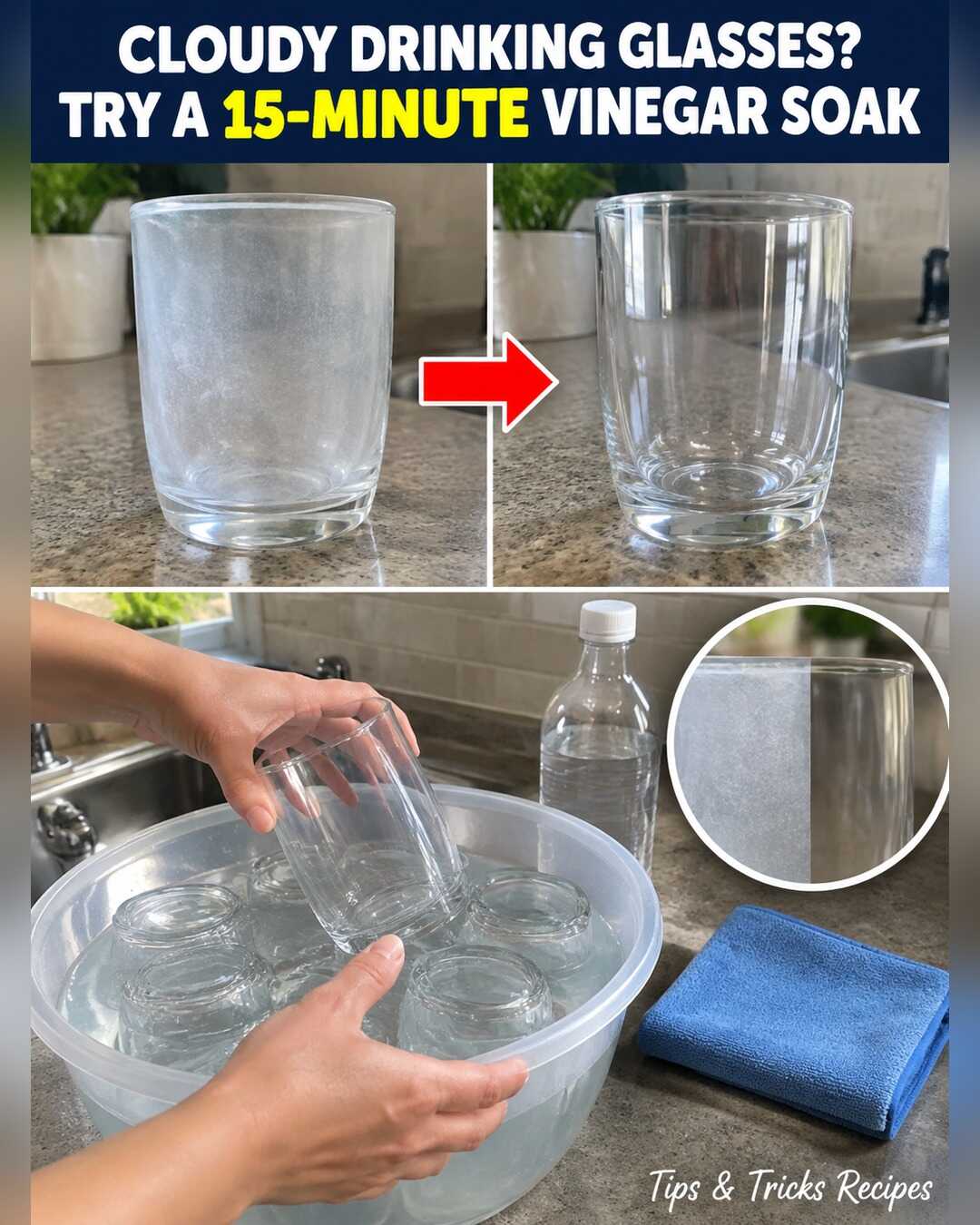
Cloudy Drinking Glasses? A 15-Minute White Vinegar Soak Brings Back the Shine
You pull a glass out of the cupboard, hold it up to the window, and it looks foggy. You washed it, rinsed it, dried it, and it still has that milky film. It is not dirt. In most homes, it is a thin layer of mineral deposit left behind by hard water.
The fix is cheap and gentle: a 15-minute soak in diluted white vinegar. It dissolves the mineral film so you can simply rinse it away. Here is how to do it properly, and which glasses to leave out.
What You Need
- Plain white vinegar (the kind sold for cooking and cleaning)
- Warm water from the tap
- A large plastic basin, a clean sink, or a wide bowl
- A soft sponge or cloth
- A dry microfiber or lint-free towel
- Optional: rubber gloves if you have sensitive skin
Step-by-Step Method
- Sort your glasses first. Plain, everyday drinking glasses are perfect. Set aside crystal, glasses with gold or silver rims, painted or printed designs, and anything antique. Those need gentler care, and vinegar can dull them.
- Wash the glasses as usual with dish soap and rinse them. Grease and food would block the vinegar from reaching the film, so this first wash matters.
- Fill the basin with equal parts warm water and white vinegar. For a medium basin, that is about four cups of each. The water should be warm, not hot.
- Lower the glasses into the mixture so they are completely covered. Tilt each glass as you put it in so air does not stay trapped inside. If a glass floats, fill it with the solution to sink it.
- Set a timer for 15 minutes. You may notice the film starting to disappear. Do not leave glasses in for hours, since a long soak is not needed and is not good for every type of glass.
- Take each glass out and rub it gently with the soft sponge, especially around the rim and the base, where the film is thickest. Stubborn spots can get a second short soak.
- Rinse every glass thoroughly under running water. This removes the vinegar smell and the loosened film. Use plenty of water, and rinse the outside as well as the inside.
- Dry each glass right away with a lint-free towel, holding it by the base. Drying while it is still damp prevents new water spots. Hold the glass up to the light and enjoy the difference.
Why It Works
The cloudy film on glasses is mostly calcium and magnesium from hard water. These minerals are alkaline, and vinegar is a mild acid. When the two meet, the minerals dissolve into the water, which is why a short soak works better than scrubbing.
Dish soap cannot do this job. Soap removes grease, but it does not dissolve mineral deposits. That is why glasses can be perfectly clean and still look cloudy.
Diluting the vinegar with water keeps the soak gentle on plain glass and on your hands, and it is enough for this kind of light film.
How to Keep Glasses Clear Longer
Once your glasses are clear again, a few small habits help them stay that way. The cloudy film comes back when water dries on the glass and leaves minerals behind, so the less water that dries on them, the better.
After washing, dry each glass with a lint-free towel while it is still warm. Do not leave them to drip dry on the rack if your water is hard. A minute of hand drying saves you a full soak later.
If you use a dishwasher, make sure it has enough rinse aid and the salt compartment is full, if your model has one. Do not overload the machine, because glasses that touch each other do not get rinsed well.
Store glasses upright on the shelf, not upside down on a damp surface. A dry cupboard also keeps them looking brighter. And once every month or two, give them a quick vinegar soak, as before, to keep the film from building up.
If you are unsure how hard your water is, look at your kettle. A white crust inside it, or white spots on faucets and the shower door, is a clear sign. In that case, a regular vinegar soak for glasses is a small habit that will pay off every month.
Mistakes to Avoid
- Soaking crystal, gilded or painted glasses. Vinegar can dull the shine and fade decoration.
- Mixing vinegar with bleach or any cleaning product containing chlorine. This can release harmful gas. Never combine them. Use vinegar alone.
- Using hot water. Sudden heat can crack glass, so warm is plenty.
- Skipping the rinse. Leftover vinegar can leave a smell and spots.
- Air-drying on the counter. New water spots form as the drops evaporate, so dry by hand.
- Soaking for a very long time. Fifteen minutes is the right amount for light cloudiness.
Bonus Tips and Variations
- For a single stubborn glass, fill it with the half-and-half mixture, let it sit for 15 minutes, then pour it out and rinse.
- Heavily clouded glasses can get a second soak, with a gentle sponge rub in between. If the cloudiness does not go away, the glass may be etched (permanently scratched by many dishwasher cycles), and no soak can fix that.
- Add a splash of white vinegar to the rinse compartment of your dishwasher, if the manual allows it, to help prevent new film.
- Do the same soak for glass vases, glass jugs and carafes, using a bottle brush for the inside.
- A soft cloth with a little vinegar also freshens up a cloudy glass shower door, but test a small corner first.
Frequently Asked Questions
Why do my glasses get cloudy even after washing?
Most often it is mineral film from hard water, which dries onto the glass. Soap does not remove it. A short vinegar soak dissolves it. If the glass stays cloudy afterward, it may be etched and cannot be restored.
Is white vinegar safe for all glasses?
It is safe for plain everyday glass. Skip crystal, glasses with gold or silver rims, hand-painted designs, and antiques. When in doubt, test a small area or a spare glass before soaking the whole set.
Can I use apple cider vinegar instead?
White vinegar is the better choice because it is clear and has no color to stain. Apple cider vinegar can leave a faint tint and a stronger smell. Stick with plain white vinegar for glassware.
Will the vinegar smell stay on my glasses?
No, as long as you rinse well. A thorough rinse under running water removes the smell completely. Dry the glasses and give them a sniff before putting them away.
How often should I soak my glasses?
Only when they look cloudy. Many households do it every month or two. If you live in a hard water area, a regular soak keeps the film from building up.
Can I do this in the dishwasher?
A little vinegar in the rinse compartment may help prevent film, if your dishwasher manual allows it. A direct soak in a basin, however, works much better for glasses that are already cloudy.
Fifteen minutes in diluted white vinegar is often all it takes to turn foggy glasses into clear ones.
Remember to rinse and dry them well, and your cupboard will sparkle again.