
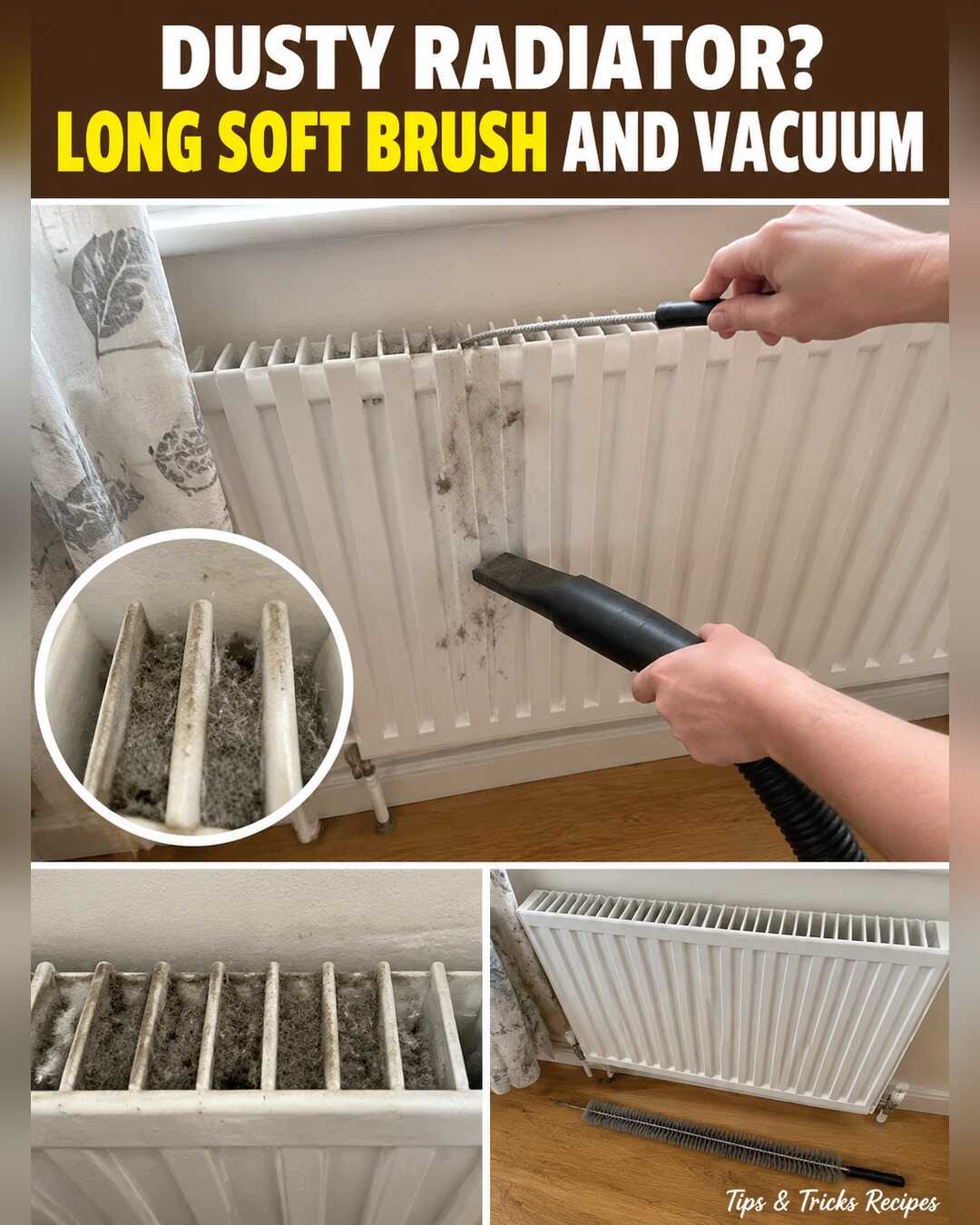
Dusty Radiator? A Long Soft Brush and Your Vacuum Clear It Out Fast
The first cold morning of the season, you switch the heating on and notice a funny smell. Warm dust. If you look at the top of your radiator, or down between the fins, you will probably see a gray, fuzzy layer that has been building up all summer.
The good news is that this takes about ten minutes. A long, soft brush loosens the dust, and your vacuum cleaner catches it before it floats back into the room. No water, no spray, no mess on the wall. Here is exactly how to do it.
What You Need
- A long, thin, soft brush (a radiator brush, a long flexible duster, or even a clean bottle brush with soft bristles)
- A vacuum cleaner with a hose and a small brush or crevice attachment
- An old towel or newspaper to put on the floor below
- A dry microfiber cloth
- A flashlight, so you can see the dust between the fins
- Optional: an old sheet to protect the curtains, and a mask if you are sensitive to dust
Step-by-Step Method
- Turn the heating off and let the radiator cool down completely. A warm radiator can burn your hand, and warm dust sticks to the brush. Give it an hour, or do this first thing in the morning before the heating comes on.
- Lay the towel or newspaper on the floor under the radiator. Dust will fall while you work, and this keeps the floor and the baseboard clean. Move the curtains away from the radiator so they do not get dusty too.
- Shine the flashlight between the fins or along the top grille. This shows you where the dust is thickest. Most of it sits at the top and in the narrow gaps at the back, where you cannot see without a light.
- Hold the vacuum hose with the crevice attachment right under or beside the area you are about to brush. Keep it close, about an inch away. The air flow will catch the dust as it comes loose.
- Slide the long soft brush gently between the fins, from top to bottom. Let the bristles do the work. Do not push hard, because the fins are thin and can bend. Pull the brush out slowly toward the vacuum hose.
- Repeat along the whole radiator, section by section. After every few passes, tap the brush against the hose or the towel to shake off the dust. Take your time at the corners, where dust packs down the most.
- Vacuum the top of the radiator, the front panel, and the floor underneath with the brush attachment. Then run the hose along the wall behind the radiator if you can reach it.
- Finish with the dry microfiber cloth along the front and top. Wipe in one direction. Check with the flashlight that the gaps look clear, then put the curtains back and turn the heating on as usual.
Why It Works
Dust is light, dry and fluffy. Wiping with a cloth often just pushes it deeper into the narrow gaps or lifts it into the air. A soft brush reaches where your hand cannot, and the vacuum catches the dust right away instead of letting it settle again.
A radiator warms the room mostly by heating the air that moves across it. When the gaps are packed with dust, that air has a harder time flowing through. A clean radiator lets warm air circulate more freely, so the room can feel a little more comfortable. We will not promise a specific saving on your bill, but clear gaps certainly do no harm.
There is also a freshness bonus. When a hot radiator burns off a layer of dust, you can smell it. Cleaning before the heating season starts means that smell mostly disappears.
When to Clean Your Radiators
The best moment is just before the first cold days, when the heating has been off for months and dust has had all summer to settle. Doing it then means the first time you switch the heating on, you will not smell burning dust in the air.
A second quick pass in the middle of winter keeps things tidy. If you notice gray streaks on the wall above the radiator, that is a sign that dusty warm air has been rising for a while, and it is time for another clean.
Pick a day when you have ten free minutes, and clean one room at a time. Bedrooms are a good place to start, because you spend many hours there and dust in the air is easy to notice at night.
Keep the brush and the vacuum attachment together in a closet, so the job is always easy to start. A habit that takes ten minutes is much easier to keep than one that needs a whole afternoon.
Mistakes to Avoid
- Cleaning a hot radiator. Always wait until it is cold to the touch.
- Spraying water or cleaning product into the gaps. Moisture can cause rust, and on an electric radiator it can be unsafe. This method is completely dry.
- Using a stiff or wire brush. It can scratch the paint and bend thin fins.
- Skipping the vacuum. A brush alone sends dust into the air and onto your curtains.
- Pushing the brush hard. If it does not slide in, use a thinner brush or the crevice attachment instead.
- Forgetting the back and the top. Most dust hides there.
Bonus Tips and Variations
- No long brush? Wrap a thin dry microfiber cloth around a ruler, secure it with a rubber band, and slide it between the fins. It works well on flat panel radiators.
- A hair dryer on the cool setting can push dust out of tight corners while the vacuum is held close. Keep it on cool only.
- Do this once at the start of the heating season and again in the middle. In a home with pets, every month or so is more realistic.
- Add a quick pass of the vacuum brush along the baseboard while you are there. Dust collects along the wall in the same spot.
Frequently Asked Questions
Can I clean the radiator while the heating is on?
It is better not to. A hot radiator can burn you, and warm dust clings to the brush. Switch the heating off, let the radiator cool until you can rest your hand on it comfortably, and then clean it.
What kind of brush works best?
A long, thin brush with soft bristles. Radiator brushes are sold in most hardware stores, but a flexible long duster or a soft bottle brush also works. Avoid stiff bristles, because they can scratch paint and bend thin fins.
Do I need to remove the radiator from the wall?
No. This method works with the radiator in place. You only need a flashlight and a slim brush to reach the gaps. If you have a very deep or complicated model, check the manufacturer’s instructions.
Will it really make my home warmer?
Clean gaps let air move more easily over the radiator, so the heat can spread better. The difference depends on how dusty it was. It is a gentle improvement, not a miracle, and it also helps the air smell fresher.
How often should I do this?
Once before the heating season and once in the middle is plenty for most homes. If you have pets, a dusty street outside, or someone with allergies, a quick pass every month or two is a good habit.
Can I use a damp cloth afterward?
Yes, but only on the outside of a cold, non-electric radiator, and wring it well. Dry it right away. Never push a wet cloth deep into the gaps, since trapped moisture can lead to rust.
A long soft brush, a vacuum and ten quiet minutes are all it takes to clear the dust from your radiator before the cold arrives.
Keep this simple routine in mind each autumn, and your home will stay fresher and warmer all winter.