
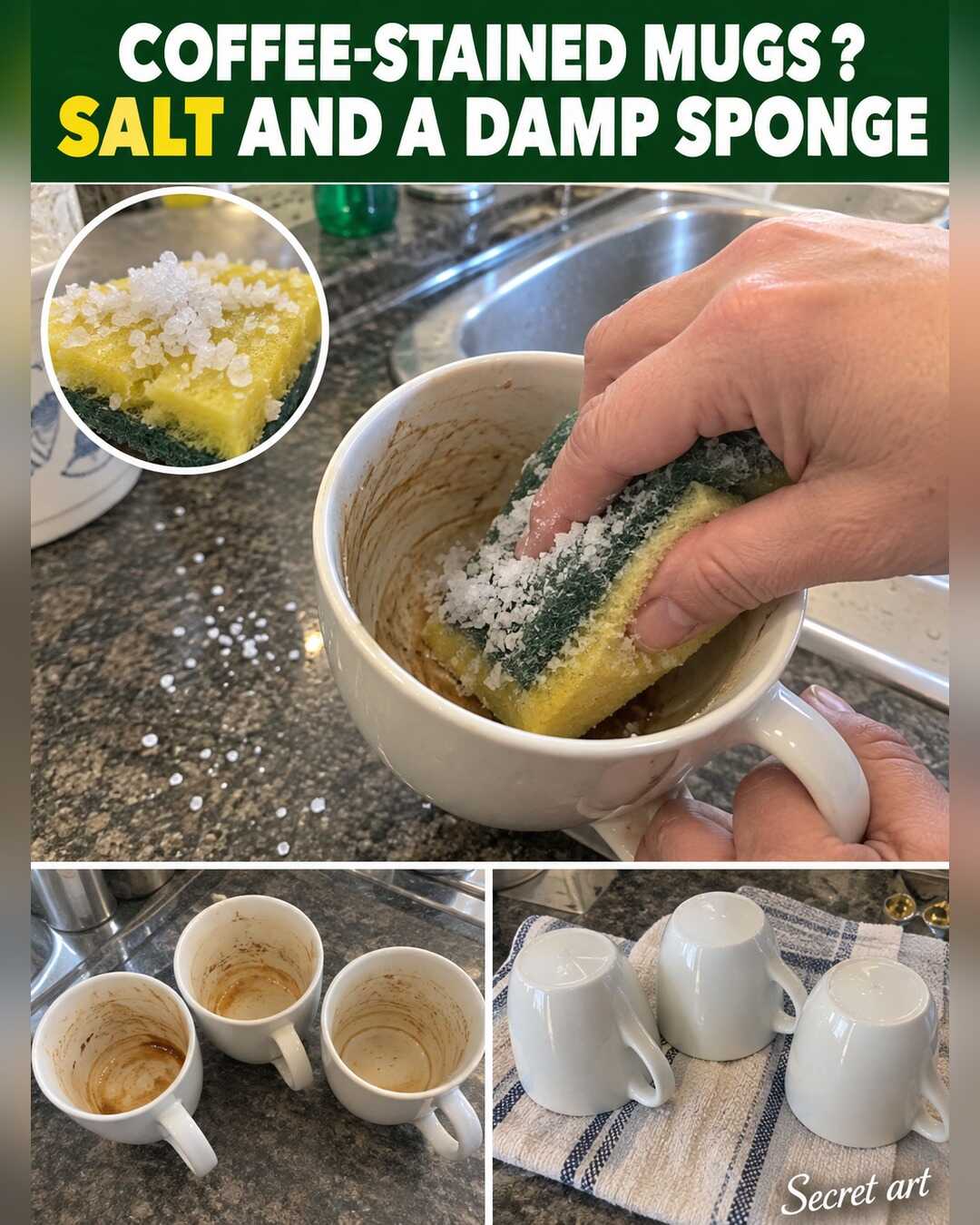
Coffee-Stained Mugs? Scrub Them Clean With Salt and a Damp Sponge
It happens in every kitchen. You pour the last of your coffee, leave the mug on the counter, and by the next morning there is a brown ring inside it. After a few weeks, the stains have settled in and the mug that was once white now looks beige.
Before you reach for a harsh cleaner, look in the cupboard. Ordinary table salt and a damp sponge are enough to scrub away most coffee stains. The salt acts as a gentle scrubber, and the sponge does the rest. It costs pennies and it is safe for most everyday mugs.
What You Need
- Fine table salt or coarse kitchen salt
- A damp sponge, preferably one with a soft side and a slightly rougher side
- Warm water
- A few drops of mild dish soap, for the final rinse
- A clean dish towel
- Optional: a small spoon for measuring the salt
Which Mugs Are Suitable?
This method works well on glazed ceramic, stoneware and porcelain mugs, which are the most common kinds at home. Glass cups are fine too, as long as you use a light touch.
Be careful with mugs that have a painted or gold-rimmed design, a printed photo, or a matt finish inside. Salt is a gentle abrasive, but it can still dull decorations. Test it on a small area first, or leave very special mugs for washing by hand with soap only.
Avoid using this on non-stick or coated travel cups, where scrubbing can damage the lining. Check the maker’s care label if you are not sure.
The Method, Step by Step
- Empty the mug and rinse it with warm water. Leave a few drops of water inside so the surface is slightly wet.
- Sprinkle about one teaspoon of salt onto the stain. For a large mug or a thick ring, you may need a little more, but a thin layer is enough.
- Take your damp sponge, not soaking wet, and press it gently onto the salt. The salt should stick to the sponge and begin to grind against the stain.
- Scrub in small circles, following the shape of the mug. Pay extra attention to the ring near the top and the bottom edge where coffee settles.
- If the stain is old, let the salt sit on it for five minutes, then scrub again. The salt draws moisture and starts to loosen the residue.
- Rinse the mug with warm water to wash the salt away. Check the inside in good light.
- Wash as usual with a drop of dish soap, rinse, and dry with a clean towel. Repeat the steps if a faint mark remains.
Why It Works
Salt crystals are small, hard and angular. When you rub them on a stain with a damp sponge, they act like a very fine scouring powder. They lift the thin layer of coffee oils and pigments that cling to the glaze without cutting into it.
The moisture in the sponge also helps. It dissolves some of the salt and spreads it into a gritty paste that stays on the stain instead of falling off. Because salt is gentler than many scouring powders, it is a good choice for everyday kitchen items.
Why Coffee Stains Mugs in the First Place
Coffee contains natural pigments and oils that stick to even smooth surfaces. Tiny scratches and cracks in the glaze, caused by years of washing and use, give them more places to hold on. The longer a mug is left with coffee in it, the harder the stain becomes.
Rinsing a mug soon after you finish drinking makes a big difference. Even a quick swish with warm water stops the residue from drying on the wall of the cup.
Mistakes to Avoid
- Do not scrub too hard. Firm pressure is not needed, and rough scrubbing can scratch the glaze over time.
- Avoid using dry salt on a dry surface, which is more abrasive. Keep the sponge damp.
- Do not use the rough side of a sponge on delicate or decorated mugs.
- Never mix cleaning products, and do not combine bleach with vinegar or ammonia.
- Do not leave salt sitting on metal rims, such as a stainless steel lid, for a long time. Salt can mark some metals.
- Do not soak mugs with metallic decoration for long periods.
Bonus Tips and Variations
Keep a small dish of salt next to the sink. When a mug looks stained, you can clean it in a minute, before the stain sets.
For a very stubborn ring, mix salt with a few drops of water to make a thick paste. Spread it on the stain, wait five minutes, then scrub. This is a handy way to treat the bottom of the cup.
Many people also use baking soda, which is another gentle option. Use either salt or baking soda on its own, then wash and rinse well.
To keep new mugs looking good, rinse them straight after use and give them a regular wash with dish soap. A weekly salt scrub for the mugs you use most will prevent a build-up.
If you share a kitchen, put the salt dish with a short note to help others. A clean mug makes every cup of coffee a little nicer.
Frequently Asked Questions
Does salt scratch my mugs?
Salt is a mild abrasive and, used with a damp sponge and gentle pressure, it is usually safe for glazed ceramic and porcelain. Scrubbing hard or using it dry can scratch more easily, so keep the sponge damp and the touch light.
What type of salt works best?
Fine table salt dissolves quickly and works well for light stains. Coarse kitchen salt gives a bit more scrubbing power for old rings. Either is fine, so use whatever you have, and rinse well afterwards.
Can I use this on a stainless steel travel mug?
Be cautious. Salt can mark some metals if left for a long time, and many travel mugs have a special lining. Check the care instructions first, and rinse the mug thoroughly if you do try it.
How long should the salt stay on the stain?
For fresh stains, you can scrub straight away. For older rings, let the salt sit for around five minutes before scrubbing. There is no need to leave it for hours.
Will it remove tea stains as well?
Often, yes. Tea leaves a similar kind of stain, and salt and a damp sponge can lift it in the same way. Old tea rings may need a second round.
What if the stain does not disappear?
Some deep stains are in the glaze itself or in tiny cracks, and they may not come out completely. Repeat the method once, then wash normally. A faint mark does not mean the mug is unclean.
A Small Habit, A Brighter Mug
A damp sponge and a pinch of salt can bring your coffee mugs back to life without any special products. The key is to be gentle, be patient and rinse well.
Try it on your most stained mug today and see what you think. We share more simple kitchen and household ideas on the blog, so come back soon.