
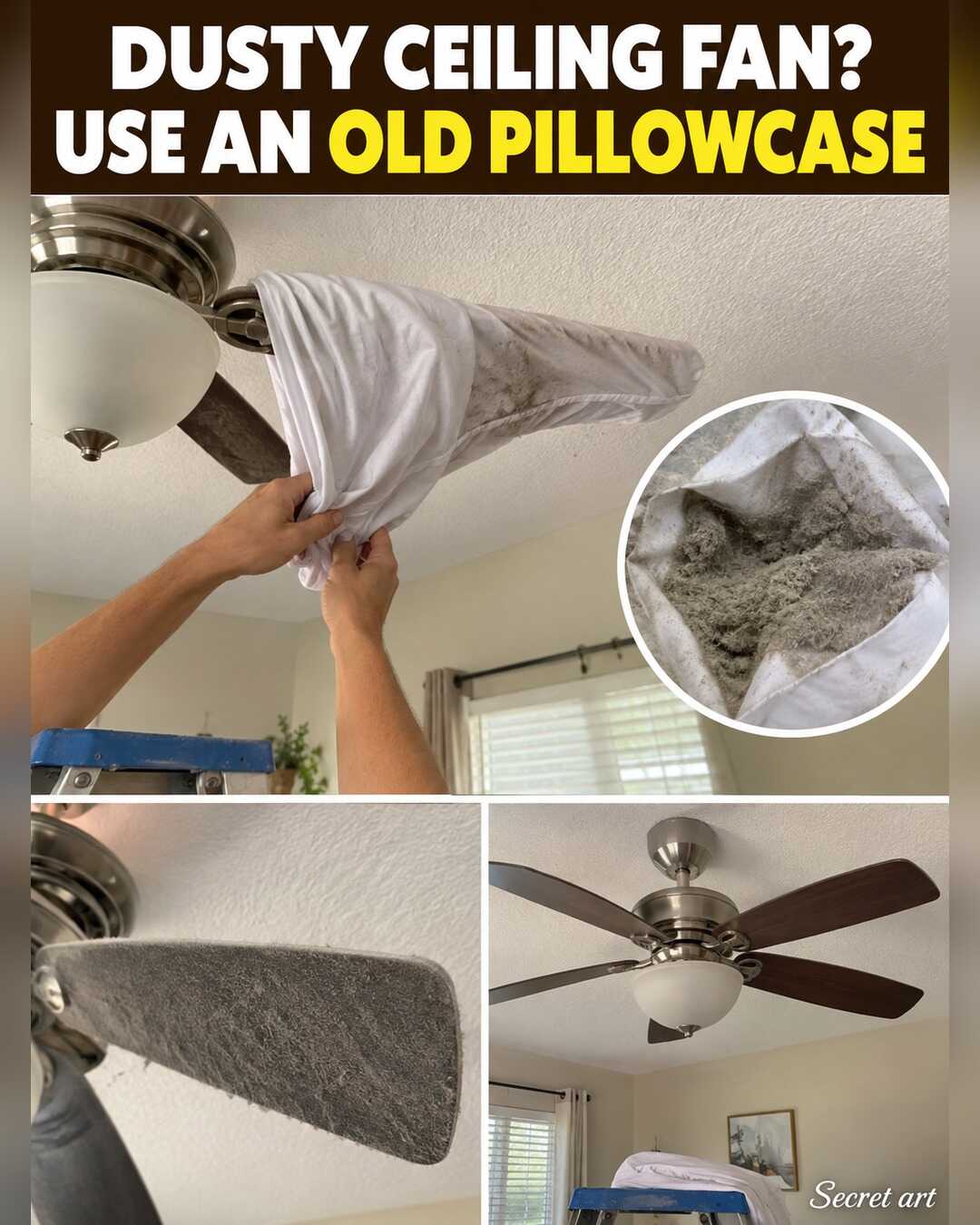
Dusty Ceiling Fan? Slide an Old Pillowcase Over Each Blade
Every few months you look up at the ceiling fan and notice a thick grey fringe along the edge of each blade. You know you should clean it, but you also remember what happened last time: a cloud of dust floating down onto the bed, the sofa and your hair.
There is an old trick that avoids the mess completely. Slide a clean pillowcase over each blade and pull it back slowly. The dust stays inside the fabric instead of falling into the room. It costs nothing, takes about ten minutes, and uses something most homes already have in the linen cupboard.
What You Need
- An old pillowcase for every fan, or one that you shake out between blades
- A sturdy step stool or ladder
- A damp cloth or microfibre cloth for the final wipe
- A mild all-purpose cleaner or a drop of dish soap in water, only if the blades are greasy
- A dust sheet or an old towel for the floor, if you like
- A dust mask if you have allergies
Before You Start
Safety comes first. Turn the fan off at the wall switch and wait until the blades have fully stopped. Do not rely on the remote or pull cord alone. If the fan has a light, make sure it has cooled down.
Use a stable step stool or ladder, set on a flat floor. Never stand on a chair with wheels or a pile of boxes. If the fan is very high, ask someone to hold the ladder or keep your hands on the ladder while you work.
If you have allergies, wear a dust mask. Even with this method, a little fine dust can escape, especially if the fan has not been cleaned for a long time.
The Method, Step by Step
- Switch the fan off and let it stop completely. Lay a towel or dust sheet under the fan if you want extra protection for the bed or furniture below.
- Take an old pillowcase, one you do not mind getting grey. A cotton one works best. Shake it out so it is open and ready.
- Gently slide the pillowcase over one blade, so that the whole blade is inside the case. Support the blade from underneath with your other hand to avoid bending it.
- Hold the open end around the blade and pull the pillowcase slowly towards you, from the centre to the tip. The fabric wipes both sides at once and traps the dust inside.
- Take the case off the blade carefully, with the open end up, so nothing spills out. Move on to the next blade and repeat.
- When the pillowcase gets full of dust, fold it closed and take it outside to shake it out, or turn it inside out into a bin bag.
- Finish by wiping each blade with a slightly damp cloth to pick up the last traces. Dry them with a clean cloth.
- Wash the pillowcase in your normal laundry and let it dry before you use it again.
Why It Works
When you wipe a dusty blade with a dry cloth or a duster, much of the fine dust is pushed into the air. A feather duster is even worse because it flicks the dust away rather than collecting it.
The pillowcase works like a sleeve. The dust on the top of the blade is pulled into the fabric and stays there because the cloth is closed around both sides. The cotton also has a slightly rough texture that grabs fine particles instead of sliding over them.
Because the case is cheap and washable, you can use it again and again. There is no spray, no special tool and no waste.
Why Fan Cleaning Is Worth It
A fan with dusty blades moves air less efficiently, and the dust can drop into your room every time you switch it on. Clean blades also look better, and the whole ceiling seems brighter.
For most homes, cleaning the fan every month or two is plenty. If you live on a busy road, have pets or cook with a lot of oil, do it a little more often. Light, regular cleaning is faster than tackling a thick layer once a year.
Mistakes to Avoid
- Never clean the fan while it is moving or when someone else could switch it on.
- Do not lean on the blades or press hard. They can bend or wobble.
- Avoid soaking the blades with water. Wood or veneer blades in particular can warp or lose their finish.
- Do not stand on a chair, a box or a wobbly surface.
- Never mix cleaning products, and never combine bleach with vinegar or ammonia.
- Do not shake the pillowcase out indoors. Take it outside or use a bag.
- Do not skip the dust mask if the dust makes you sneeze.
Bonus Tips and Variations
If your blades are greasy, such as in a kitchen, dampen the pillowcase slightly with soapy water, wring it out well, and wipe. Follow with a dry cloth. Greasy dust sticks, so a little soap helps loosen it.
Use two pillowcases if you have a large fan or lots of dust. When the first gets full, switch to the second to keep working without going outside.
You can wipe the motor housing and the light fixture with a slightly damp cloth while you are up there. Do not spray liquid near the motor, and keep the cloth only slightly damp.
Do the fan at the same time as your other high dusting jobs, such as the tops of cupboards and curtain rails. Working from the top down means you will not need to dust twice.
After cleaning, switch the fan on at a low speed for a few seconds. If anything wobbles or makes a noise, turn it off and check that the screws are snug before using it again.
Frequently Asked Questions
Can I use any pillowcase?
A cotton pillowcase works best because it grips the dust. Avoid very smooth or silky fabrics, which tend to let the dust slide. Use one that you do not mind getting dirty, and wash it afterwards.
How often should I clean my ceiling fan?
Every one to two months is a good habit for most households. If you have pets, allergies, or you cook a lot, do it more often. Frequent light cleaning is much easier than a big job after a long gap.
Will the blades bend if I pull the pillowcase?
They should not if you support the blade with your other hand and pull gently. Never pull hard or lean on the blade. If a blade feels loose, stop and check the screws or ask a professional.
What if the dust is sticky?
Sticky dust usually has some grease in it. Lightly dampen the pillowcase with warm water and a drop of dish soap, wring it well, and wipe. Then follow with a dry cloth so no moisture stays on the blades.
Is there a way to stop dust from coming back so fast?
You cannot stop it completely, but regular cleaning helps, and so does keeping the room dusted and vacuumed. Some people wipe the blades with a very lightly damp cloth, which leaves less of a surface for dust to cling to.
Can I use this method on a fan with a light?
Yes, but switch off the light and let it cool down first. Avoid pulling the pillowcase against the light fittings, and clean the light cover separately with a damp cloth.
A Neater Way to Dust
Cleaning a ceiling fan does not have to mean a dusty room. An old pillowcase, a steady step stool and a little patience will collect the dust instead of scattering it.
Give it a try this weekend and see how much grey ends up inside the case. For more easy household ideas like this, keep an eye on the blog.