Chayote seeds? old paint bucket? Grow Chayote Like This Instead!
Chayote seeds? old paint bucket? Grow Chayote Like This Instead!
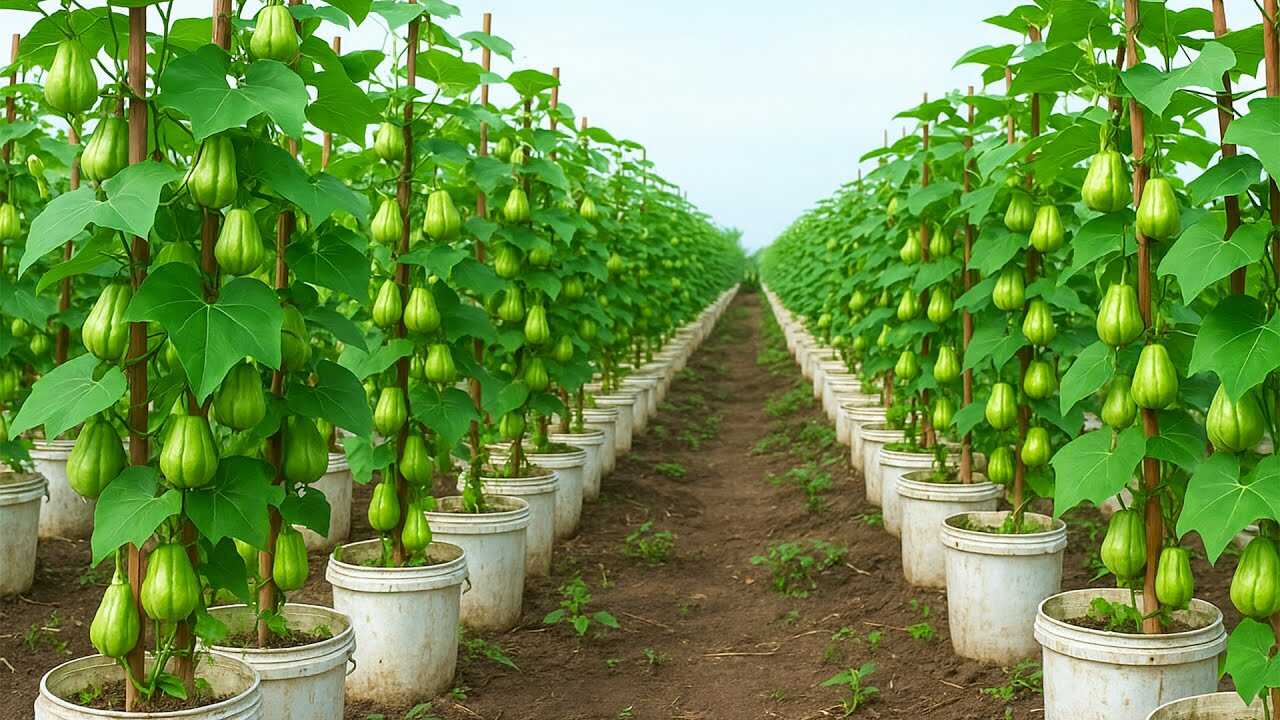
The photo shows neat rows of chayote vines climbing bamboo stakes, each planted in white plastic buckets that look exactly like repurposed **old paint buckets**. If you’re tempted to use what you already have, this guide shows how to turn those buckets into safe, productive containers for **chayote (Sechium edule)**—with clear, factual steps, exact doses and realistic timelines.
Why a cleaned paint bucket can work (and what to watch for)
Plastic 5-gallon buckets are popular because they provide consistent root volume and mobility. Botanically, chayote benefits from a deep, warm container: it develops a vigorous root ball and needs stable moisture to set fruit. A properly prepped plastic bucket gives the root space and thermal buffering that chayote likes.
Important safety note: many buckets previously held paints or chemicals. Only reuse buckets that contained **water-based (latex) paint** or were used for food-safe materials. If you cannot confirm the prior contents, either line the bucket (instructions below) or choose a known food-grade container. This avoids potential contamination and keeps produce safe to eat.
What you’ll need
- One cleaned 5-gallon (≈19 L) plastic bucket per chayote plant (buckets seen in the image).
- Good-quality potting mix, mature compost and perlite for drainage.
- Hand drill with 4–6 drill bits (12 mm / 1/2″ holes recommended).
- Bamboo stake or trellis about 6–8 ft (1.8–2.4 m) tall, securely anchored in the bucket.
- Balanced granular fertilizer (e.g., 14-14-14) and compost for top-dressing.
- Optional: landscape fabric liner if bucket’s prior use is unknown.
Step-by-step: prepare, plant, and care
Follow these steps carefully to match what’s shown in the photo but make it safe and effective.
- Clean the bucket. Wash thoroughly with hot soapy water and rinse. If it held latex paint, scrub until no residue remains, then sun-dry for 24 hours. If it held oil-based paint or unknown chemicals, do NOT use unless lined.
- Drill drainage holes. Drill 4–6 holes of about 12 mm (1/2″) evenly spaced in the bottom. Good drainage prevents root rot—this is non-negotiable.
- Optional liner. If unsure about prior bucket contents, line the interior with food-safe heavy-duty landscape fabric or a new plastic nursery pot placed inside the bucket. This reduces leaching risk while retaining the bucket’s structural benefit.
- Mix the potting medium. For a 5-gallon bucket, combine: 70% high-quality potting mix, 20% mature compost, 10% perlite. For one 5-gallon bucket that’s roughly: 14 L potting mix + 4 L compost + 1.9 L perlite. Fill the bucket, leaving ~5 cm (2″) from the rim.
- Add starter fertilizer. At planting, incorporate one tablespoon (≈15 g) of balanced granular fertilizer (14-14-14) into the top 5 cm of the mix. This provides a steady nutrient base; chayote responds to both nitrogen for foliage and potassium for fruit development.
- Planting the chayote. Chayote is typically propagated from the whole fruit (one viable method): place a healthy chayote squash on its side, half-buried in the soil with the broader end down and the pointed end up, leaving the top exposed. Plant in spring after danger of frost. Alternatively, transplant a vigorous seedling into the bucket at the same depth.
- Install the stake. Immediately set a 6–8 ft (1.8–2.4 m) bamboo stake or small trellis into the center of the bucket, pushing it down deeply so it anchors the plant as it thickens—secure the vine as it grows, as seen in the image.
Watering, feeding and schedule (exact doses and timing)
Consistency matters more than fancy tricks. Expect fruiting in about 12–20 weeks from planting the whole fruit (depending on climate and variety). This timeline is realistic for container-grown chayote and should be used throughout your care routine.
- Watering: In warm weather (spring–summer), water deeply until water runs from the drainage holes every 48 hours (every 2 days). In cooler weather (fall), water every 72–96 hours (3–4 days). Each watering should be thorough—wet the whole root ball—then allow the top 2–3 cm (0.8–1.2″) to dry slightly between drinks.
- Fertilizing: Side-dress with one tablespoon (≈15 g) of the same balanced granular fertilizer per bucket every 4 weeks during the active growing season (spring to early fall). In addition, add a handful (about 60–80 g) of mature compost on the soil surface every 6 weeks and lightly work it in.
- Foliar boost (optional): Apply a diluted seaweed extract or liquid micronutrient feed monthly during active growth—follow the product label for dilution. This supports flowering and fruit set without overloading salts in the container.
Pruning, trellis and support tips
Chayote vines can become heavy quickly. Train the main stem up the stake and remove weak lateral shoots once they reach 30–45 cm (12–18″) to focus energy on fruiting. Tie stems with soft garden twine to prevent abrasions. Provide a small horizontal support at 1.2–1.5 m (4–5 ft) if the vine becomes top-heavy; secure to the stake.
Common mistakes to avoid
- Using buckets with unknown chemical history. This can cause contamination—line or avoid them.
- No drainage holes. Containers without drainage cause waterlogging and root rot.
- Filling with garden soil. Heavy soil compacts in containers, restricting roots; use a potting mix blend as described.
- Over-fertilizing. Excess salts build up in a confined root zone—stick to the monthly schedule and flush the container with extra water once every 6–8 weeks to leach salts.
- Neglecting support. Weak stakes lead to broken vines and lost fruit; anchor stakes well.
Seasonal notes and realistic expectations
Chayote prefers frost-free climates. If you’re in a temperate region, start in late spring and expect initial fruit 12–20 weeks after planting. Containers warm faster, so growth may be slightly quicker than in-ground—but don’t expect instant results; this is a multi-week process and a complement to good light, consistent watering and proper nutrition.
Final encouragement and call to action
Those white buckets in the photo are not just clutter—they’re an affordable way to grow vigorous chayote if you prepare them correctly. Clean and line when needed, provide drainage and root-friendly mix, stake well, and feed on schedule. Do this consistently over the next 12–20 weeks, and you’ll likely enjoy healthy vines and fruit. Try one bucket as a test this season—then scale up once you’re confident.
Ready to convert a bucket? Clean one today, drill the holes, and start your chayote—share your results and any questions, and I’ll help you troubleshoot.