
Reusable shopping bags need a wash? Clean each material and let it dry completely
Mild detergent and the washing label are the starting point for cleaning reusable shopping bags. A cotton tote, a coated bag and an insulated carrier can look equally sturdy while needing different treatment. Emptying, washing appropriately and drying thoroughly makes the routine easier without sacrificing handles, linings or printed surfaces.
The awkward dirt usually hides below the groceries: crumbs in a folded corner, a sticky mark under a seam or moisture inside an insulated lining. Work on each material separately instead of putting the entire collection through one hot wash. This guide covers a practical hand-cleaning route and a machine-washable alternative.
What you will need
Choose a mild detergent suitable for the bag and a clean soft cloth. Keep a small soft brush for accessible seams, plus a basin or sink and a place where the bag can remain open while drying. Leave stronger cleaning products aside unless the manufacturer specifically calls for them.
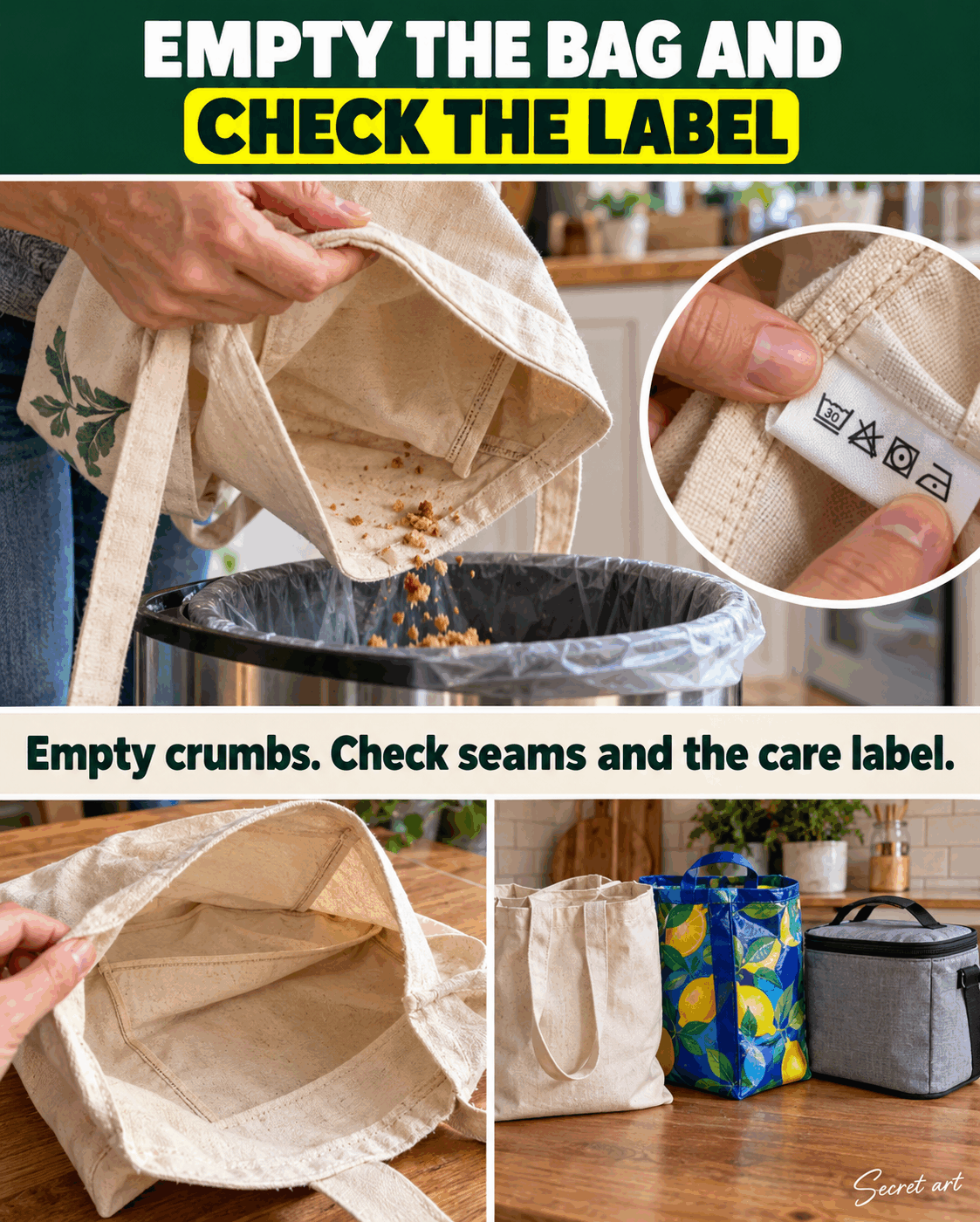
Read the label before filling the basin. Look for whether the bag may be machine washed, the permitted water temperature, and any drying restriction. Check removable inserts separately. A cardboard base, stiff reinforcement or insulated lining may need surface cleaning even when the outer fabric looks washable.
- Mild detergent appropriate for the material
- Water at the temperature permitted by the care instructions
- A clean soft cloth and an optional soft brush
- A basin or a cleared sink for washable bags
- A drying rack with room to hold the bag open
- The original care label or the manufacturer’s instructions
The method, step by step
- Empty the bag completely
Take out receipts, loose packaging and any removable base. Open pockets and unfold the bottom corners so small crumbs cannot remain trapped. Shake dry debris into the trash rather than scattering it over a food preparation surface. Check the handles and seams for damage before spending time washing the bag.
- Sort the materials
Put washable fabric totes in one group and coated, wipe-clean or insulated bags in another. Do not judge the lining by the outer fabric. If the instructions are missing, begin with a damp cloth on an inconspicuous area and avoid machine washing or soaking a structure you cannot identify.
- Wash the compatible fabric bags
For a machine-washable tote, follow its stated cycle, temperature and detergent directions. Empty pockets and avoid crowding the drum. For hand washing, use a modest amount of suitable detergent in compatible-temperature water, gently work through the fabric, then rinse until the water and material no longer feel soapy.
- Wipe coated and insulated surfaces
Keep bags that require surface cleaning out of a soaking bath. Dampen the cloth with mild soapy water and wipe the inside, paying attention to the base and folds. Follow with a fresh damp cloth to remove detergent. Do not flood stitched insulation, rigid panels or seams that are not designed for immersion.
- Attend to the corners and handles
Support the fabric while lifting dirt from a seam with a soft cloth or brush. Avoid aggressive scrubbing across printing, glued layers or exposed stitching. Clean handles according to their material too; a washable cotton body does not automatically make leather-like trim or a decorative handle suitable for the same treatment.
- Dry, inspect and store
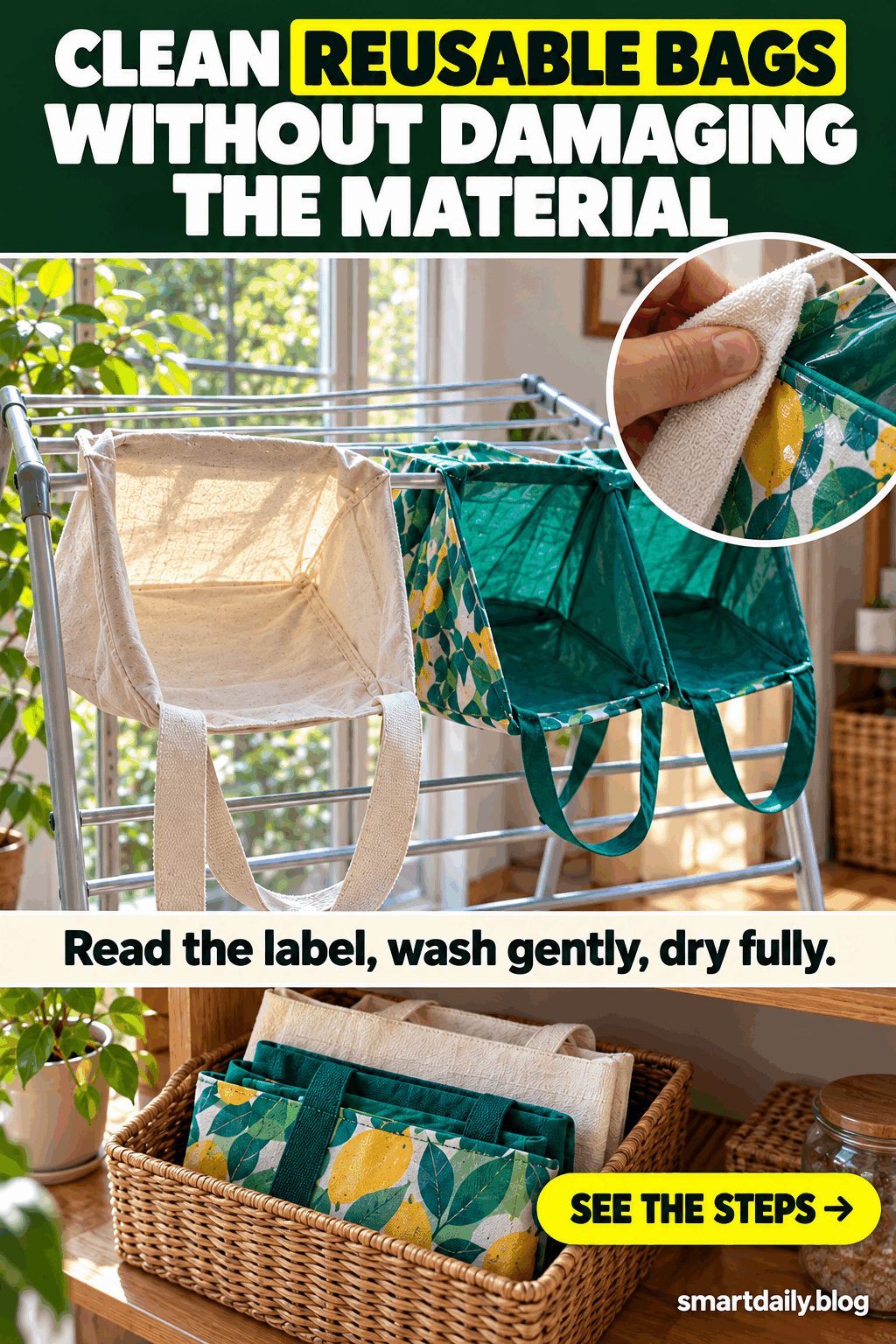
Open the bag widely and turn it inside out when its construction permits. Let the bottom and corners dry completely, not merely the outside panels. Check removable inserts before replacing them. Store only dry bags loosely enough that air can circulate, rather than squeezing a damp bag into a tight carrying pouch.
Why these three stages matter
Emptying first allows the wash to reach the material rather than moving crumbs around a puddle. A folded bottom can hide both loose dirt and a sticky patch, so opening that fold is often more useful than adding extra detergent. The aim is physical removal followed by a clean rinse.
Sorting matters because heat, agitation and immersion affect materials differently. A fabric tote can tolerate a treatment that loosens a coated layer or distorts a reinforced base. The care label is a more reliable guide than thickness or price. Keep each bag within the conditions its maker allows.
Drying is a separate part of the job. Water can remain along stitching, under a base insert or between a handle and the body even after the main panels feel dry. Opening these areas helps you notice residual dampness before the bag is folded away and forgotten until the next trip.
Mistakes that make cleaning harder
Do not solve a persistent mark by repeatedly increasing the water temperature. Check the material and instructions instead. Some discoloration will remain after the surface is clean, especially on older printing or a well-used base. A cosmetic stain alone is not a reason to use an abrasive treatment on a delicate lining.
Avoid leaving detergent behind. A very concentrated mixture takes longer to rinse and can make a wipe-clean lining feel tacky. Use the product as directed and change a dirty cloth rather than spreading the same water across every bag. Rinse the basin before moving from one group of materials to another.
Do not fold a bag as soon as the outside feels dry. Feel the corners and the handles, and lift any removable insert to check beneath it. If a bag stays damp or smells unpleasant after appropriate washing and complete drying, inspect the lining and consider replacing a damaged or deteriorated bag.
A simple routine after each shopping trip
Unpack the bags completely when you get home, then leave them open for a quick inspection. Deal with a spill before putting the bag back in its usual storage spot. A small dry crumb can be shaken out immediately; a leak or a sticky patch calls for a suitable wash before reuse.
Keep a dedicated bag for raw meat, poultry or fish and keep those foods contained separately during transport. Wash a bag after a food leak and clean the surface on which it was placed. This is a handling habit, not a claim that an ordinary detergent wash turns every bag into a disinfected container.
A spare clean bag makes the drying stage less inconvenient. Rotate the bags so you do not need to fold one while it is still damp or rush it onto a heater. Check the manufacturer’s guidance before using a tumble dryer, radiator or another direct heat source to speed up drying.
Frequently asked questions
Can every reusable bag go in the washing machine?
No. Follow the label for each bag, including temperature and drying directions. Fabric, coatings, insulation, printing and removable reinforcement can change what is suitable. If instructions are unavailable, use a cautious surface-cleaning approach and ask the maker before machine washing a bag whose construction you cannot identify.
What if the bag has a removable cardboard base?
Remove it before washing the compatible parts. Keep cardboard out of the water and check whether it can be wiped or should simply be replaced when damaged. Do not put it back beneath a damp lining. An insert and the bag around it may have different care requirements.
How much detergent should I use?
Use the amount recommended for the product and the cleaning method, starting with a modest compatible mixture for hand cleaning. Extra detergent does not replace access to dirty folds. If the lining feels slippery or tacky after wiping, remove residue with a fresh damp cloth and let it dry.
Can I wash an insulated bag by soaking it?
Only if its manufacturer permits immersion. Otherwise, remove loose dirt and wipe the lining with a cloth and appropriate mild detergent, then wipe away residue. Keep water from collecting inside stitched insulation or rigid panels. Open the bag fully and allow all accessible surfaces to dry before closing it.
When should I replace a shopping bag?
Replace a bag when tears, failing seams, a deteriorating coating or persistent contamination prevent effective cleaning and dependable use. Inspect it after washing and drying, rather than making the decision while it is wet. Repair may be suitable for some plain fabric bags if the repair restores their strength.
Empty, sort, wash according to the label, then give the bag time to dry completely. Keeping those stages separate makes reusable bags easier to care for between shopping trips.