
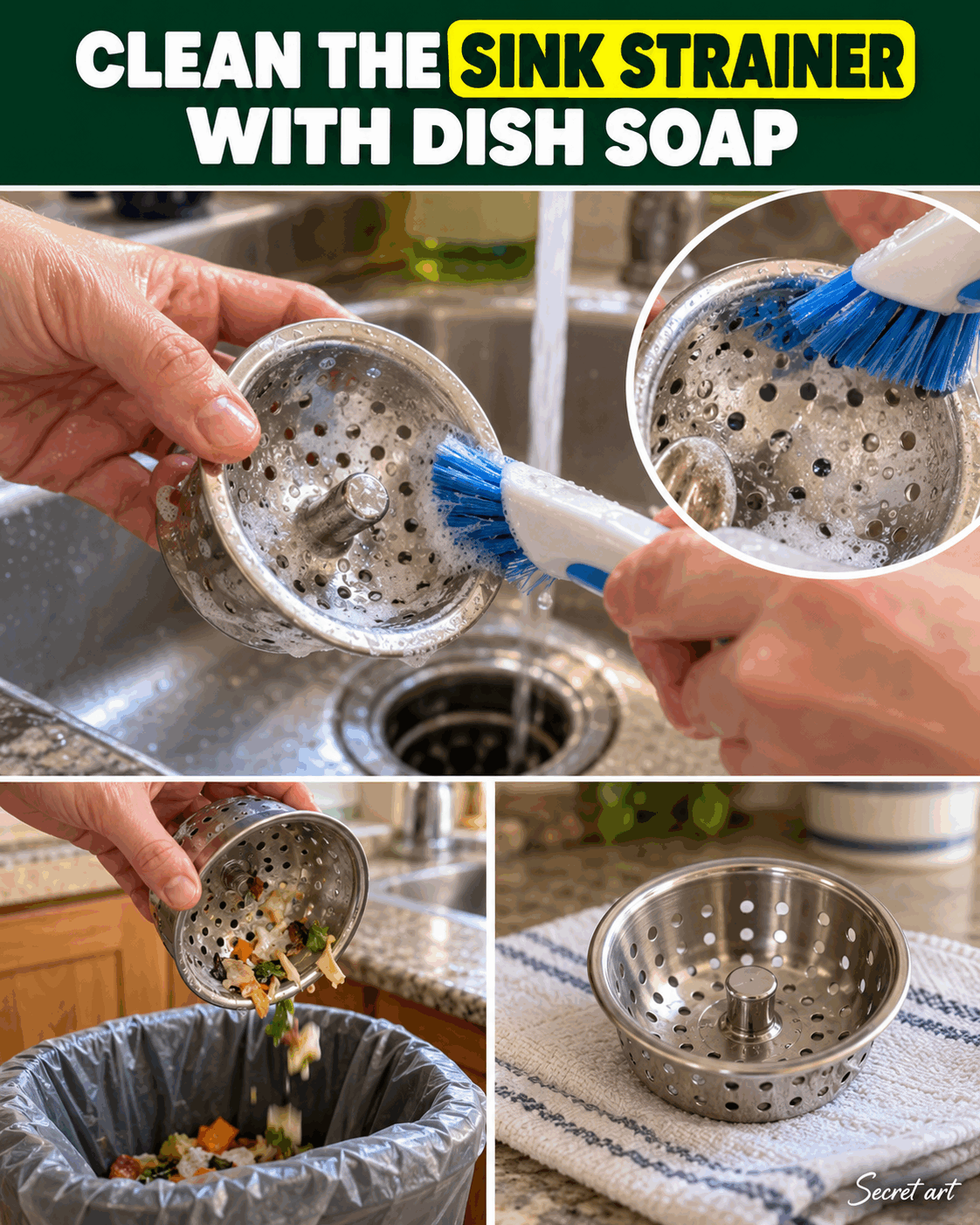
A greasy sink strainer? Use dish soap and a dedicated brush to clean the basket
Dish soap and a dedicated soft brush are enough for a useful first clean of a removable kitchen sink strainer. The aim is to remove food film from the basket and its holes, not to treat the drain beneath it. Lift the strainer out so you can see both sides clearly.
A basket can look clean from above while a slippery layer remains under the rim or around the openings. Rinsing alone may leave that film behind. A short, controlled hand wash lets you work around the shape, check for trapped scraps and finish with a thorough rinse.
What to gather before you start
Use ordinary dish soap appropriate for the strainer, warm water and a soft brush kept for this cleaning job. A small basin is useful for a removable basket that may be immersed. Have the trash nearby for food scraps and a clean drying area ready before you begin.
Check how your particular strainer comes out. Some baskets simply lift from a center handle, while others belong to a stopper mechanism. Follow its instructions and do not force a fixed part. This method is for accessible, removable pieces; it does not require loosening plumbing connections beneath the sink.
- Dish soap compatible with the basket material
- Warm water
- A dedicated soft-bristled brush
- A small basin, if immersion is permitted
- A trash container for collected food scraps
- A clean place to drain and dry the basket
The method, step by step
- Lift out the basket
Let standing water drain and lift the removable strainer as its maker intends. Hold a handle or solid part rather than pushing fingers against fine mesh. Set it over a basin or towel so the contents do not drip across the counter. Keep any removable stopper parts together in order.
- Empty the food scraps
Tip loose scraps into the trash and remove anything that can be lifted away without forcing it through the openings. Avoid pressing rice, skins or fibrous pieces down the drain. Emptying the basket first keeps the washing water easier to manage and gives the brush access to the dirty surface.
- Apply a little dish soap
Wet the basket with warm water and add a small amount of compatible dish soap. If the manufacturer permits soaking, leave the removable piece briefly in soapy water to soften a stubborn film. Use a comfortable handling temperature rather than boiling water, especially when plastic or silicone parts are present.
- Brush both sides gently
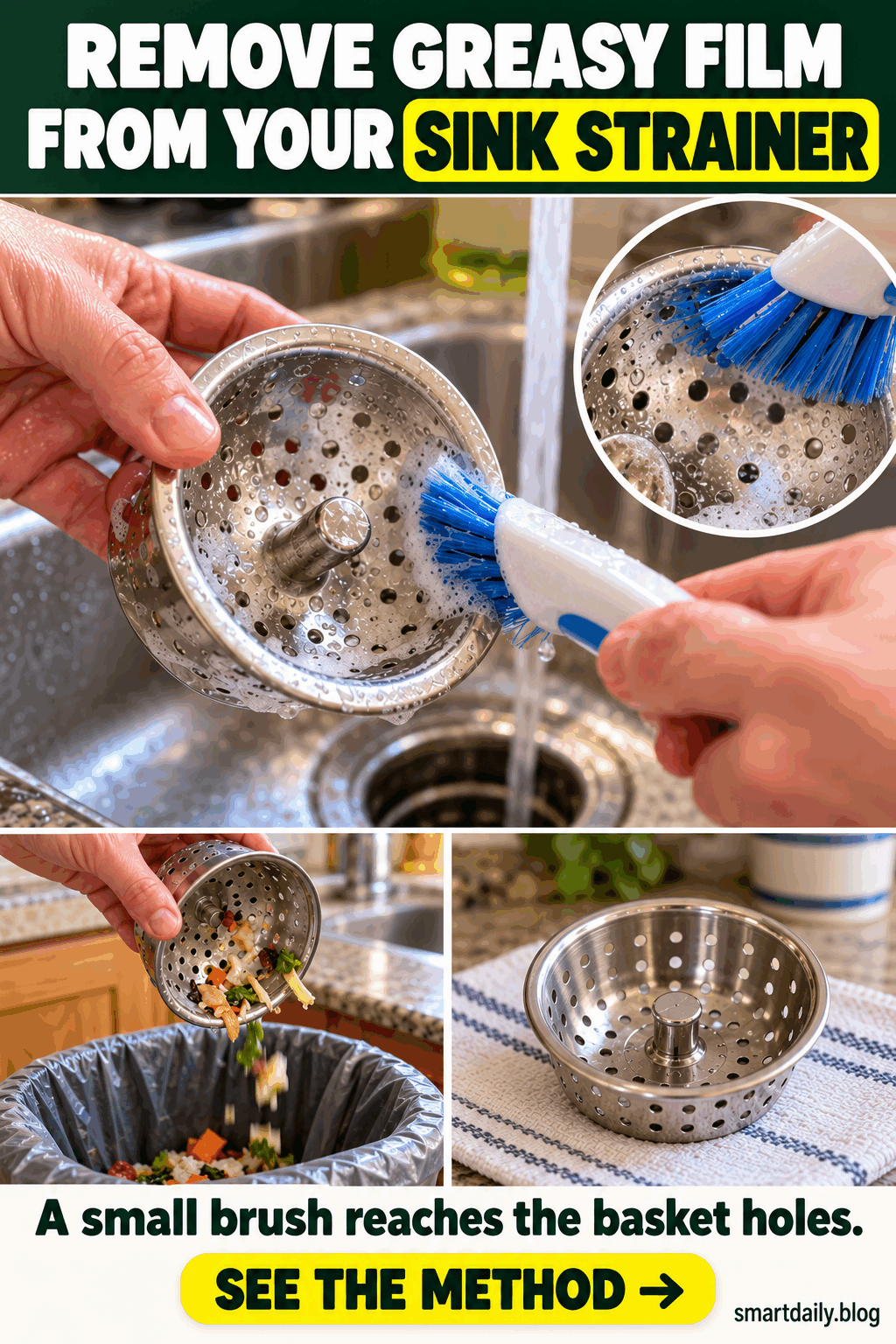
Support the basket and work the soft brush across its inside, underside and rim. Use small movements around the holes rather than forcing a hard bristle through them. Pay attention to the join between the rim and basket, where a thin deposit can remain out of sight during normal rinsing.
- Rinse and examine the openings
Rinse away loosened film and detergent under running water, turning the basket to check every side. Hold it toward the light to spot remaining scraps. If a hole is still obstructed, return to gentle brushing rather than reaching for a sharp metal tool that could distort fine mesh or a soft insert.
- Dry and replace it correctly
Allow the cleaned basket to drain on a clean surface. Wipe the accessible seating area of the sink, rinse it and refit the basket as instructed. Check that a combined strainer and stopper still operates normally. Keep the cleaning brush clean and let its bristles dry between uses.
Why soap and brushing work together
Dish soap helps loosen greasy residues while gentle brushing supplies the movement needed to lift them from corners and openings. Neither step requires a dramatic chemical reaction. Once the dirt has loosened, rinsing carries it away; leaving a soapy layer behind would defeat the clean finish you are trying to achieve.
Removing the basket gives you access to its underside and the narrow band below its rim. Those areas receive food particles and washing water but may not be reached by a quick rinse from above. Changing the angle is often what reveals the missed film, rather than finding a stronger product.
A dedicated brush also makes the routine more controlled. Choose bristles that bend and reach without scratching the surface, and reserve that brush for the task. Wash and rinse it after use, then store it so the bristles can dry rather than sitting in a puddle beside the faucet.
Adjust the method to the material
For a stainless steel basket, avoid steel wool and aggressive scraping that can mark the finish or bend a fine opening. Work patiently around the rim with a soft brush. If the basket is distorted, sharp or damaged, replacement may be more sensible than repeatedly trying to restore its shape.
A flexible silicone basket may turn inside out for emptying, but do this only where its design allows. Do not stretch a part away from its mounting or pull at a bonded edge. Wash gently, rinse the folds and let the part return to its usual position before refitting it.
Some manufacturers mark particular strainers as dishwasher safe. That permission belongs to the exact product, not to every metal or silicone basket. Follow the maker’s placement and temperature instructions if you use a dishwasher, and still remove food scraps before putting a compatible strainer on the rack.
Mistakes to avoid
Do not pour a mixture of cleaners over the basket in the hope that the fizz will do the brushing. Mixing products is unnecessary for this method. Stick to compatible dish soap and water, and keep the task separate from any drain product or cleaning chemical already being used nearby.
Do not mistake mineral staining for a layer of grease. Soap and a brush may remove food film without changing a hard-water mark. If a separate descaling step is needed, consult the material’s care instructions and use only an appropriate product as directed, rather than adding acid to the soapy cleaning water.
Do not treat a clean basket as a solution to a slow or blocked drain. Check that the strainer itself is clear and seated correctly; if water still drains poorly, investigate that separately using an appropriate method. There is no need to dismantle plumbing just to wash a removable kitchen basket.
Keep the next clean shorter
Empty the basket when scraps collect instead of leaving them pressed against the mesh through several loads of dishes. A quick look underneath after emptying helps you notice the beginning of a film. Fit a gentle wash into the routine when needed rather than waiting for every opening to become covered.
Set the brush and a small amount of dish soap within reach of the washing area, while keeping the brush separate from food utensils. That small arrangement makes it easier to clean the strainer deliberately, rinse the tools and leave the sink area dry instead of postponing the job again.
Frequently asked questions
Can I clean the strainer without removing it?
A rinse in place can remove loose scraps, but it may miss the underside and the area beneath the rim. Lift out a removable basket according to its instructions for a more complete wash. Do not try to detach a fixed drain fitting or force a mechanism that is not meant to come out.
What kind of brush should I choose?
Choose a small soft brush that reaches the basket’s corners without scratching or distorting it. Reserve the brush for this task, rinse it after cleaning and allow it to dry. Avoid wire bristles, sharp picks and hard scraping tools, particularly on fine mesh, coated surfaces or flexible silicone parts.
Should I soak a greasy basket overnight?
A brief soak may be enough to loosen a film if the material and manufacturer permit immersion. There is no need to assume an overnight soak is suitable for every assembly. Start with warm soapy water and gentle brushing, then inspect the basket before deciding whether another short cleaning pass is needed.
Can it go in the dishwasher?
Only when the exact product is described as dishwasher safe by its manufacturer. Check any instructions for removable stopper pieces, rack placement and temperature. Empty scraps first. If you cannot identify the material or instructions, a careful compatible hand wash gives you more control over the parts and finish.
Why does water still drain slowly after cleaning?
The basket may not be the cause of the problem. First check that its openings are clear and it is refitted correctly. If the water still drains slowly, treat that as a separate issue. Washing a strainer removes accessible food film; it does not establish what is happening farther down the plumbing.
Lift out, empty, soap, brush and rinse: the basket is easier to clean when every side is accessible. Finish by drying the tools and refitting the strainer correctly.