
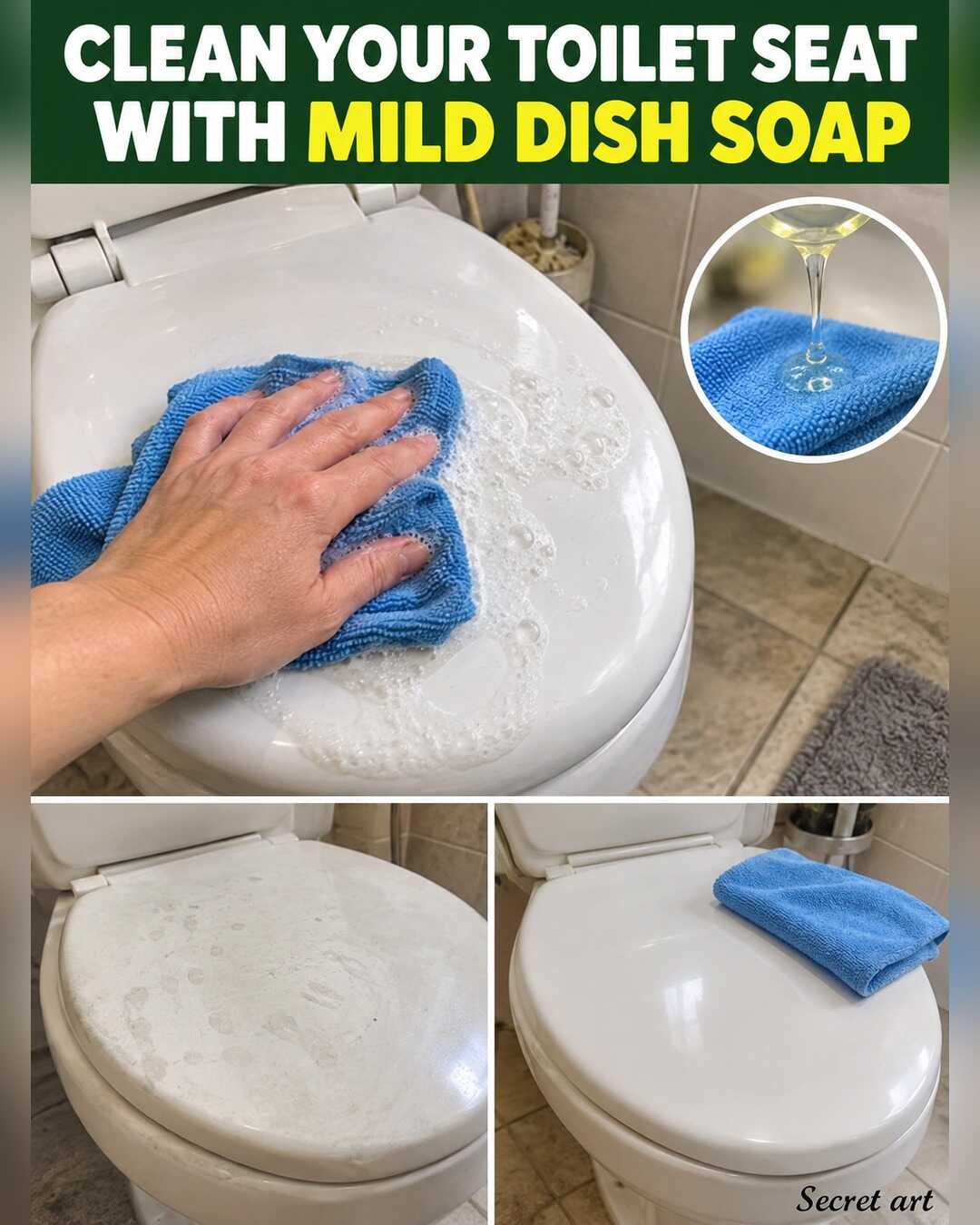
Clean Your Glossy Toilet Seat With Mild Dish Soap and a Cloth
You wipe the bathroom counter, the mirror and the floor, and then you glance at the toilet seat. It looks dull. There are fingerprints on the lid, a few streaks near the hinges, and a faint film that never quite goes away. Most of us grab the strongest spray under the sink and hope for the best.
Here is the good news: a glossy toilet seat usually needs much less than that. A drop of mild dish soap, warm water and a clean cloth will do most of the work, and they are kinder to the finish. This guide shows you the exact steps, plus a few habits that keep the shine for weeks.
What You Need
- A mild liquid dish soap, the plain kind without bleach or strong scent
- A bowl of warm (not hot) water
- Two soft cloths, preferably microfibre, kept only for the toilet
- A dry towel or paper towels for buffing
- Rubber gloves, if you like
- A cotton swab or old soft toothbrush for the hinges
Check Your Seat First
Before you start, take ten seconds to look at the seat. Most modern seats are made of plastic, often called polypropylene, or a hard moulded material that has a smooth, shiny coating. These handle mild soap very well. Wooden seats with a painted or lacquered surface need a lighter touch, and a seat with a worn, cracked finish should not be soaked at all.
If you still have the manual or the box, check what the maker recommends. If you do not, test your mix on a small, hidden spot, such as the underside of the lid near the edge. Wait a minute, wipe it dry, and look. If nothing changes, you are good to go.
The Method, Step by Step
- Lift the lid and the seat, and take a quick look underneath. Dirt hides along the rim and around the hinges, so you want to reach those spots too.
- Fill a bowl with warm water and add a few drops of mild dish soap. Stir gently so the water gets slightly soapy, not foamy.
- Dip the first cloth in the water and wring it out well. It should be damp, never dripping. Water that runs into the hinge area can leave marks and can loosen fittings over time.
- Wipe the top of the lid first, using straight, even strokes. Then do the top of the seat, the sides, and finally the underside. Always work from the cleanest area to the dirtiest.
- Use a cotton swab or a soft toothbrush dipped in the soapy water for the hinges and the small gaps around the bumpers. Go slowly and do not scrub hard.
- Rinse the cloth in clean water, wring it out, and wipe every surface again to remove the soap. Leftover soap can attract dust and make the seat look cloudy.
- Dry and buff with the second cloth or a dry towel. This step gives the shine back, so do not skip it.
Why It Works
Dish soap is made to lift grease. Most of the film on a toilet seat is a thin mix of skin oil, hand cream, dust and tiny splashes. That mix is greasy, which is why plain water just smears it around.
A small amount of soap breaks the grease into tiny droplets that the damp cloth can pick up. Warm water helps the soap spread and work, while the cloth does the gentle rubbing. Nothing here is harsh, so the glossy coating stays intact instead of getting scratched or dulled.
The second dry cloth matters as well. Water that dries on its own leaves spots and soap traces. A quick buff removes both and leaves a clean, even shine.
Why a Dedicated Cloth Is a Good Idea
Keep the toilet cloths separate from the ones you use in the kitchen or for the bathroom sink. It sounds fussy, but it is just good housekeeping. Choose a colour that is easy to recognise, such as blue, and always store it apart from the others.
After use, rinse the cloth with hot tap water and a little soap, then wash it with your regular laundry at the hottest temperature the label allows. Let it dry fully before you use it again, because a damp cloth left in a pile starts to smell quickly.
Mistakes to Avoid
- Never mix cleaning products. Do not combine dish soap with bleach or other cleaners, and above all never mix bleach with vinegar or ammonia, because the fumes are dangerous.
- Skip abrasive powders, scouring pads and steel wool. They leave fine scratches, and scratches hold dirt.
- Avoid very hot water on plastic. It can warp thin parts and dull the finish.
- Do not soak the seat or let liquid pool around the hinges.
- Do not use the same cloth you used on the bowl. Keep the seat cloth clean and separate.
- Do not leave the seat wet. Always dry it after rinsing.
Bonus Tips and Variations
For a quick weekly refresh, keep the bowl of soapy water and the cloth in a small basket under the sink. The whole job takes about three minutes. A little regular care beats a big scrub once a month.
If your seat has stubborn marks, let a soapy cloth rest on the spot for a minute or two before wiping. This gives the soap time to loosen the residue, so you need less pressure. If the mark is still there, repeat the process rather than reaching for something harsher.
For a seat with a soft, padded or cushioned top, wring the cloth out even more and go lightly. Pat dry with a towel straight away.
You can also give the lid and the tank the same treatment. Both are touched often, and both collect the same kind of film. Start with these cleaner parts and finish with the seat, and use fresh water if it gets cloudy.
Frequently Asked Questions
Can I use any dish soap?
Choose a plain, mild liquid. Soaps with added bleach, strong degreasers or heavy fragrances are more likely to dull a glossy finish or leave a sticky film. If the label does not mention any of those, a few drops in warm water are enough for a whole seat.
How often should I clean the toilet seat?
A quick wipe once or twice a week is plenty for most homes. If the bathroom is used by many people, or you have small children, do it more often. Regular, light cleaning is easier on the finish than occasional heavy scrubbing.
Is this safe for every type of seat?
It is safe for most plastic and moulded seats, but not all seats are the same. Painted wood, antique pieces and seats with a damaged coating need extra care. Check the maker’s advice if you have it and test a small hidden spot first.
Why does my seat still look cloudy after cleaning?
Cloudiness usually means a trace of soap is left behind. Rinse the cloth in clean water, wipe the seat once more, and dry it well with a second cloth. Using fewer drops of soap next time also helps.
Can I disinfect with this method?
Soap and water remove dirt and many germs from the surface, but they do not replace a disinfectant. If you want to disinfect, use a product made for the job and follow its label exactly. Clean with soap first, rinse, and never mix products.
What should I do about the hinges?
Use a cotton swab or a soft old toothbrush with a little soapy water, then wipe with a damp cloth and dry. Do not spray liquid straight into the fittings, and do not force anything that feels stuck.
A Simple Habit That Pays Off
A shiny toilet seat does not need strong chemicals, only a little soap, a clean cloth and a minute of care. Once the routine is set, it becomes one of the easiest jobs in the bathroom.
Try it this week, and notice how the finish stays brighter for longer. Soon you will find even more small, practical ideas like this one right here on the blog.